HOME | ABOUT US | Speaker | Americans Together | Videos | www.CenterforPluralism.com | Please note that the blog posts include my own articles plus selected articles critical to India's cohesive functioning. My articles are exclusively published at www.TheGhouseDiary.com You can send an email to: MikeGhouseforIndia@gmail.com


Showing posts with label Pluralist Mike Ghouse. Show all posts

Friday, September 13, 2019

Derogatory statements about Hinduism

You might cringe when someone makes an idiotic remark about Hinduism and Hindu practices.
A majority of Indian Muslims will never make a negative statement about Hindus or Hinduism. Indeed, they will defend it as Hinduism is one of the most misunderstood religions like theirs.
They are driven by the wisdom found in the Quran, 6:108 (Itani), “Do not insult those they call upon besides God, lest they insult God out of hostility and ignorance. We made attractive to every community their deeds. Then to their Lord is their return, and He will inform them of what they used to do.” The Quran warns us from taking the low road and destroying mutual respect and trust.
Wisdom is available when people disagree, the best way to part is narrated in the Quran109:6 (Itani), you have your idea, and I have my way.” Let’s respectfully disagree.
Please be aware, the
re are about three mistranslations of Quran in the market, and we hope you read at least five versions out of the 50 plus translations to get it right. It is easy for one to jump to conclusions by seeing one person’s interpretation. Humans make mistakes.
From Allama Iqbal to Sahir Ludhinavi to Shakeel Badyuni and hundreds of poets and authors have written accolades, bhajans and uplifting commentary about Hinduism. On my part, I will continuously uphold and defend Islam and Hinduism, along with all religions. The wisdom of the Quran calls for people to learn about each other, and when they do, conflicts fade and solutions emerge.
I shared the following note (Pluralism 101) to a WhatsApp group with a video as a forewarning to stall Muslims from making derogatory comments. The video was about our Hindu friends drinking urine right of a Cow and washing their faces. Please remember what is sacred to you is not sacred to others, and vice versa.
A Muslim is an ultimate human being who cares for other’s wellbeing and stands up for justice to each one of the 7.5 billion inhabitants of the earth. A Muslim is an exemplary citizen and an Amin – A model citizen. We have a few bad apples, and we need to work and redeem them through critical notes like this.
The administrator of that WhatsApp group and I received a few disgusting commentsand the administrator chose to dissolve the group rather than engage in the conflicts, that was his choice. The other group also had a few negative comments. What a shame!
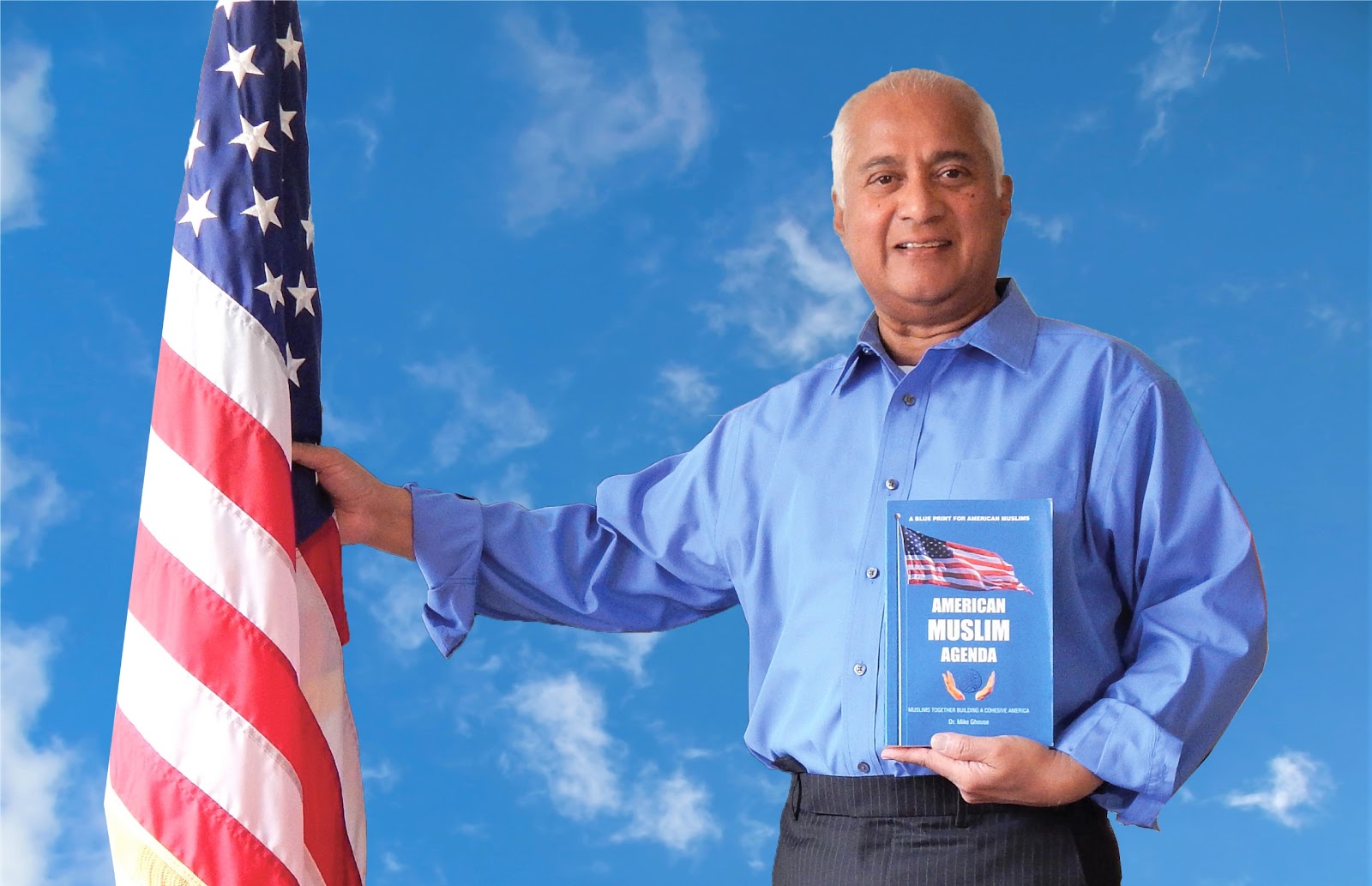
Muslims are developing good checks and balances, if one idiot among us makes a wrong statement, there are ten to pounce on him/her.  Our Hindu, Sikh, Jewish and Christian friends are also doing the same, speaking out against idiotic statements. There are plenty of them in each group. The new book American Muslim Agenda documents many such incidents.
I hope I am speaking for a majority of Indian Muslims, if not, please let me know. We have to talk out what is right.  
Appended below are:
  1. The Pluralism 101 note (below).
  2. Video of my Hindu friends drinking cow urine (not included).
  3. NPR’s Muslim woman forced to resign – Indianewengland.com
  4. Achche Din Aayienge? – A poem and I hope you will enjoy it and share it.
    Facebook – https://www.facebook.com/MikeGhouse/videos/463727984228407?sfns=mo
  1. Standing up for Hindus (hundreds of items to be added after 2012). http://standingupforothers.blogspot.com/2012/04/standing-with-hindus.html
Pluralism 101 (posted on two WhatsApp groups)
I’m sharing the attached 1-minute video with a specific purpose, that is, for each one of us to respect the otherness of the other. If you can watch this without making faces or sounds, you’ll earn 10/100 points in the beautiful journey of pluralism.
Others’ belief appears weird, but in reality, each faith has weirdness in it, that only others can see and not the believer.
Do you know what heaven is? It’s a state of mind that is free from conflicts, tensions, fears, and phobias. When you do your Jihad, which means an inner struggle against negative feelings, you will free yourselves from the temptations that flutter you, and achieve full freedom, Nirvana, Salvation, Mukti, Moksha or Nejat from anxieties.
Happy freedom to you!
 Mike Ghouse is a public speaker, author, thinker, newsmaker and an interfaith wedding officiant. His new book American Muslim Agenda is available at Amazon and the book stores.  https://www.linkedin.com/in/mikeghouse/

Wednesday, May 29, 2019

Narendra Modi’s speech and political pluralism

https://countercurrents.org/2019/05/narendra-modis-speech-and-political-pluralism


Whenever I can, I listen to the speeches of political leaders and I have done the same with a few speeches of Prime Minister Modi. The following video is about 70 minutes long. The speech was made around May 24, 2019.

Prime Minister Modi is unquestionably one of the greatest orators of this decade. I watched his full speech to the NDA – that is the National Democratic Alliance made up of BJP (Bhartiya Janata Party) and regional parties.
He rightfully acknowledged the contributions of Dr. Ambedkar who gave the constitution and acknowledged the sacrifices of Shaheed Bhagat Singh. Then he added Veer Savarkar as a contributor to the spirit of independence and that is to please the base, as Veer Savarkar is one of the guys who sowed the seeds of discord and promoted ill-will towards fellow Indians. If someone hates a fellow Indian because he is a Muslim or a Christian, it was because of wrongful propaganda of Veer Savarkar, Golwalker and a handful of others. I wish they had believed in freedom and respect for the otherness of the other. We cannot blame them for what they did, but at least we should not repeat their mistakes.
PM Modi talked about Sab ka saath, sab ka Vikas, a great slogan, and added sab ka Vishwa’s – that is the trust. Together with all, prosperity for all and confidence of everyone. He missed the opportunity to achieve that, or he may not have meant it. He has to clarify that.
PM Modi, could have laid out a plan in a few words how to achieve everyone’s trust, urging his base to give up on lynching, harassing and making the life difficult for ‘minorities’ and have a national day where all Indians come together and celebrate unity. Take a pledge that each one of us will contribute towards building goodwill among fellow Indians and not ill-will.
Overall the speech was good but severely deficient, as it was not the speech to Indians, but a speech to his base. He delivered them the red meat.
He urged the audience to speak up when they see something wrong, and my first response was Mr. Prime Minister, let that begin with you, you take the lead and speak up when there is a rape, when someone is lynched, harassed or beaten up in daylight. Don’t wait for three days to stop the damage. Much of the crimes would go away if you speak up instantly. What holds you from speaking? He has to earn the trust of all to bring sustainable prosperity to all.
Do you agree, the most patriotic person is the one who keeps the government on their toes and prevent them from making mistakes? You do your share, and I will do mine because I care about every Indian, and my work would bring Indians together and not pit one against the other.
The Prime Minister can start with one simple step – open the speech with Namaste, Jai Bhim, Salaam, Satsri Akal, Jai Jinendra, Buddha Namo, AlahAbho and Shalom. That is how you start to sab ka saath, the saath of 1.25 billion Indians in one single sweep.
Related: Why Integrated societies are good for America (India).
http://centerforpluralism.com/why-integrated-societies-are-good-for-america/

Mike Ghouse is committed to building cohesive societies and offers pluralistic solutions on issues of the day. His book, the “American Muslim Agenda” is about Muslim earning their respectable space in the society. The book is available at Amazon, Xlibris, Google, Barnes and Noble, and Kindle. Mike’s mission is to open people’s hearts, minds, and souls towards each other. He believes that the ultimate purpose of humans is to live freely and be comfortable with their culture, race, religion, ethnicity, sexuality, and individuality. Mike is a public speaker, author, interfaith wedding officiant, a newsmaker and the executive director of the Center for Pluralism in Washington, DC. More about him in three formats at https://www.linkedin.com/in/mikeghouse/

Thursday, April 25, 2019

Book About Muslims - American Muslim Agenda

If you are a conservative, then grudgingly you'll see the value in what this book offers, and if you are on the left, you want more of it, and if you are moderate, you will dance with joy.

HOSTING A BOOK TALK


The book is about building a cohesive America where each one of us feels secure about our faith, race, ethnicity, culture, sexual and political orientation. Who does not want to live a tension free life at home, workplace, and in the public space? 

The "American Muslim Agenda” serves a two-fold purpose. On the one hand, it separates the chaff from the grain for fellow Americans to see Muslims for who they are and not how the media projects them. On the other hand, it challenges Muslims to restore Islam to its original purpose; that is to create cohesive societies, in our case, a coherent America, where each one of the 323 Million Americans feels proud of his or her uniqueness. 

The book presents many success stories to keep the reader bemused. I am pleased to submit three versions of the blurbs on the book talk. The format can be 10 minutes or 20 minutes presentation with room for Q&A. We want our esteemed guests to go home fully satisfied with all the questions they have had about Islam and Muslims. 

Our conservative friends would grudgingly acknowledge the pathway laid out in the book, while the moderates will dance with joy. If your vision of America is in tune with the book, together as Americans, we can contribute towards the greatness of our nation.


Would this book bring a change? 


Would this bring a change among Muslims towards others and others towards Muslims? Indeed, this book lays out a clear agenda to foster harmony among fellow Americans. It is akin to planting a seed and nurturing to give the beneficence to the next generation.

Some of the reservations we have about Muslims is based on what we have heard from our parents, friends, teachers, pastors, and TV. It is time for us to learn first-hand about them and remove the misunderstandings and live freely. 

It is one of the bold books written about Muslims, and it highlights the sources of extremism and how to cure it.

Unfortunately, some of the Muslim scholars from the past have reduced Islam to a religion of rituals and obedience. This book brings clarity to Muslims and fellow humans and separates the chaff from the wheat for you.

What is the overall theme of your book?


The overall theme of the book is to open people's hearts and minds towards each other. I believe that the ultimate ‘unexpressed’ purpose of humans is to live freely and be comfortable with one's culture, race, religion, ethnicity, sexuality, and individuality.

Why do you think that this book will appeal to readers?

It will appeal to Muslims and Non-Muslims alike, as they have never seen the pristine, pluralistic Islam. Moreover, for the first time in Islamic history, the essence of Islam is explained. Also, for the first time, the book explains twelve values directly from the Quran that contributes towards building cohesive societies with no privileges to one over the other. It is human nature to get along with fellow beings, and this book will resonate with them and pave the path for them to see the light at the end of the tunnel.


TEN TAKE AWAY POINTS FROM THE BOOK

1. The American Muslim Agenda challenges Muslims to think and restore Islam to its original purpose – i.e., to create a cohesive America, where each one of the 323 Million Americans feels secure with his or her faith, race, ethnicity culture, sexual and political orientation. 


2. The American Muslim Agenda paves the way for Muslims to own their mistakes, and remedy them. It corrects how fellow Americans perceive Muslims.


3. Islam is not about imposing (Sharia) your ideas or governing others. Islam is about living your life and letting others live theirs with freedom. That is the original Islam. Islam is about freedom and firmly stands for free will.

4. The essence and purpose of Islam from a humanity’s (Aalameen) perspective for the first time.

5. Never before in Islamic history, twelve values of Islam that contribute to creating secure, orderly and cohesive societies have been articulated. Verses from the Quran fully back each value. Thus, the book becomes a reference manual to teach and learn about Islam.

6. The best way to combat Islamophobia is through education, engagement, and dialogue. There are many success stories narrated including dealing with Fox News, Sean Hannity, Stuart Varney and the supposedly most of the Islamaphobes.

7. This book is the product of twenty years of research and interviews with the right, left, and the moderate fellow humans from many faiths including 150 interviews at Fox News and its many right-leaning guests.

8. Can a Muslim become President of the United States? What does it take, there is a full chapter on the topic?

9. In the end, it is learning to respect the otherness of the other and accepting the God given the uniqueness of each one of the 323 million Americans.

10. There is a whole lot more, and it is all in the book.

Talk Version 1.0

Title of the talk: Muslims making America the Greatest nation on earth.

Americans Muslims are committed to building a cohesive America, an inclusive America where each one of the 323 Million Americans feel secure about his/her faith, race, ethnicity, culture, sexual and political orientation.

When you are free from apprehensions, and connect with fellow workers, the workplace becomes a joy to be. You will give 100% of your heart and mind to your work, and your family benefits from having a whole of you, thus creating a little heaven for yourselves.

Dr. Mike Ghouse, author, public speaker, pluralist, interfaith wedding officiant, and the president of the Center for Pluralism in Washington, DC., will discuss how Muslim efforts in building a cohesive America are working.

He points out that we are Americans, we are free and brave people and must jettison our apprehensions about each other to live freely. Mike advises that if you are a conservative, then grudgingly you'll see a value in what this book offers, and if you are on the left, you want more of it, and the moderates will dance with joy.

He points out that we are Americans, we are free, and the brave people, and must jettison our apprehensions about each other to live freely. How do we accomplish that? It is by knowing each other.

America has always led the world in science, medicine, math, agriculture, automation, information technology, exploration and all the advancements of the human race, and it is time for us to lead the world in building a cohesive nation. The book offers concrete solutions to Americans to make America a great and powerful model nation of inclusion for Americans to enjoy living their lives productively and purposefully, and the world to look up to us to emulate.

We have to assure each other and every American without exception that we are committed to each other's security, prosperity, and peace. Our goal is to reach out to every American who has not been reached before, particularly those who do not understand us. As American Muslims, we uphold, protect, defend and celebrate the values enshrined in our constitution.

Mike will share a few incredible success stories of dealing with our friends on the right and answer questions about Muslim efforts.

The book “American Muslim Agenda” will become a reference manual to knowledge seekers and teachers of Islam, and those who want to see one nation, one people and one America. For Muslims, it is backed up with verses from the Quran. You can order this book from Amazon, Kindle, Barnes & Noble, Google, and other book stores. See the talking points at http://www.AmericanMuslimAgenda.com and Mike’s profile appended at https://www.linkedin.com/inmikeghouse.

Talk Version 2:0

Title of the talk: Muslims making America the Greatest nation on earth
Americans Muslims are committed to building a cohesive America, an inclusive America where each one of the 323 Million Americans feel secure about his/her faith, race, ethnicity, culture, sexual and political orientation.

When you are free from apprehensions, and connect with fellow workers, the workplace becomes a joy to be. You will give 100% of your heart and mind to your work, and your family benefits from having a whole of you with them creating a little heaven for yourselves.

Dr. Mike Ghouse, author, public speaker, pluralist, interfaith wedding officiant, and the President of the Center for Pluralism in Washington, DC., will discuss how Muslim effort is ongoing in building a cohesive America, where each one of the 323 Million Americans feel secure about his/her faith, race, ethnicity, culture, sexual and political orientations.

He points out that we are Americans, we are free and brave people and must jettison our apprehensions about each other to live freely. Mike advises that if you are a conservative, then grudgingly you'll see a value in what this book offers, and if you are on the left, you want more of it, and the moderates will dance with joy.

The book paves the way for Muslims to own their mistakes, remedy them, and correct how fellow Americans perceive Muslims. Mike argues that Islam is not about imposing your ideas or governing others. Instead, Islam is about living your life and letting others live theirs with freedom. It is a bold challenge to Muslims. He shows a narration from humanity's (Aalameen) perspective of the essence and purpose of Islam for the first time in history.

Mike articulates, for the first time in Islamic history, twelve values of Islam that contribute to creating secure, orderly and cohesive societies. He concludes that the best way to combat Islamophobia (and other phobias) is through education, engagement, and dialogue. Mike lays out a clear agenda to foster harmony among fellow Americans. It is akin to planting a seed and nurturing to give the beneficence to the next generation.

Mike believes when Muslims become one with all and defend American values with their souls, they will become part of the American story, and everyone’s language will automatically shift from us vs. them to us, the one nation under God with liberty and justice for all. As American Muslims, we uphold, protect, defend and celebrate the values enshrined in our constitution.

This book will become a reference manual to teachers of Islam and knowledge seekers about Islam, as it is backed up verses from the Quran. You can order his book from Amazon, Kindle, Barnes & Noble, Google, and other book stores. See the talking points at http://www.AmericanMuslimAgenda.com and Mike’s profile appended at https://www.linkedin.com/inmikeghouse.

BOOK - Version 3.0

The American Muslim Agenda is a primer, a blueprint, and a road map for Americans in general and Muslims in particular.

A Muslim is someone who is a conflict mitigater and a goodwill nurturer, following the formula for peaceful societies practiced by Prophet Muhammad (PBUH) and guided by the Quran.

As a community, American Muslims have not developed any concrete plans to extricate themselves out of the chaotic situations, hostility and incessant Islamophobic rhetoric we face. Each time a terrorist acts out, we start praying and wishing that the terrorist not be a Muslim. We are Americans, and we can do better than that.

There is only one America, and all of us are fully integrated parts of that nation. We need to learn to engage with those who are opposed to us, and reassure them that we are all in this together. Mike will share some success stories.

When we start defending America and the American values we are in! We become an integral part of American Fabric. That is the clear objective articulated in this book.
The book is available at Amazon, Kindle, Google, Xlibris, Barnes & Nobles, and other book stores. The softcover is priced at $19.99, and the hardcover is $29.99. It is also available as an eBook.

The American Muslim Agenda will be in the hands of lawmakers, presidential candidates, media persons, lobbyists, think tanks, educators, interfaith activists, CEO, and fellow Americans. The book is about building a cohesive America where each one of us can live securely with our faith, race, ethnicity, and culture.

As American Muslims, we uphold, protect, defend and celebrate the values enshrined in our constitution.

Mike is a public speaker, author, interfaith wedding officiant, a newsmaker and the executive director of the Center for Pluralism in Washington, DC. More about him at https://www.linkedin.com/in/mikeghouse/

Email to: SpeakerMikeGhouse@gmail.com or text (214) 325-1916

Monday, April 23, 2018

We are Desis, and we fight like cats and dogs


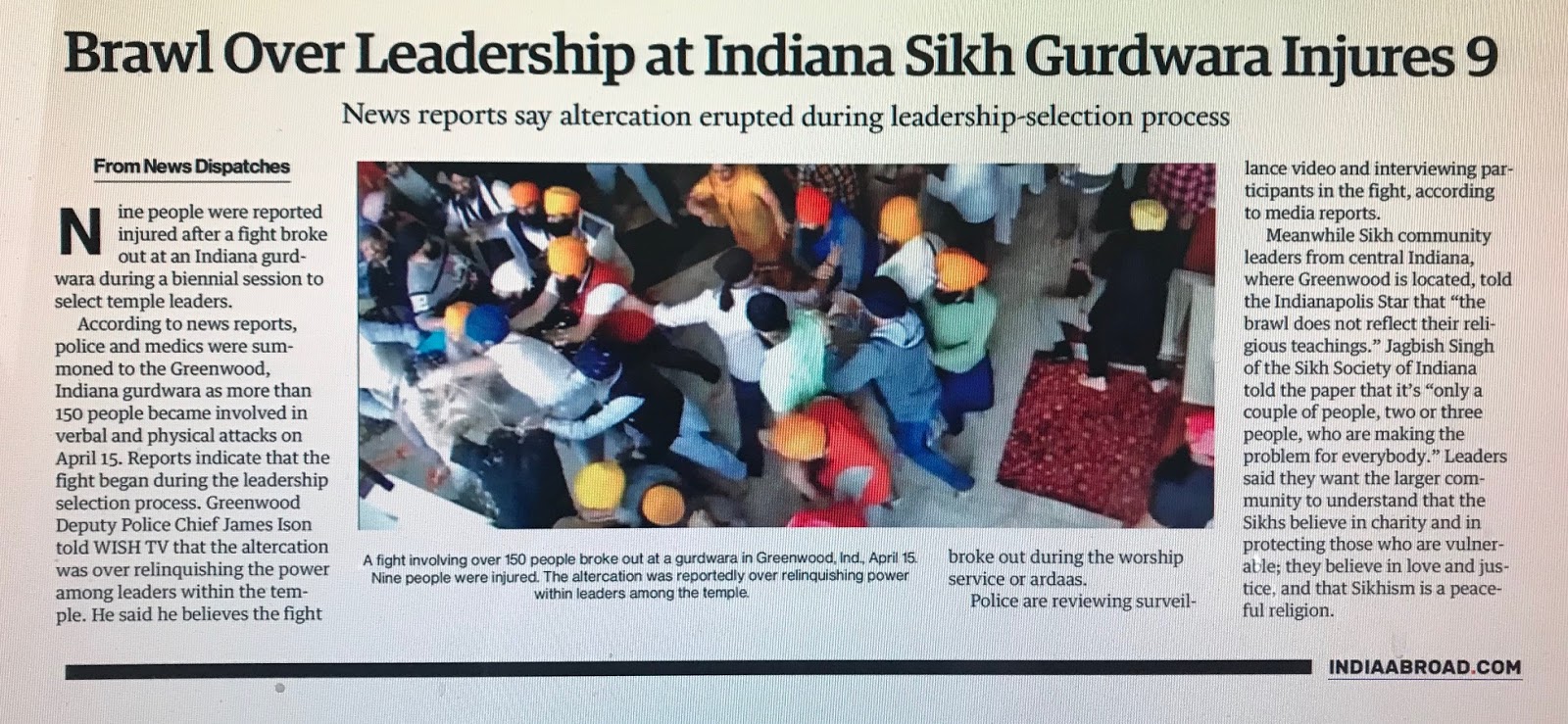
In Greenwood, Indiana, a fight broke out in the Gurdwara; it reminds me of the battle a few years ago where the Sikhs were chasing each other with swords in a London Gurdwara. Don’t laugh, we are Desis, and we always fight. 

Having visited many places of worship and connected with most ethnic communities, I have witnessed fights like this in Temples, Mosques and Churches and Gurdwaras of Desi Americans. We act in an identical fashion no matter what state we are from, or what country we are from in South Asia.  They have all fought from within and have split into two or three groups.   

In Dallas, that is my hometown, the Bengali Association, Kerala Association, Pakistani Association, Bangladeshi Association and the Hindu Temple have all gone to the courts, as they could not sit down and talk with each other.  Hey, we are Desis,’ and we love to fight for no reason, we have to show the other to be an inferior being.  Let me make it clear; it is a just a handful of us in each group, not all of them.


As long as we are a small group, we work together cohesively. But once we grow in size, we fight for control, even in America! I was in India in August 2017, and I could hear the same fights in the Mosque and the Temple several blocks away. I was tempted to go to calm them down, it has worked every time. I don't know what it is, people will listen to me.

In a Mushaera program, I was able to pull the big guy out of the hall before he could start the fight, and the same thing happened at the Hindu Temple - two guys got into hand and fist fight and others were joining them.  My printer and his wife were at each other's throats I pulled them apart and worried about him beating me up. Later on, while driving home, I was thinking - those guys could have thrashed me but they didn't, why?  The only answer I could find was, I had nothing to gain from it and they recognized it and listened. I always wondered why the British were afraid to mess with Gandhi, or why were they afraid of MLK?   

Of course, there are many good organizations run very well by the Desi Americans, and that is the norm. What we usually talk is exceptions, as that is the only area that needs attention.

I must give credit to a few organizations, and one of them is India Association of North Texas. They are not free from conflicts and pettiness, but the majority of them are good people and follow the rules.  The elected officers respectfully step down and celebrate the past executives, unlike other organizations where they don’t.  Indeed, many of the organizations shamelessly disrespect the previous team, even in a sports association like Cricket.

IANT is an exemplary organization, and I am proud to be a life member of the organization. When I see the conflicts elsewhere, invariably, I talk about IANT in glowing terms.  When I retire, I will do my share of work in adding whatever I can to its inclusiveness. My late wife Najma admired each one of them for their volunteerism.  Dallas is my home and I will come home when I get the things done that I am set out to do; Establish and fund the Center for Pluralism.

If we can learn to respect the otherness of others and accept each other's uniqueness, conflicts fade and solutions emerge.
CBS reports this picture of Gurdwara, and the name on truck matches with the name of the town, down below in the Times of India, the Gurdwara is not the same, it does not have the Golden domes. 

One Jagbish Singh from Indiana said it right, “The brawl does not reflect their religious teachings, it’s “only a couple of people, two or three people, who are making the problem for everybody.”  Indeed, all the problems in the world we have are three are four people.

REENWOOD, Ind. -- Police say a brawl at a Sikh temple in suburban Indianapolis has left four people with minor injuries. Greenwood Assistant Police Chief Matthew Fillenwarth says police and medics responded Sunday to a verbal and physical fight involving about 150 people at the Gurdwara Sikh temple in the city just south of Indianapolis.
CBS affiliate WTTV-TV reports the altercation began as there was a change of leadership within the temple that he says happens every two years. Fillenwarth says it's believed that there was a worship service going on when the fight broke out.
WTTV reports the ceremony in question can include daggers. Police were still investigating whether pepper spray or any weapons were used during the incident. No weapons were recovered at the scene.
Fillenwarth says four people suffered minor injuries and were taken to a hospital, where they will be questioned by police.
Police are reviewing surveillance video from the temple and interviewing other participants in the fight.

© 2018 CBS Interactive Inc. All Rights Reserved. This material may not be published, broadcast, rewritten, or redistributed. The Associated Press contributed to this report.

Sunday, June 21, 2015

Happy Fathers day - a tribute fathers

Happy Father's day | The Ghouse Diary.com

On  this father's day, I will be dedicating half an hour to reflect on my father; Mohamed Abdul Rahman.  He is one of my mentors, and an affectionate and caring father who opened many windows of knowledge for me.
If I am a pluralist today, if I respect the otherness of others and have no prejudice towards others, it was his teaching; living by example.  With what happened in Charleston two days ago, McKinney a few weeks ago, Baltimore and St. Louis a few months ago, his stand on equality in thoughts, acts and talks makes a whole lot of sense.  

If you are one of the parents who teach your children to look down on people other than your own kind, you are essentially running a sewer in their body system and messing them up for a life time. It would be difficult for them to live with people who are different than them.  You must turn in yourselves into some educational courses to set yourselves free from prejudices. If it is you, please go to interfaith meetings and  inter cultural events, it will gradually fix you up by removing the sewer line and replacing it with oxygen. 

In the 1950’s and 60’s India was pretty much like the United States, both nations treated their Blacks and Dalits shamelessly. The Dalits, also known as untouchables were not allowed to step in your homes – my father broke all the wrongful norms of the society, not only did they come in our home, they also ate from the same plates as we did, and drank the tea from the same cups. Both of my parents were free when they left this world, they were mukt, got their moksha earned their nirvana and received their salvation with Nijaat.

It was a big no-no at that time,  and many of his friends said unsavory words, but my father stood his ground. I see that streak in me playing it out all the times. Thank you Dad for inculcating the value of treating every human with full dignity, and that is just one of the thousands of things you blessed me with. I love to see all of God's creation treated fairly and justly.

Indeed, my father endured criticism and some abuse from his conservative friends; Hindus, Muslims and others at that time.

 My parents told us (me and my siblings) that we are all one family, from Adam and Eve and that we will have differences and have to learn to live with each other. they often quoted the verse from Quran, to respect the otherness of others - Lakum dinakum Wali addin.

My prayers also go to my father figure Mr. Everett Blauvelt, who opened the doors for me to enter the United States.  He was indeed a very caring man and named me Mike. He was a good listener.

I miss them both today. I also appreciate my friends who are father figures to me - Davendra Maini, Bill Matthews and Harbans Lal.

My heart goes out to those who did not have a good relationship with their fathers but, despite that they have survived, and they can give that affection to their off springs and others. Father's day is a difficult day for them, while others are cherishing their fathers, they are struggling with mixed feelings to the feelings of hate. It's not easy, and there is no quick fix to it, other than reflecting on it, and taking the responsibility to your own life. Life is given to each one of us as a trust,  and at least we can live up to it.
Life is all about expressions and completing transactions. Every emotion, thought, action or a change creates a new debt or a favor that needs to be re-balanced. Obviously we cannot reciprocate the favors in full, but we have been able to do that with a thank you in the most simplistic way and that is good enough.

One of the incomplete transactions of my life was not being able to do the things I wanted to do for my father. As a kid I would step in and take over the work from him so he can take rest, an Indian tradition that I cherish. When I moved to Saudi Arabia on an assignment, I sent my first check to him with which he started paying off my loan. With the next check I asked him to buy clothes for the family and wanted him to replace his old black Jacket he wore forever with a new one. He said no, first things first. In the first week of December 1977 my check paid off all my loans, and with the next check I asked him to oblige me, and he said he will. Man, I am feeling a deluge of emotions as I am writing this for the 2nd time, darn it. my eyes are welled up again.
 
He did not get the check; he passed away a day before receiving it.  He lived up to his own words, "Until my last breath, I will be earning my living and taking care of my family." Darn it, he did it. I was angry for my helplessness, and was happy that the man kept his word. But that created a huge vacuum in my life and I continue to recover my balance by serving the senior friends in whatever little way I can. You can always count on me to drop everything off to attend to a senior's request.

My father is my hero and opened the doors of wisdom to us. Pluralism indeed runs in my family. He taught one of the biggest lessons of my life in social cohesiveness and dealing with extremism that I continue to reflect in my talks, acts and write ups.

During the communal riots in Jabalpur (India) in the early sixties, both Muslims and Hindus were killed in the mayhem. I wish every father in India, America and elsewhere teaches this lesson to his kids. He was crystal clear on his take; He told us the "individuals" are responsible for the bloodshed and not the religions; he would emphasize that you cannot blame the intangible religion and expect justice, we must blame the individuals who caused it and punish them accordingly for disturbing the peace and thus bring a resolution to the conflict by serving justice. He said you cannot annihilate, kill, hang or beat the religion, then why bark at it?
 
My father was a Mayor of the Town of Yelahanka (The town gave birth to Bangalore in 1537) and served the council for many years. He was also the president of the Muslim Association of the town. We grew up with no barriers between us and other human being. 

He treated all of us kids with dignity and I am pleased I got to be disciplined at least once in my life. I guess I replicated that with my children to the point my kids would actually say, Dad, you should have disciplined us. I did not see the need for it. I am fine and they are fine too. I gave them the cold shoulder that my father had given me to straighten me out, and it worked both ways, although my daughter was a tough cookie, she would not budge.
 
I was about ten years old and watched a man fall off his bicycle with his big bag of rice and was struggling to get back on it, and I wasn't going to help him, instead I was laughing at him. I saw my father about 100 feet away and the way he sped towards me, which got me frightened for the first time, I dashed inside the home and a few minutes later after helping the guy,  he came in dashing… I climbed on top of the paddy bags in a corner of the house, I thought he could not get me there, so he goes outside and plucks a long branch off the mulberry tree and gives me a few good ones. "My son will never do that" after that conditioning, I have developed the habit of stopping for everyone who needs help. I dare not watch and not do something about it.

To those who have not had a father or had a negative experience, God has offered guidance through the instrument of forgiveness to release you from the pain. Just do it. I will be happy to be a big brother or even a father figure in the moment of your need. It's an open offer to call me at (214) 325-1916, let’s keep it to 5 minutes.
 
God bless us all, Amen!

Thank you,
mike ghouse   
(214) 325-1916

Mike is a speaker, thinker, writer, pluralist,  TV-Radio commentator and a human rights activist committed to building cohesive societies and offers pluralistic solutions on issues of the day. His info in 63 links at MikeGhouse.net and writings at TheGhouseDiary.com 

Saturday, May 9, 2015

India's Five Greatest Empires of All Time

With an exception of a few Kings, most all of them were thief's - they only business they had was to kill the next king, annex his territory, loot the wealth and take the women.  Whether it is the Europeans, Indians, Arabs, Chinese - Christians, Muslims, Hindus or Buddhists, the story is same - kill and rob others to make your own good.   Is that what made them great?

Thanks to America for inventing Democracy, at least there is a will of the people here, and
Thanks to Pandit Nehru for nurturing India to be a stable, secure, safe, and secular democratic nation.

I shudder at the thought of what India would have been if it was not for Nehru, Ambedkar, Patel and Azad. Thanks to them for passing on a great India into the hands of Lal Bahadur, Gulzari Lal, Indira, Morarji,  Rajiv, Atal, Manmohan and Modi. Although Indira messed up with emergency the first time, almost all of them have done a great job in preserving the democratic, secular pluralistic credentials of India and I hope Modi keeps it going. Now, It is in our hands to keep India great and have it continue on its pluralistic ethos - respecting the otherness of others.

What would make India truly great? It is when every Indian feels free, safe and secure to pursue his/her own happiness. Greatness does not come from conquests, authoritarian, iron fist or fascist rule, but from caring and being just for every citizen.
 
Happy Mother's day - here is my interfaith Mother's day message.
http://www.huffingtonpost.com/mike-ghouse/mothers-day-interfaith-ce_b_7233900.html
Jai Hind

OUR FLAG
 

Mike Ghouse
MikeGhouseforIndia.blogspot.com

 
http://nationalinterest.org/feature/indias-five-greatest-empires-all-time-12833?page=show


India's Five Greatest Empires of All Time

You won't believe what these states accomplished...
Akhilesh Pillalamarri
May 8, 2015

 
South Asia is like a world unto itself. Also known as the Indian subcontinent, its particular geography and climate have always led to it having distinct sets of histories and cultures. Currently, over a fifth of the world’s population lives on a landmass almost the size of Europe excluding Russia—it contains deserts, polar-like conditions, rainforests, plains, hills, and temperate forests. In short, South Asia is a microcosm of the world.

Therefore, it should come as no surprise that its history is complex, with empires, states, and independent cities often coexisting together in the region. South Asia’s historical political configuration bears more resemblance to Europe’s than China’s: a recurring theme in South Asian history has been the difficulty of creating and maintaining empires that span the entire subcontinent, with smaller, regional states being the norm. As in traditional Hinduism's idea of reincarnation, empires are born to die, only to give rise to new empires, which then fall, in a never-ending cycle.

With that in mind, here are South Asia’s five greatest empires. Since the Mughal and British Empires are well known to western audiences, I have decided to omit them and focus on the pre-European, pre-Islamic empires of South Asia.

Maurya Empire

The Maurya Empire (320-185 B.C.E.) was the first major historical Indian empire, and definitely the largest one created by an Indian dynasty. The empire arose as a consequence of state consolidation in northern India, which led to one state, Magadha, in today’s Bihar, dominating the Ganges plain. In the wake of Alexander the Great’s invasion of northwest India, one Chandragupta Maurya took over Magadha and created the Maurya Empire.

The empire was initially very successful both internally and in terms of foreign policy. Many of its policies were set out by Chanakya, Chandragupta’s minister, who wrote a book advocating a strong, centralized, authoritarian state, TheArthashastra. After a treaty with Alexander’s generals, the empire acquired territory in Afghanistan and Iran. By the time of Chandragupta’s grandson’s reign, the empire included most of South Asia except the southernmost parts of it. This grandson, Ashoka, is famous for having embraced Buddhism due to remorse after his bloody conquest of Kalinga (today’s Orissa) around 260 B.C.E. This elevated the nascent religion.

The Maurya Empire collapsed not too long after Ashoka's death in 232 B.C.E.  Some historians have argued that the elevation of Buddhism was responsible for this as it is not as compatible with running a state as Hinduism. However, the empire’s fragmentation reveals the problems of actually maintaining an empire in a region as diverse as South Asia. Despite Chanakya’s book, the empire depended less on institutions than on able rulers, the lack of which doomed it and led to increasing local rule.

Kushan Empire

The Kushan Empire (135 B.C.E.-375 C.E.) was founded in the Bactria region of northern Afghanistan by Yuezhi nomads who migrated there from Xinjiang due to Han Dynasty campaigns. Once there, they displaced the Greco-Bactrian kingdom and expanded over the Hindu Kush mountains into today’s India and Pakistan. At the height of their empire, they controlled most of the Ganges valley and an arc that extended through Afghanistan and Central Asia into Xinjiang. It was under their reign that trade routes developed between India, China, Persia, and Rome.

Under the influence of the Kushans, who eventually moved their capitals to Peshawar (in Pakistan) and Mathura (in India), Indian influence, especially Buddhism, became predominant across Central Asia. This tendency reached its height under the Emperor Kanishka (127-151 C.E.) who convened the 4th Buddhist Council—essentially converting Buddhism into a state religion; Kanishka also expanded his empire deep into central India.

Ultimately, however, the empire fragmented into many principalities and was replaced in North India by the resurgent Hindu Gupta Empire while its Afghan territories became tributary to the Persian Sassanid Empire.

Gupta Empire

The Gupta Empire (320-550 C.E.) was a great empire but also had a mixed record. Like the previous Maurya Empire, it was based in the Magadha region and conquered much of South Asia, though unlike that empire, its territory was limited only to what is today North India. It was under Gupta rule that India enjoyed the height of its classical civilization, its golden age, when much of its famous literature and science was produced. Yet, it was also under the Guptas that caste became rigid while the decentralization of power to local rulers continued.

After a period of initial expansion, the empire stabilized and did a good job of keeping out invaders (like the Huns) for two centuries. Indian civilization expanded into much of Bengal during this time, which was previously a lightly inhabited swampy area. The main achievements of the Guptas during this era of peace were artistic and intellectual. During this period, zero was first used and chess invented, and many other astronomical and mathematical theories were first elucidated.


Ads by Adblade
Trending Offers and Articles
http://web.adblade.com/clicks.php?appId=17021&zid=5547c4ff8fbf6&adId=202023&pos=1&impt=1431118372&zoneId=1051&algid=2&reqid=534d535812d76043&ord=1431118372&url=http://nationalinterest.org/feature/indias-five-greatest-empires-all-time-12833?page=showIf you & your mate are not doing any of these 17 things, your relationship might be on the rocks.http://web.adblade.com/clicks.php?appId=17021&zid=55267d5857c1c&adId=194251&pos=2&impt=1431118372&zoneId=1051&algid=2&reqid=534d535812d76043&ord=1431118372&url=http://nationalinterest.org/feature/indias-five-greatest-empires-all-time-12833?page=show"The way you live, retire, and invest-it could all soon change in ways most Americans don't expect"http://web.adblade.com/clicks.php?appId=17021&zid=5547c43ad7a83&adId=202022&pos=3&impt=1431118372&zoneId=1051&algid=2&reqid=534d535812d76043&ord=1431118372&url=http://nationalinterest.org/feature/indias-five-greatest-empires-all-time-12833?page=showCheck out these celebrities with their stunt doubles & see if you can tell who's who.

The Gupta Empire collapsed due to continuous invasion and fragmentation from local rulers. Power at this point increasingly shifted to regional rulers outside of the Ganges valley.

Pratihara Empire

The Pratihara Empire (650-1036 C.E.), also known as the Gurjara-Pratiharas is little known in the West and hardly better known in India. Yet it is one of the most consequential states in South Asian history and its size and duration exceeded many other empires listed here. The empire originated among military clans in western India after the fragmentation of the Gupta Empire. This period saw the rise of the Rajputs in the deserts of parts of Gujarat and Rajasthan, who were to play an important role in subsequent Indian history. The Rajputs were Kshatriyas (a caste of warriors and rulers) who dedicated themselves to warfare, martial prowess, and fortification with a zeal previously not found in India; in this sense, they resembled the feudal knights emerging in Europe around the same time. Rajputs were fiercely independent and always held their fiefs autonomously while also allying themselves to the Mughals and British at various times.

Shortly after the rise of the Pratiharas, they defeated Arab invaders at the Battle of Rajasthan (738 C.E.), halting Muslim expansion into India for three hundred years. Later on, they set up a capital at Kannauj, near Delhi, and expanded into central India. In both western and central India, they set up a large number of fortifications, making these regions hard to conquer. More importantly, a more muscular form of Hinduism emerged in this period that provided the ideological basis for later resistance to Islam in a way that was not possible with Buddhism.

Like most Indian empires, the Pratihara Empire eventually fragmented into multiple states and Mahmud of Ghazni, an invader from Afghanistan, who took away a lot of gold and demolished temples, sacked Kannauj in the early 11th century. The Pratiharas soon petered out.

Chola Empire

While most of India’s empires have been primarily land-based powers, the Chola Empire is unique in that it was a naval empire. The historian John Keaynoted “the idea that the sea could be political, a strategic commodity in its own right dominated by a state rather than by commercial competition, was a relatively new concept for Indians.” The Cholas were based in Tamil Nadu and had been around as a minor state from the second century B.C.E. However, their imperial period began in the 10th century C.E, when they dominated all of South India.

Due to geographic and topographic reasons, the projection of military power outof South Asia has always been difficult, leading to relatively little conquest of territories outside this region by South Asian states. However, South Asia’s position on the sea is an exception to this rule, and a great naval power can use the region as a base to dominate the Indian Ocean. The Cholas knew this, as did the British later. The Cholas were famous for their maritime expeditions that gave them control over the Maldives, Sri Lanka, and the Malaysian-Indonesian archipelago by 1025 C.E. Large portions of northern India and Southeast Asia’s coasts were tributary. After a period of decline, the Chola were overthrow by a vassal in 1279 C.E.

Conclusion

After the defeat of a Hindu coalition by Muhammad of Ghor in 1192 C.E., Islamic rule began over much of northern India. At least two Muslim empires worth the name of great powers existed during this period: the Delhi Sultanate (1206-1526) and the Mughal Empire (1526-1858). Other prominent empires during this era include Vijayanagara in South India (1336-1646) and the Maratha Empire throughout most of South Asia (1674-1818). After 1757, the British Raj eventually came to dominate South Asia afterwards by defeating local rulers, the Mughals, Marathas, and Sikhs and ruled until 1947.