HOME | ABOUT US | Speaker | Americans Together | Videos | www.CenterforPluralism.com | Please note that the blog posts include my own articles plus selected articles critical to India's cohesive functioning. My articles are exclusively published at www.TheGhouseDiary.com You can send an email to: MikeGhouseforIndia@gmail.com


Sunday, November 15, 2015

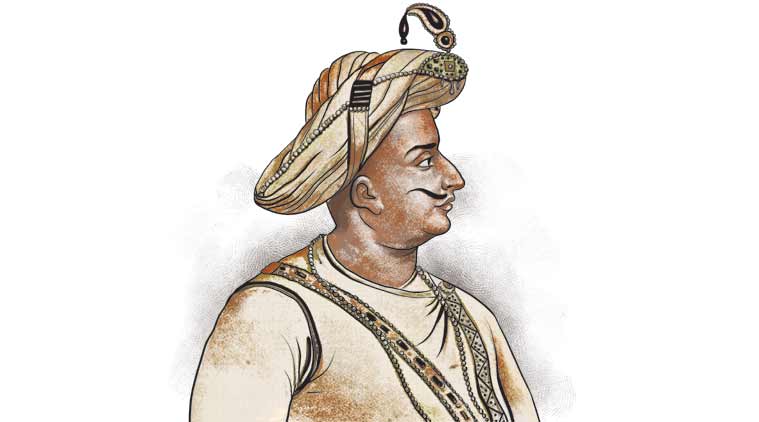
The competing narratives of Tipu: What they say, and why

Tippu Sultan is the son of Karnataka, and he cared for his people and has done a lot of good. The Victors, the British were hell bent on maligning anyone that was a threat to them, Tipu was no exception. 

What he has done for Karnataka is unmatched, he laid the foundation for industry, irrigation and communal harmony. His most trusted deputy was a Hindu, who literally raised him. 


BJP is resorting to dirty politics, that is what they have done, where ever they go, they create
problems.
Mike Ghouse

Historical evidence on the life and times of Tipu Sultan is mixed, and his assessment has often been based on current perceptions, prejudices.


Written by Amrith Lal , Monojit Majumdar | Updated: November 16, 2015 10:03 am
Tipu Sultan, Tipu Sultan controversy, Tipu Sultan issue, Tipu Sultan histy, history tipu sultan, tipu sultan story, BJP, Karnataka, VHP, India news
Tipu Sultan
Why is a late 18th century Mysore ruler at the centre of a polarising debate?
Last year, Karnataka Chief Minister Siddaramaiah announced that from now on, the state would officially celebrate the birth anniversary of Tipu Sultan, the “Tiger of Mysore”, on November 10 every year. A controversy followed, and the historical role of Tipu was debated among those who saw him as a bulwark against colonialism and a great son of Karnataka, and those who pointed to his destruction of temples and forced conversions of Hindus and Christians to accuse him of tyranny and fanaticism.
The disagreement flared up again as the planned celebration approached. The VHP began an agitation, and the BJP announced a boycott of the ceremony at the Karnataka Vidhana Soudha. On the other hand, Siddaramaiah insisted Tipu was a patriot and “true secularist”, and speaking at the Vidhana Soudha function, playwright and Jnanpith awardee Girish Karnad said Tipu would have been as revered in Karnataka as Shivaji was in Maharashtra if only he was Hindu. Karnad also said that Tipu was born in Devanahalli, where Bengaluru airport is located, and the airport should ideally be named after him.
On November 10, a 67-year-old VHP leader was killed after falling off a wall while trying to dodge bricks thrown by protesters in Kodagu. A day later, a Muslim man succumbed to a bullet injury he suffered apparently while participating in a pro-Tipu protest. Girish Karnad and Pratap Simha, the BJP MP from Mysuru who has been leading the protests against the Tipu celebrations, have received death threats online, allegedly from opposing camps in the quarrel.
So, who was Tipu Sultan and when did he rule? What is he best known for?
Tipu Sultan was the son of Haider Ali, a professional soldier of humble origins who started out as a junior officer in the army of the Wodeyar king of Mysore, and rose rapidly to ultimately take power in 1761.
Tipu was born in 1750 and, as a 17-year-old, participated in the first Anglo-Mysore War. He subsequently fought against the Marathas, and in the Second Anglo-Mysore War of 1780-84. Haider died while the war was on, and Tipu succeeded him in 1782. The war ended with the Treaty of Mangalore, at which Tipu had the upper hand.
In India’s wider national narrative, Tipu is a man of imagination and courage, a brilliant military strategist who, in a short reign of 17 years, mounted the most serious challenge that the English East India Company faced in India. He engaged Company forces in four rounds of fighting during 1767-99, and gave Governors-General Cornwallis and Wellesley sleepless nights before finally being killed on the battlefield defending his capital Srirangapatnam in the Fourth Anglo-Mysore war. With Tipu gone, Wellesley imposed the humiliating Subsidiary Alliance on the reinstated Wodeyar king, reducing Mysore to a client state of the Company.
Tipu was a moderniser who reorganised his army along European lines, using new technology, including what is considered the first war rocket. He devised a comprehensive land revenue system based on a detailed survey and classification of land, in which the tax was imposed directly on the peasant, and collected through salaried agents in cash, widening the resource base of the state. He worked to modernise agriculture, giving tax breaks for developing wasteland, building new irrigation infrastructure and repairing old dams, and promoting agricultural manufacturing and sericulture. He sent ambassadors to Europe to learn technical knowhow, built a navy to support sea trade, and commissioned a “state commercial corporation” to set up factories outside Mysore. Mysore started trade in sandalwood, silk, spices, rice and sulphur, and ultimately came to establish 30 trading outposts across Tipu’s dominions and even overseas.
Why is he then seen unfavourably?
As with nearly every historical figure, perspectives on Tipu differ. Both Haider and Tipu had strong territorial ambitions, and invaded and annexed territories outside Mysore. Haider annexed Malabar and Kozhikode, and then conquered Kodagu, Thrissur, Kochi and Mayyazhi (Mahe). Tipu went to war with the English and Marathas, raided Kodagu, and crushed revolts in Kochi and Travancore.
Not surprisingly, in these areas, the narrative of his reign is markedly different. In Kodagu, Mangaluru and Malabar, he is seen as a bloodthirsty tyrant, who burnt down entire towns and villages, razed hundreds of temples and churches, and forcibly converted Hindus. This narrative is sometimes backed by a historical record that has Tipu himself boasting about having forced “infidels” to convert to Islam, and destroyed their places of worship.
Is there any scope for the two opposing narratives to be reconciled?
Real or imagined differences between any two opposing historical narratives appear sharpened periodically — most commonly in the context of current political battles. The disagreement over Tipu is old, and has combusted every few years after ‘political’ provocation. The current escalation probably cannot be separated from the larger context of majoritarian muscle-flexing by Hindu extremists across the country.
Much of the criticism of Tipu is rooted in accounts of those he vanquished — and of colonial historians who had powerful reasons to demonise him. Tipu defeated the Company in wars, allied with the French to frustrate its attempts to control politics of the Deccan and Carnatic, and sought to challenge its vital trading interests. Tipu’s keenness to subjugate Kodagu was linked directly to his desire to control the port of Mangaluru, on whose path Kodagu fell. Tipu battled nearly all powers in the region, irrespective of the faith of his opponents. It is likely that his Islamic zeal had something to do with finding ideological ballast for relentless warring.
To argue, like Siddaramaiah, that Tipu was a nationalist patriot and secular, is futile. Neither nationalism nor secularism is a philosophy that existed in the 18th century. To read these modern concepts back in time is misleading and fallacious. If Tipu fought the British “only to save his kingdom”, so did every other pre-modern ruler in history.
If there is evidence that Tipu persecuted Hindus and Christians, there is enough evidence too of his patronage of Hindu temples and priests, and of handsome grants and gifts to them. His patronage of the Sringeri mutt and donations to temples at Nanjangud, Kanchi and Kalale are well documented.
Tipu was a multilayered personality who must not be seen through the prism of morality or religion. It is not necessary that he be judged either as a hero or as a tyrant.
How does the conflict fit into the politics of Karnataka today?
The Congress and socialists see Tipu as a nationalist figure because he fought the East India Company. His building of roads, a centralised administration, irrigation systems and a modern standing army is stressed to decommunalise his legacy. Championing Tipu as a “statesman” is in line with the Congress’s religion-neutral nationalist tradition.
The row over Girish Karnad’s suggestion on renaming Bengaluru airport reflects something different. The airport is named after Kempe Gowda, a chieftain revered by the Vokkaligas, the core base of the JD(S). The party has picked on Karnad’s remarks, and forced the CM to distance himself from them.
For the BJP and the Parivar, the Tipu controversy is an opportunity to push the political conversation to religious identities and force a polarisation. Siddaramiah, who has built a broad coalition of OBCs and minorities with reasonable success, now faces a challenge from Hindutva politics.
What happens now? How far can this disagreement go?
State Assembly elections are due only in 2018, but Siddaramaiah’s celebration of Tipu has given the opposition an issue to galvanise cadres and target the government.
When linguistic states were formed in the 1950s, many regions that read their historical past differently were merged under a common linguistic identity. Kodagu, now part of Karnataka, has always seen Tipu as an invader — the old Mysore state’s narrative of him as a moderniser was unlikely to be acceptable only because it was now the official state narrative. The Marathas are an exception who found pan-Indian acceptability overcoming past narratives in regions they conquered. Karnad’s point that the evolution of the Marathas into pan-Indian icons was helped by the fact that they were Hindus, is significant.
In much of India, history continues to be seen through an ethnic, communal, regional or religious lens. There is every possibility, therefore, of the Tipu controversy being raked up again.

Saturday, November 14, 2015

Diwali Message from Americans to Indians and Pakistanis

Mike Ghouse

November 11, 2015 - Sterling, VA - The Adams Center Mosque in Sterling, VA - a suburb of Washington, D.C held an interfaith gathering to celebrate Veterans Day, Diwali, the 50th Anniversary of ISNA (Islamic Society of North America) and for a motivational talk by Dr. Raj Mohan Gandhi, grandson of Mahatma Gandhi.

The American Muslims congratulate Hindus, Sikhs, Jains, Muslims and others around the world on the happy occasion of Diwali. Diwali Mubarak!  Diwali ki Shubh Kamnayein - Happy returns of the day.

A few years ago, at the White House Diwali celebrations, to the surprise of some 300 Hindu leaders gathered from around the United States, a Muslim leader was invited to address the Diwali function, and they found Dr. Sayyid M. Syeed's message very inspiring. No wonder he received a roaring applause. It was apparent that the gathering had found a true interfaith leader.  


Dr. Syeed is the National Director of the office for Interfaith and Community alliances for the Islamic Society of North America (ISNA). As a man dedicated to building harmony and good relationship among the faith communities, he quoted the Quran, "Minaz Zulumati Ilan Noor (from Darkness to Light).' The broader meaning is 'to ease from difficulties," that is indeed the essence of Diwali, the wining of goodness over evil and seeking God's guidance to take us from darkness to the light.

A few years ago, Jyoti Bhatia, former President of the Dallas-Ft.Worth Hindu Temple, and Nishi Bhatia, President of the Dallas Hindi Association asked me to speak about Diwali at a dinner gathering to a group of people from different faiths and cultures. I cherished the opportunity, and loved talking about Diwali, as its essence reflects the ideals of pluralism, and symbolizes hope and positive energy, victory of good over evil; a new beginning. Diwali indeed is all about seeing the light at the end of the tunnel.

The Diwali Celebration is a part of the epic Ramayana, and the Ram Lila (enactment of the story on stage) which are played out all night long in towns across India. I grew up watching it in front of my house, and my friends played different roles in the show. Indeed, one of my former relatives played Hanuman's role.

It was a challenge for me to tell the story of Ramayana to a group of people who knew nothing about it, and in 30 minutes!  Thank God, it turned out to be a successful program. The audience was informed that the story would be narrated through slides and along with the names of key persons, the story would be reiterated, and at the end they would be asked for feedback.   The Bhatias and I felt amazing joy when each one of them answered the questions from the story. Eureka, they got it!  

Although Diwali is a Hindu tradition, people of all faiths participate in its celebrations - Hindus, Jains, Muslims, Sikhs, Christians, Buddhists and others.

Appeal to the Indians and Pakistanis

On this Diwali, I appeal to the Indians to shed their ill-will towards Pakistanis and vice-versa; it has not done any good to anyone but has given grave heartaches.  Let's free ourselves from the influence of politicians who rejoice in creating ill-will between people, and let's pray that our politicians clean up their hearts and live a serene life and let others live in peace and harmony.  

Pakistani Prime Minister Nawaz Shariff assured his fellow countrymen who are Hindus that he will stand by them against injustice, and added, "Every community living here whether Hindu, Muslim or Parsi, belongs to me and I belong to them. I am the prime minister of all communities, he said, while addressing a ceremony to mark the Hindu religious festival of Diwali.  He continued, "It's my duty to help and facilitate you. If you are in distress, I will stand with you. Even if a Muslim commits an injustice, I will stand with the victim." Meanwhile, the PM announced the construction of Bhagat Kunwar Ram Medical Complex in Hyderabad and the Guru Nanak Gurdwara." – The Tribue.com 

There is a saying in Urdu/Hindi language, "Der aayed, durust aayed" - that is, "Even if you are late, I am glad you made it right. 

It is a good start. Someone has to be the first, and now I hope and pray that Narendra Modi starts wishing fellow Indians who are not of his faith on their happy occasions. It can be his first goodwill step.

If Modi and Shariff take the right steps, more people will follow them and good has to come in the end, and the darkness has to end.

A few Muslims do bad things, just as a few Hindus, Christians, Jews, Buddhists, Sikh, Jain and others do.

The teachings of Quran and Bhagvad Gita must be honored in the truest sense; of course, some will misinterpret both texts.  Any interpretation of the holy books that causes one to be biased towards fellow beings cannot be right - cannot be divine words.  We should quit making a villain out of God.  Indeed, Dr. Raj Mohan Gandhi's message to the congregation at the Mosque was to struggle (Jihad) against bias, if you found you are biased towards others, conquer the evil within yourself, be a winner, be the Ram.

Nawaz Shariff invoked the words of Prophet Muhammad (pbuh) - "If one of you is unjust to a fellow being, on the Day of Judgment, I will stand up against you and support those whom you were unjust towards."  That is the Islamic teaching. God in the Quran repeatedly says in so many different words that Justice and Mercy are the two pillars of a good society.  You have to throw away the lenses of ill-will to see the beauty in each holy book.  Bhagwad Gita, Granth Saheb and other holy books offer the same sane advice.

My appeal to all of you is to drop the bias against the other. If you hate someone, hate what that individual did to you, and not the parents, siblings, community, townspeople, or fellow religionists.  Try this today; cherish the serene pleasantness you feel inside of you… that is your real heaven!

May this Diwali take us all from the darkness to the light, Amen!  

Dr. Mike Ghouse is a community consultant, social scientist, thinker, writer and a speaker on Pluralism, Interfaith, Islam, politics, human rights, India, Israel-Palestine and foreign policy. He is committed to building cohesive societies and offers pluralistic solutions on issues of the day. More about him in 63 links at www.MikeGhouse.net and the bulk of his writings are at TheGhousediary.com 


Friday, November 13, 2015

Is Modi redeemable?

I was one of the few moderate voices who believed Modi was redeemable, and I thought his good talk must be encouraged. I wrote several good pieces about him but that was all in vain.

In the last three months, we have found out that he cannot help with what he is trained to believe - everyone including his admirers like Tavleen Singh and Madhu Kishwar have given up on him.

He had told Bajrangi Babu during Gujarat Massacre to go ahead to finish it (slaughter Muslims) in three days, then the military would come and his hands would be tied after that. This Babu proudly tells that he pulled a baby out of a pregnant woman's womb and chopped him up with this sword; Modi protected him by transferring three judges who were handing his case.  It appears that he has a hidden agenda, which probably says, go ahead and finish it in three years, let freedom go to hell.

Is he still redeemable? Will he speak up against evil acts of his partymen? He has not spoken against the murder of Kalburghi, Akhlaq, burning of two Dalit children and much more.


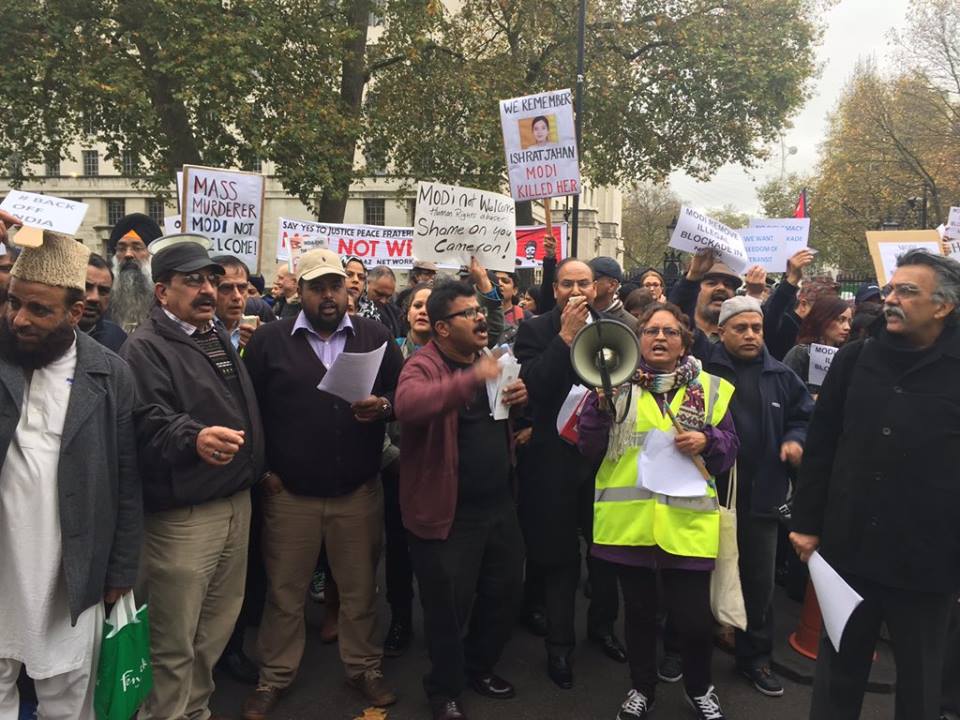
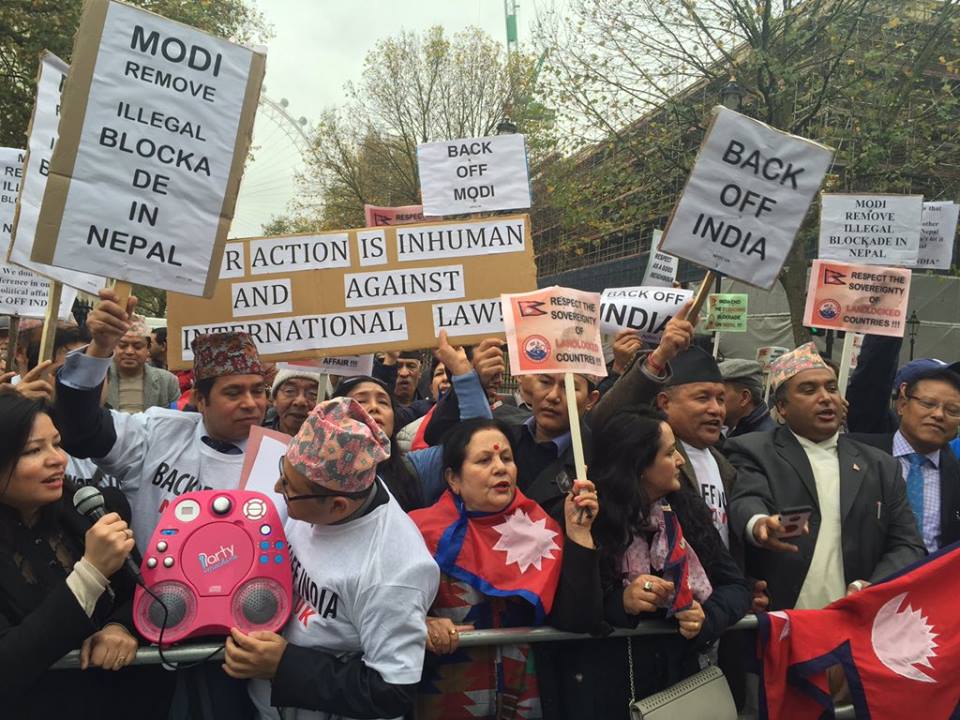
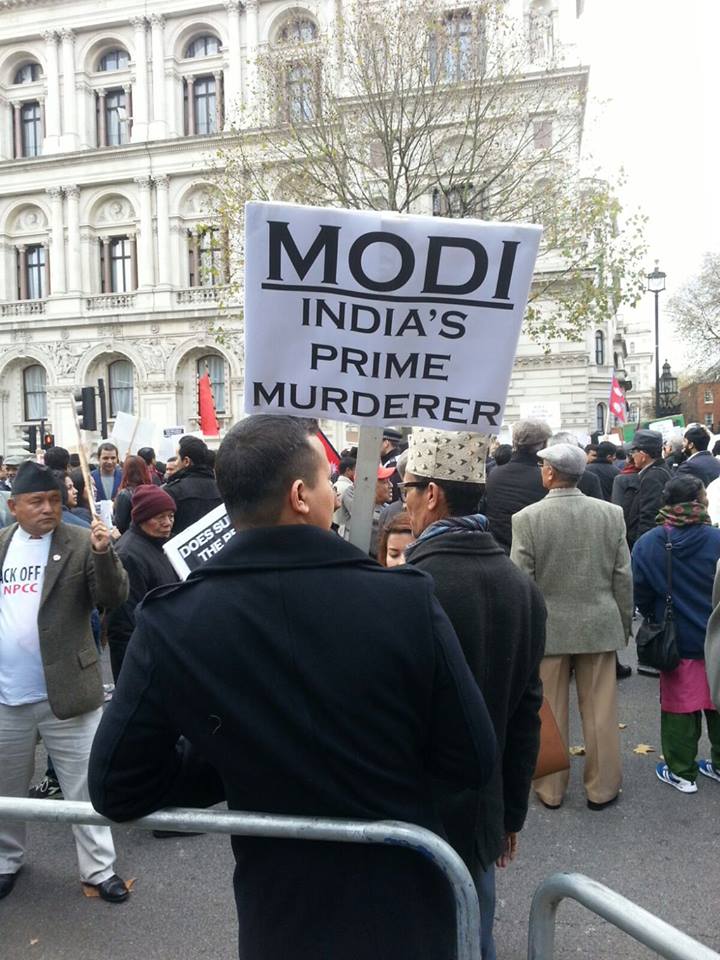
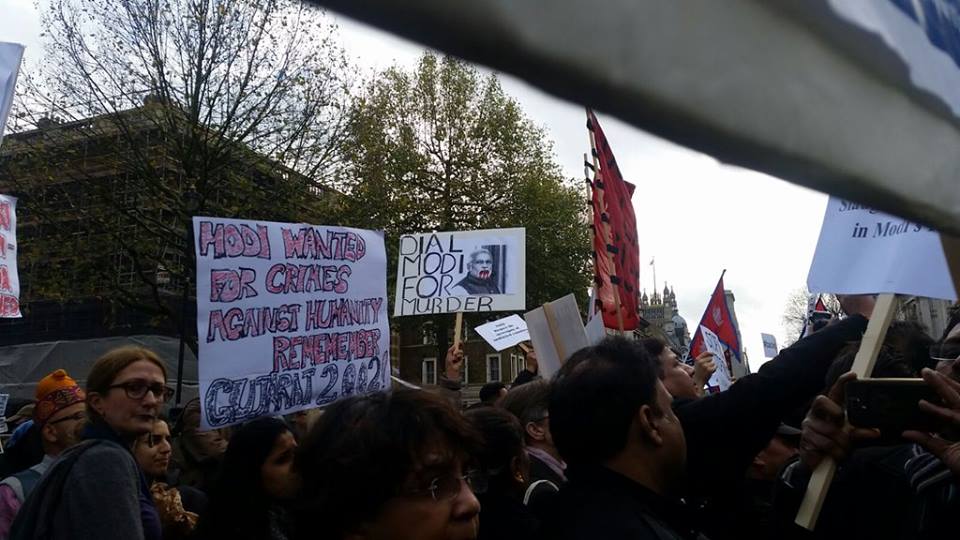
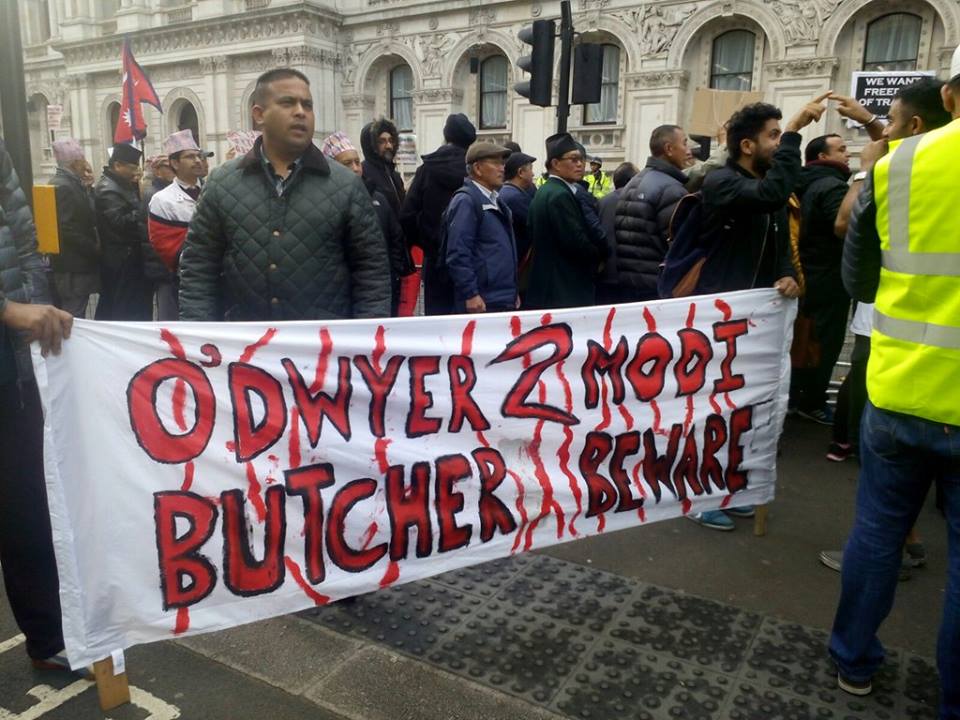
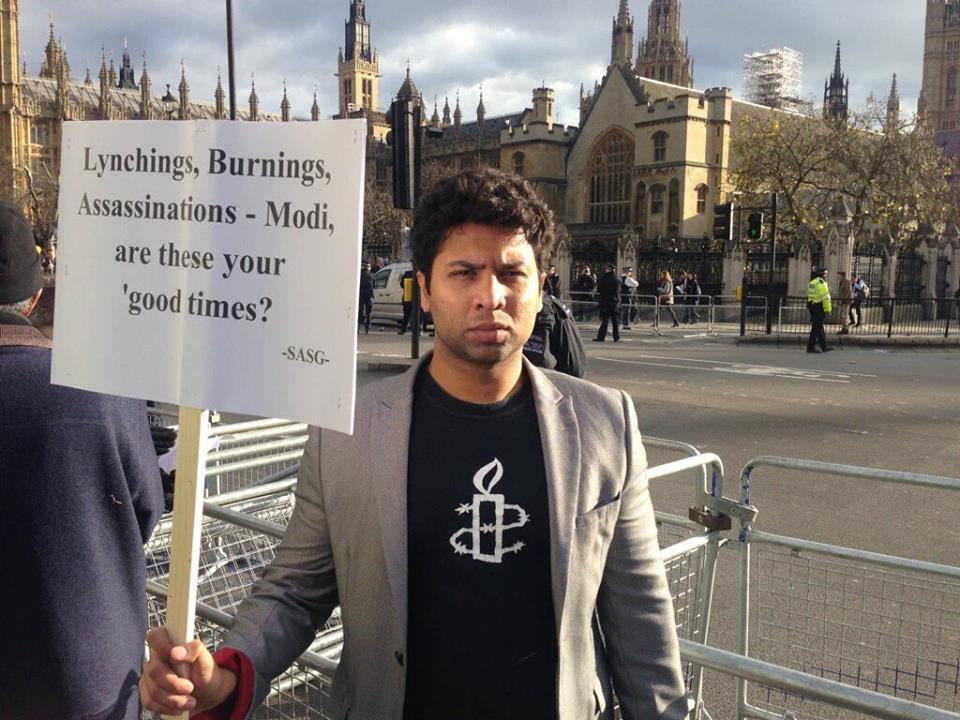
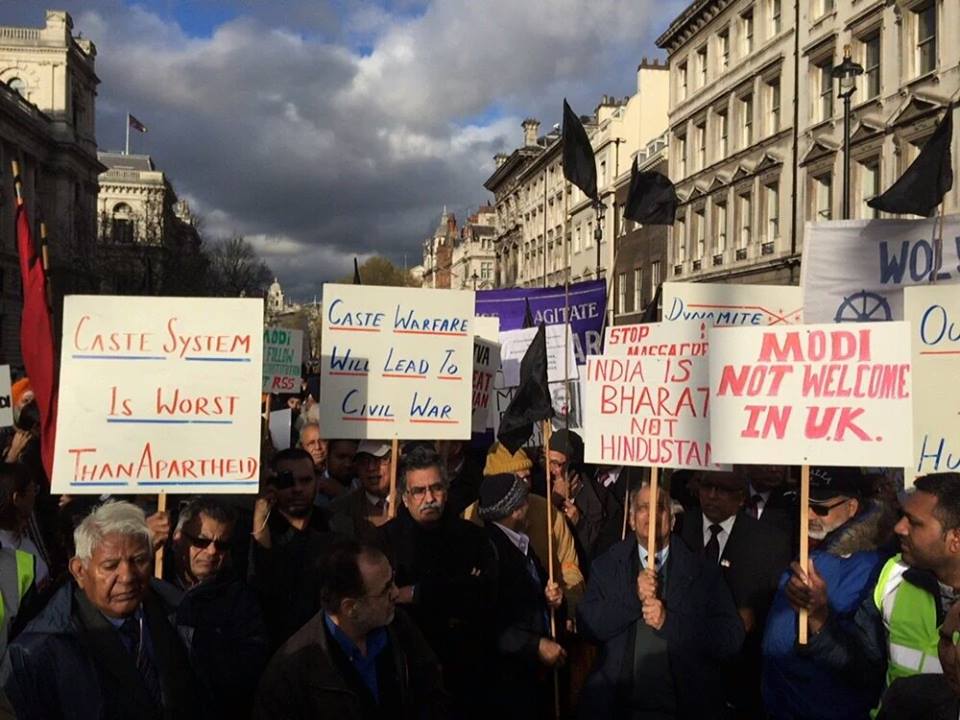
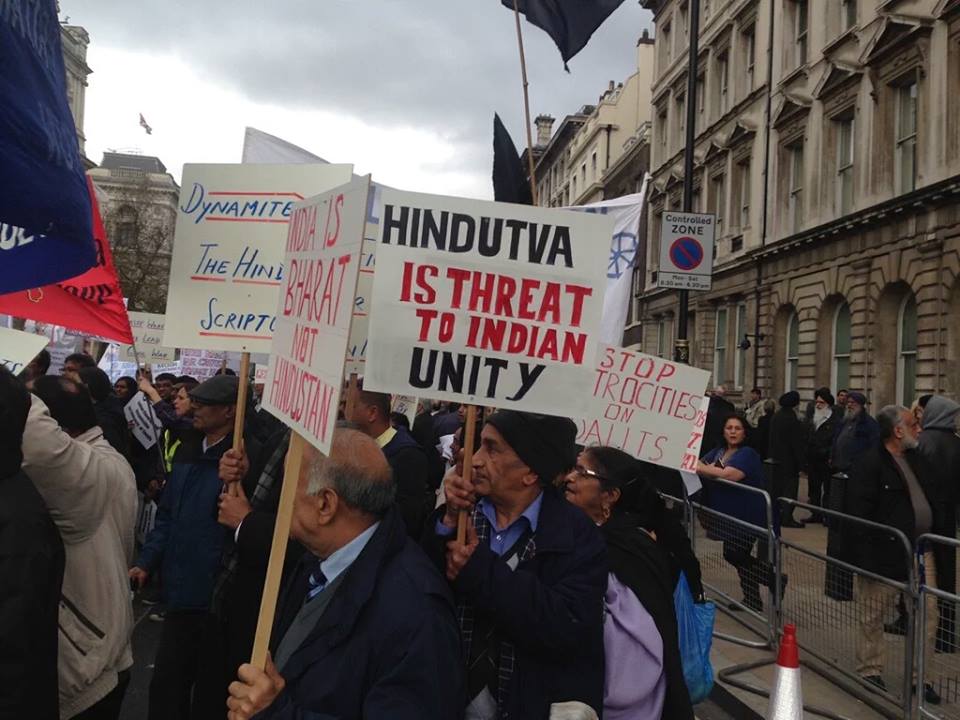
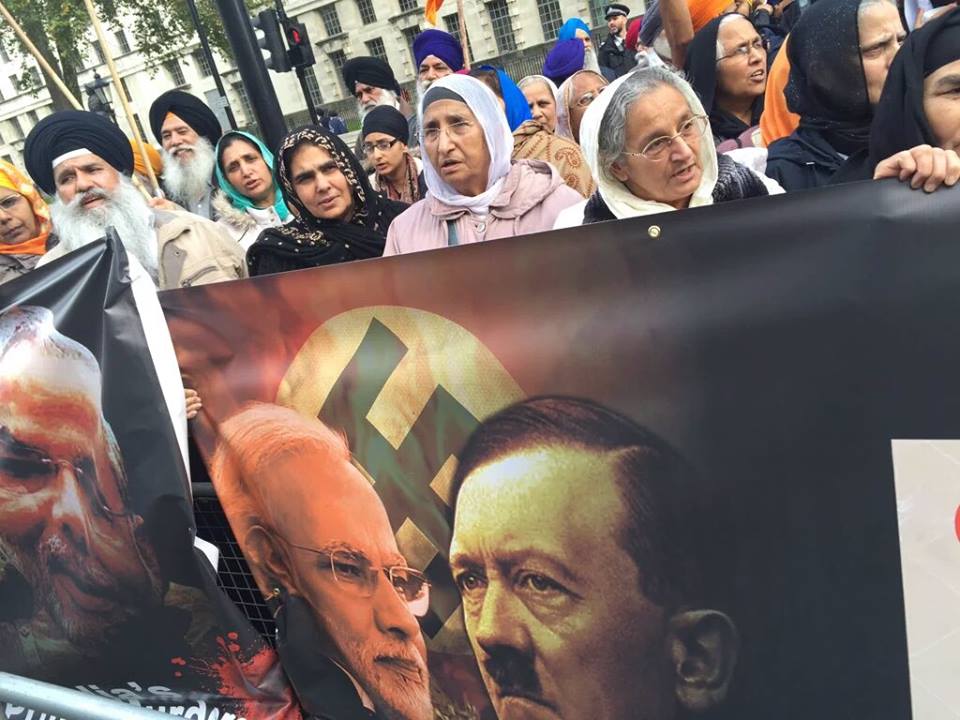
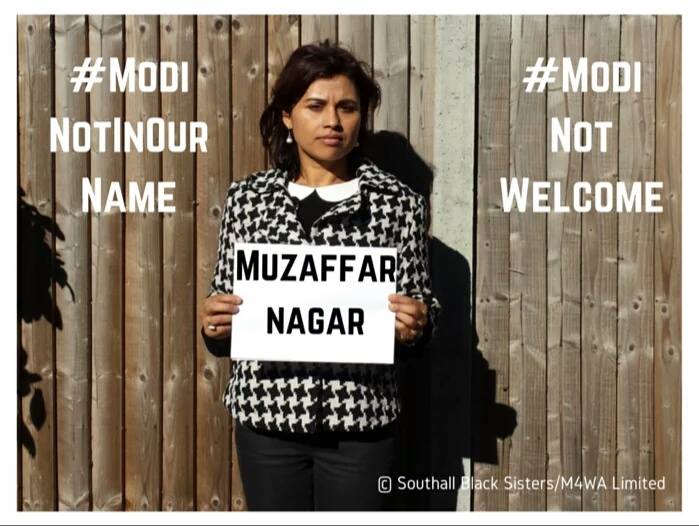
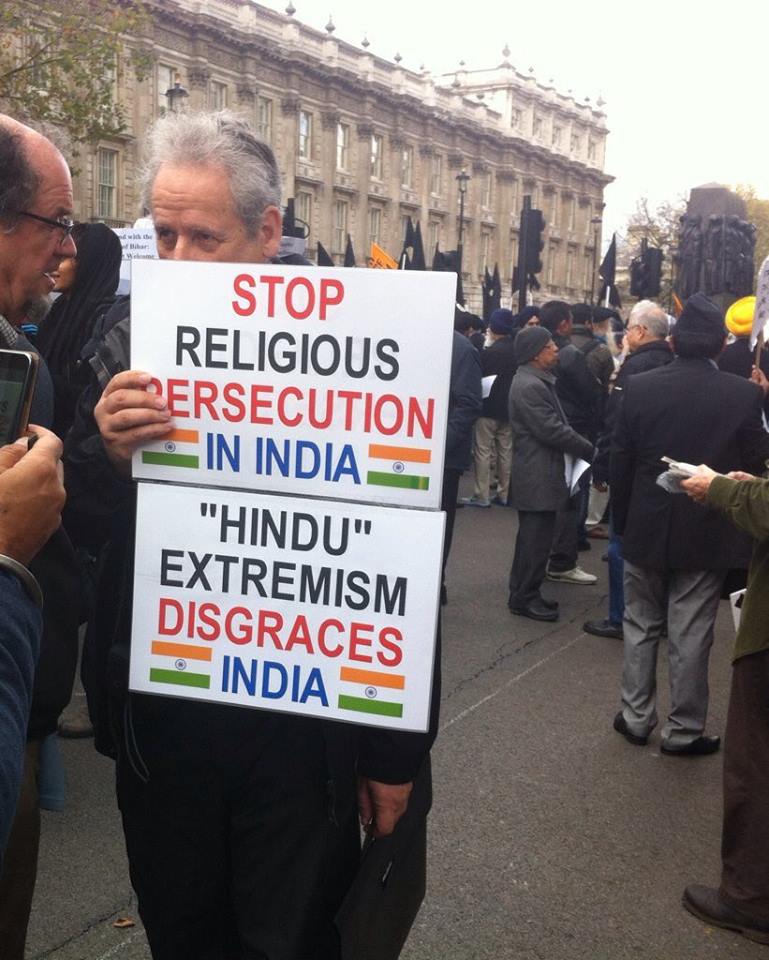
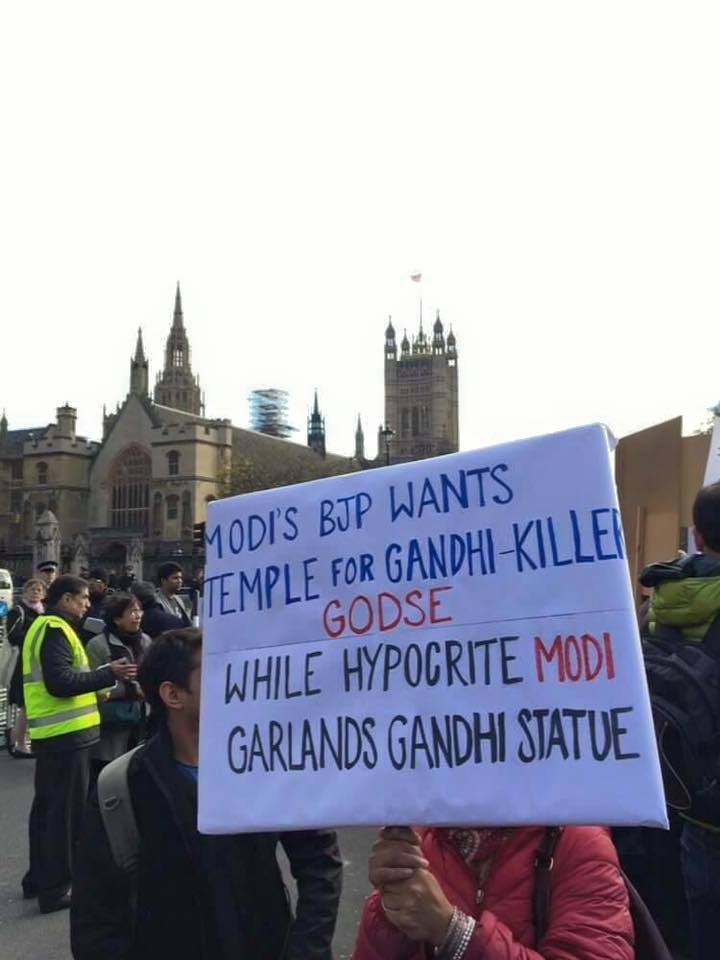
It was embarrassing to see these signs in London, but that is the reality we have to face. If Modi had the balls, he would have spoken up and stopped so much mayhem... but it appears that is what he wants.

Is he redeemable? Any one wants to bet on it?


Mike Ghouse
http://mikeGhouseforIndia.blogspot.com  
Modi Faces Massive Protest In UK
By Countercurrents.org
13 November, 2015
Countercurrents.org
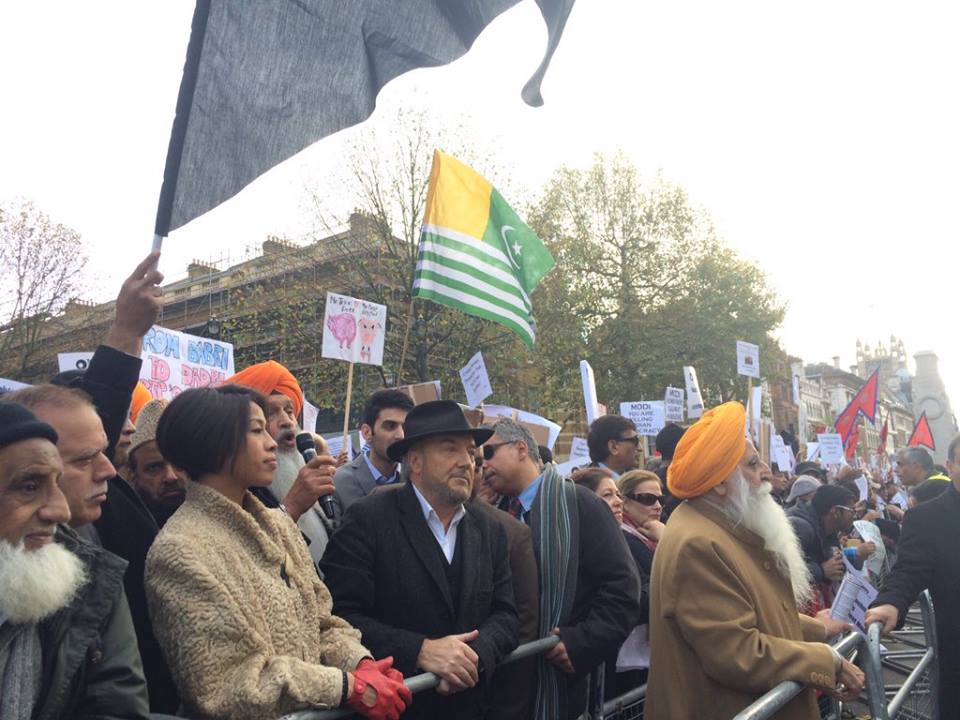
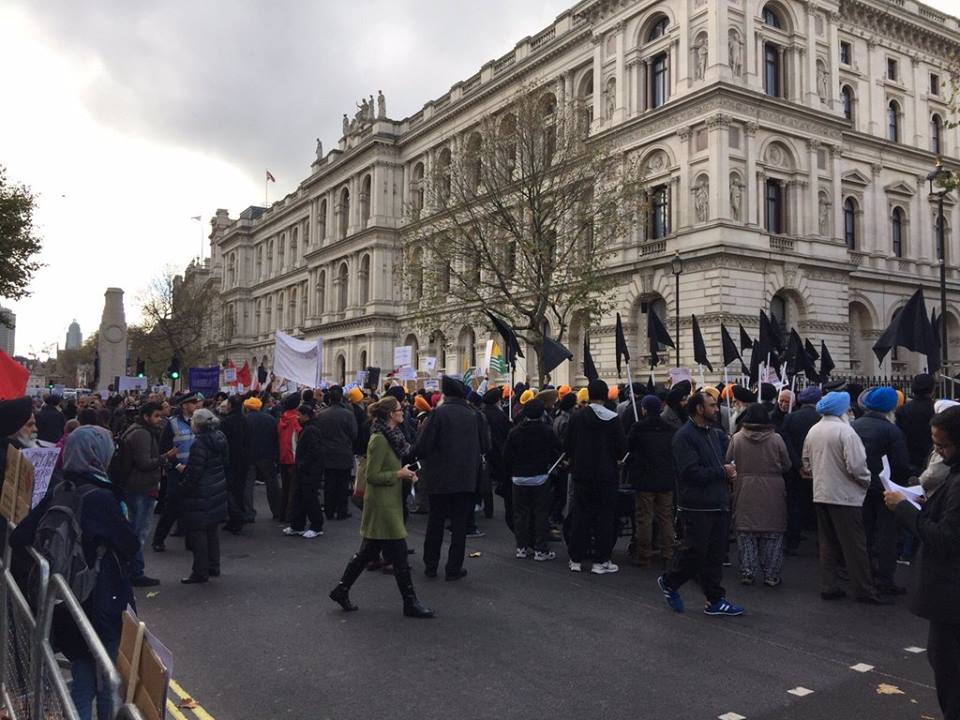
Hundreds of protesters staged a demonstration outside Downing Street, Londong against Prime Minister Narendra Modi's visit to the UK.

Former MP George Gallaway who was among the protesters said David Cameron is honouring "the killer Modi, who comes the very organisation that murdered Mahatma Gandhi." " Modi is murdering the India of Mahatma Gandhi, an India we can believe in. He is dripping in blood" said Galloway.


The agitation was orgnaised by South Asia Solidarity Group. A press note from the group said they protestested against,
Modi’s systematic human rights abuses and promotion of a fascistic politics of hatred in India, as demonstrated by the wave of attacks on Muslims, Christians, and on Dalits which have been orchestrated by Hindu right groups and co-ordinated by the RSS - an organisation modelled on the Nazi and Italian fascist parties - to which Modi owes allegiance. The protests were also against the tide of murders of rationalists and other dissenters, which underline the alarming shift towards fascism in India.
The London protestors stand in solidarity with the very large number of writers, artists, filmmakers, scholars and scientists who have recently returned prestigious government awards in protest at this violence. We also stand in solidarity with the people of Bihar, one of India’s most populous states, which in recent state-level elections have decisively rejected Modi and his party’s politics of hate.
We also cannot forget those who were murdered in the pre-planned genocidal violence against Muslims in Gujarat in 2002 when Modi was Chief Minister, who include three British citizens. We also condemn the hypocrisy of David Cameron who claims to be committed to combating gender violence internationally but is hosting Modi who presided over brutal mass rapes and mutilations of women in Gujarat in 2002.
The protest was also against Modi’s economic policies in which labour laws are being swept aside, trade unions crushed, campaigning NGOs banned, and foreign and Indian corporates given a free hand to plunder and destroy the environment and indulge in massive human rights abuses. Modi’s latest announcement of further concessions on FDI is another example of his unprincipled selling off of India’s resources at the lowest possible price. It also smacks of desperation – Modi is now being criticized by corporate commentators such as Moody’s and Infosys who fear the tide of violence will be bad for the economy; he is even under attack from his own party’s senior leaders for his rabid bigoted election speeches during the Bihar elections.
In this context we also condemn the role of David Cameron in shamelessly promoting the interests of British corporates – the new East India Companies being welcomed by Modi – whatever the cost to the Indian people. For example planned deals on military aviation will facilitate state terror against India’s own people in regions such as Chhattisgarh, Manipur and Kashmir.
The protest exposes the hypocrisy of Narendra Modi in garlanding the statue of Gandhi in Parliament Square when not only was Gandhi’s assassin Nathuram Godse affiliated to Modi’s RSS, but currently in India MPs of his own party such as Sakshi Maharaj have called for a temple to be built in the name of Gandhi’s murderer! It is also the height of hypocrisy to claim to honour Gandhi while continuously violating his values of tolerance and religious harmony.
More information: southasiasolidaritygroup@gmail.com


Wednesday, November 11, 2015

Hindutva’s stick against Muslims

An enlightening piece! Mike Ghouse

Hindutva’s stick
 SHARE  ·    COMMENT   ·    PRINT   ·   T+  

Hindutva groups use the idea of a uniform civil code as a stick to beat the minorities with, an enterprise that finds an answering echo in judicial zeal informed by poor scholarship. By A.G. NOORANI


Shiv Sena chief Uddhav Thackeray deserves kudos for exposing the hypocrisy of the Sangh Parivar, of which his own party is a member, albeit a small and noisy one. On October 22, he said at the Sena’s annual Dussehra rally in Mumbai’s Shivaji Park: “They should first announce that this country is a Hindu rashtra and impose the uniform civil code” (emphasis added, throughout). “They” refers to the senior partner, the Bharatiya Janata Party (BJP), whose long-standing triple agenda is a Ram temple at Ayodhya, abrogation of Article 370 of the Constitution, and a uniform civil code. The word “impose” bluntly prescribes the approach that others prefer to veil. On August 5, 1989 ,Organiser, the organ of the Parivar, quoted the then BJP president, L.K. Advani, as proudly telling BBC, “It would not be wrong to call the BJP a Hindu party.” He said on November 19, 1990: “Henceforth only those who fight for Hindu interests would rule India.” For good measure, he complained on October 20, 1990, that “secular policy is putting unreasonable restrictions on Hindu aspirations”.
The advocacy of a uniform civil code is an integral part of this ethos. It is not motivated by a desire for reform but by a lust for uniformity in the Hindutva mould. Men who have no sympathy for Muslim women whose husbands, brothers and sons were killed by the goons of the Hindutva brigade, without so much as a rebuke by the Parivar chief, are not inspired by lofty considerations. Their target is Muslim Personal Law, and they want to erase it from the statute book because it signifies Muslim identity.
India is a land of continental dimensions. Consider the conciliatory moves made by Canada’s national government in recent decades to support Quebec’s distinct identity, with its language, culture and laws. The United Kingdom has two different systems ofcriminal law. Scottish law recognises the plea of “not proven”; English law does not. There is no national Bar. England has barristers; Scotland has advocates. The catchphrase “national integration” is calculated to mislead. Sri Lanka’s Muslims are well integrated with the nation. They have their own personal laws.
In 1979, the Rashtriya Swayamsewak Sangh (RSS) opposed the establishment of the Minorities Commission and insisted that a Human Rights Commission would suffice. This is because, fundamentally, it rejects the very concept of minorities. The demand for imposition of a uniform civil code has figured in every election manifesto of the BJP, and earlier in the manifestos of the Jana Sangh. The approach is totally at variance with the one adopted by genuine reformers of high credentials as secularists. The universally respected Romila Thapar leads this school. In her recent lecture in Mumbai she advocated a persuasive approach.

The real issue

The real issue is not the civil code. It is reform of Muslim Personal Law, which flagrantly violates the Sharia, the law ordained by the Quran. The perverted law now in force is oppressive to women, specifically the arbitrary triple divorce and polygamy. It is not Sharia that is followed in this but the “Anglo-Muhammadan” law of British times. The All India Muslim Personal Law Board is in the grip of dinosaurs. A besieged community is a conservative community. It clings to what is left of its identity. Since Independence, the Muslim community has been exploited either by the “sarkari musalman” who acts as adalal (agent) between the state and the country’s Muslims, the quintessential Uncle Tom, or the reactionaries who control the board or the bogus secularism of some “secular” parties.
Jawaharlal Nehru had to wage a battle within his own party, the Congress, against Hindu communalists. Muslims witnessed his helplessness, suffered in the never-ending riots, saw the erosion of constitutional safeguards and the attacks on Urdu, and faced the wrath of the rising forces of Hindutva. They withdrew into their own suffocating shell. The nation is poorer for that.
The issue, then, is the reform of Muslim Personal Law. Pressures for its abrogation by the uniform civil code retard the progress for reform. Professor J.N.D. Anderson noted: “It is the family law that has always represented the very heart of the shariah, for it is the part of the law that is regarded by Muslims as entering into the very warp and woof of their religion.” It has been “basic to Islamic society down the centuries”. This was why in 1931 the Congress Working Committee declared that “personal laws shall be protected by specific provisions to be embodied in the Constitution”. Nehru assured Mohammad Ali Jinnah, in a letter dated April 6, 1938, that the Congress had “declared that it does not wish to interfere in any way with the personal law of any community”. Law Minister G.S. Pathak said in the Lok Sabha on May 17, 1966, that “personal laws are mixed up with religion” and that “we cannot coerce people to accept our views about their religion and customs”. Earlier, a similar assurance was given in the Lok Sabha by Law Minister A.K. Sen on August 29, 1963.
The constitutional position

Relevant are two provisions of the Constitution and a basic principle of jurisprudence. Article 37 says emphatically, a propos the Directive Principles of State Policy laid down in Part IV of the Constitution: “The provisions contained in this Part shall not be enforceable by any court, but the principles therein laid down are nevertheless fundamental in the governance of the country and it shall be the duty of the state to apply these principles in making laws.” On any honest construction, this means legislation of the legislatures, not legislation in the guise of adjudication by the courts.

In contrast, the Fundamental Rights are enforceable by the courts (Articles 32 and 226). Likewise, when Article 44 directs “The state shall endeavour to secure for the citizens a uniform civil code throughout the territory of India”, it means the legislature comprising elected representatives of the people and aware of the realities and the feelings of the people. They are allowed a wide margin of discretion—“shall endeavour”. It does not mean unelected judges, sitting in an ivory tower, presuming to legislate. That is, to use the words of Lord Simonds, “a naked usurpation of the legislative function under the thin disguise of interpretation” (Magor and St. Mellons Rural District Councils vs Newport Corporation (1952) AC 189 at 191).
The Supreme Court is not entitled at all to direct Parliament to legislate. Justice K.S. Hegde of the Supreme Court said in 1971: “No court can issue a mandate to a legislature to enact a particular law. Similarly, no court can direct a subordinate legislative body to enact or not to enact a law which it may be competent to enact” (Narinder Chand Hem Raj v. Lt. Governor, Administrator Union Territory, Himachal Pradesh (1971), 2 SCC 747 at p. 75, (Para 7). In 1989, the Supreme Court reaffirmed these principles: “There can be no doubt that no court can direct a legislature to enact a particular law. Similarly, when an executive authority exercises a legislative power by way of subordinate legislation pursuant to the delegated authority of a legislature, such executive authority cannot be asked to enact a law which he has been empowered to do under the delegated legislative authority” (Supreme Court Employees Welfare Association vs Union of India(1989) 4 SCC 187 at p. 219 (Para 51).
Intent of the framers of the Constitution

No court of law can ignore the distinction and override the clear intent of the framers of the Constitution reflected in a closely reasoned debate. It is excellently summed up by Granville Austin in his masterpiece The Indian Constitution: Cornerstone of a Nation(1966): “The sub-committee (on Fundamental Rights) decided to introduce the Directive Principles of Social Policy, as they were then called, with a Preamble explaining that they were for the general guidance of the government and were not cognizable in any court.The break with the Fundamental Rights had been made. The members went on to adopt provisions based on Sir B.N. Rau’s draft to the effect that the state should raise the level of nutrition and the standard of living of the people, and promote international peace and just dealings between nations. Certain changes and counter-changes were made during the next several weeks, but, in general, the first stage of drafting the Directive Principles was over.

“The framing of the provision regarding a uniform civil code provides an interesting aside to the sub-committee’s work. In India in 1947, despite the inroads on personal law during the British period, many Indians lived their lives untouched by secular law, whether civil or criminal. The idea of a uniform civil code, therefore, struck at the heart of custom and orthodoxy, Hindu, Muslim, and Sikh. During the days when the Principles were to be justiciable, Minoo Masani moved in a sub-committee meeting that it was the state’s responsibility to establish a uniform code, in order to get rid of these water-tight compartments, as he called them. The members voted against the recommendation, five to four, on the ground that it was beyond the sub-committee’s competence. Yet, two days later the members approved the inclusion of the provision, but only after it had been decided to create a non-justiciable section of the rights where the clause could be put. The reason behind these actions was not, as it might at first appear, the wish to avoid a clash with Hindu orthodoxy, but a sensitivity, particularly on Nehru’s part, to the fears of the Muslims and the Sikhs. Had the provision been in the rights, it would have been justiciable and perforce applicable equally to all communities.” Thus, Parliament alone was to “endeavour” to frame the uniform civil code in its discretion. Note, the Rights and Directives were drafted by one and the same body.
Article 44 figured as Article 35 in the draft Constitution. It was debated in the Constituent Assembly on November 23, 1948 (Constituent Assembly Debates, Volume 7, pages 540-552). A member of the Assembly’s Drafting committee, Sir Alladi Krishnaswamy Ayyar, said: “The Future Legislatures may attempt a uniform civil code or they may not” (page 550).
The Chairman of the Drafting Committee, Dr B.R. Ambedkar said: “I quite realise their feelings in the matter, but I think they have read rather too much into Article 35, which merely proposes that the state shall endeavour to secure a civil code for the citizens of the country. It does not say that after the Code is framed, the state shall enforce it upon all citizens merely because they are citizens.” That the Sangh Parivar adopts this very approach is perfectly understandable. What is disturbing is that, as will be pointed out, judges of the Supreme Court, in their zeal for reform, have also taken this hard line from 1985 to 2015.
Contrast this with Ambedkar’s statesmanlike attitude, a few days later on December 2, 1948: “It is, therefore, quite impossible for anyone to conceive that the personal law shall be excluded from the jurisdiction of the state. Having said that, I should also like to point out that all that the state is claiming in this matter is a power to legislate. There is no obligation upon the state to do away with personal laws. It is only giving a power. Therefore, no one need be apprehensive of the fact that if the state has the power, the state will immediately proceed to execute or enforce that power in a manner that may be found to be objectionable by the Muslims or by the Christians or by any other community in India.

“We must all remember—including Members of the Muslim community who have spoken on this subject, though one can appreciate their feelings very well—that sovereignty is always limited, no matter even if you assert that it is unlimited, becausesovereignty in the exercise of that power must reconcile itself to the sentiments of different communities. No government can exercise its power in such a manner as to provoke the Muslim community to rise in rebellion. I think it would be a mad government if it did so. But that is a matter which relates to the exercise of the power and not to the power itself” (pages 781-2). If the government should not, neither should the Supreme Court.
Double standards

Interestingly, Parliament itself has disabled itself from enacting the coveted code “throughout the territory of India”—which is what uniformity requires. There is Article 370 on Kashmir’s special status, which the BJP wants to abrogate. The Centre’s uniform civil code cannot extend to that state. Those who cavil at Article 370 and shout for the code are strangely silent on Articles 371A and 371G. These are special provisions with respect to the States of Nagaland and Sikkim, respectively. They embody a compact on the basis of which the provisions were enacted. Article 371A(1) says: “(1) Notwithstanding anything in this Constitution, (a) no act of Parliament in respect of—(i) religious or social practices of the Nagas, (ii) Naga customary law and procedure, (iii) administration of civil and criminal justice involving decisions according to Naga customary law, (iv) ownership and transfer of land and its resources, shall apply to the state of Nagaland unless the Legislative Assembly of Nagaland by a resolution so decides.” An identical provision is made for Mizoram.
In both cases it is left to the people to decide whether or not to change their personal law—the very principle that Parliament has respected on Muslim Personal Law. If double standards are being applied, it is because the BJP aspires to obliterate Muslim identity, while the zealous reformist yearns for a destructive uniformity.
Limits of sovereignty

Unlike the arid legalism of some lawyers and judges, Ambedkar was steeped in constitutional law which, as Justice Felix Frankfurter said, is “but applied politics, using the word in its noble sense”. It was left to the great A.V. Dicey to point out forcefully the internal and external limitations that are inherent even in the British parliament, which is not fettered by a written Constitution.

“Everyone, again, knows as a matter of common sense that, whatever lawyers may say, the sovereign power of Parliament is not unlimited, and that King, Lords, and Commons united do not possess anything like that ‘restricted omnipotence’—if the term may be excused —which is the utmost authority ascribable to any human institution. There are many enactments, and these laws not in themselves obviously unwise or tyrannical, which Parliament never would and (to speak plainly) never could pass. If the doctrine of parliamentary sovereignty involves the attribution of unrestricted power to Parliament, the dogma is no better than a legal fiction, and certainly is not worth the stress here laid upon it.”
The internal limitation is the outlook of the members of a parliament; the external limitation is the sentiment of the people: “the possibility or certainty that his (the omnipotent King’s) subjects, or a large number of them, will disobey or resist his laws” or rise in revolt. “What is true of the power of a despot or of the authority of a constituent assembly is specially true of the sovereignty of Parliament; it is limited on every side by the possibility of popular resistance” (An Introduction to the Study of the Law of the Constitution; pages 71 and 79).
This is the first part of a two-part article.

Monday, November 9, 2015

Dear Narendra Modi: Here Is What You Are Doing Wrong

This is a good oped by Mahesh Murthy,  in the last two days, I must have read nearly 15 pieces, and almost all of them have a similar take - these guys don't represent Hinduism. 

Hindutva is not Hinduism - one is an extremist ideology and the other is a beautiful religion.

The foundation of RSS is based on hate for the others, their ideological mentor is Hitler and most of them trained there have sickening attitudes towards others.

It may not be an embarrassment  for Modi to have resorted to divisive rhetoric, because he was trained to be divisive and hateful towards others. Poor guy, cannot help himself.

I don't see any correction on part of Modi coming up, he is hardwired to be divisive, we just have to wait out for his exit in 2019.  

I care about India, and want every Indian to live his life and let others live theirs. 

Mike Ghouse


Dear Narendra Modi: Here Is What You Are Doing Wrong
http://www.huffingtonpost.in/mahesh-murthy/dear-modi-heres-why-you-l_b_8504192.html

NARENDRA MODI

Dear Narendra Modi,
I'm no election expert but here's my read-between-the-lines about the Bharatiya Janata Party (BJP) Bihar debacle, and a couple of thoughts on what you might want to do to course-correct.
1. The people of India voted you into national government because they wanted a better economy. A part of that was reforms, another was clearing logjams, a third was reducing corruption and yet another was bringing black money back. Strangely, all parties promised this but you were trusted best to deliver this "better economy". (PS: All parties still promise this. It's still the main agenda - it's what matters.)
2. Your report card on this is spotty to poor so far: reforms haven't happened, logjams haven't yet cleared, corruption may have come down a bit but hasn't disappeared, and your promises about black money have largely proven to be a joke.
3. Instead of focusing on these and working on your mandate, you veered off in two completely different directions:
  • One, following an agenda that you were NOT voted in for like banning beef, having pure veg days, shutting down international NGOs, Hindu-fying history and literature, and generally doing the bidding of your foster home, the Rashtriya Swayamsevak Sangh (RSS), to turn India into a Hindu nation. As you've seen, most Hindus also don't want to turn India into a Hindu nation. None of these actions had any electoral legitimacy, yet you did the bidding of your trainers at RSS. You've learnt now that the people voted in the BJP and not the RSS. Keep that in mind.
  • And second, your curious desire to position yourself as some international statesman of stature out-doing Nehru and spending more time visiting places outside India than being in India itself. This has led to all decisions being centralised within the PMO and seemingly none being taken by you. It was strange to see that even your defence minister didn't know what the original OROP declaration was going to be--he merely read out what your little boffins in the PMO sent him. And it's also led you to deliberately ignore all kinds of anti-Muslim malfeasance--whether it was you not condemning the Dadri Murder, or looking-the-other-way when orange-clad swami-type idiots in your party made ridiculous statements about Shah Rukh Khan going to Pakistan, or when another Hindutva-vaadi idiot is forced down the throats of students at FTII, or when the National Academy doesn't have the testicles to condemn intolerance. Your looking-the-other-way is now obvious to people. You can very clearly now see that it is not expected of you.
4. So you want a second term as PM? Here's what you need to do: ditch the RSS. Yes, they might have been your spiritual home for ages, but they are screwing up India and nobody likes them anyway. Plus they are costing you a huge chunk of votes--your national vote share in 2014 was 31%, and it's dropped to 24% in Bihar. So primarily you've lost a quarter of your earlier fan base in just 18 months. Ditch the anti-Muslim, anti-Pakistan rhetoric. We want a country where religion doesn't matter. And we want to grow bigger, not fight wars.
5. Get right back on your economic agenda. Stop the bloody foreign tours except when it's part of the economic agenda. Pass bills. Get e-governance working. Lower corruption. Get the economy flowing again.
6. Get some humility. Get off the RSS path-of-arrogance, and deal with the opposition nicely. Work WITH them and not against them to get GST and the rest of bills through parliament. They want it, you want it, we all want it. All that's coming in the way is your ego and arrogance. Hopefully, Bihar will have taught you the lesson the state wanted to deliver to you--that they don't care for your arrogance. You can change. You need to. Get off your high horse.
8. Get the GDP growing again, past 7, maybe even 8 or 9%. Let people make money and get rich.
And who knows they might even vote for you again.
And who knows, you could eventually be seen as that world-class statesman you're dying to be seen as.
Cheers and all the best,
Mahesh Murthy

New York Times - A Rebuke to India’s Prime Minister Narendra Modi

Most Indians gave a long rope to Modi, believing in his rhetoric, including me, but he failed us all. He is set in his ways, he knows the word inclusion like a 2 year old who keeps repeating the word when he learns a new word without knowing the meaning of it.

Modi is not for every Indian, he is only for a few Hindus and not all the Hindus. He recited the slogans that American Indians produced for him... and got the votes, but cannot live up to his words.

Three more years before he is out. We have to guard ourselves from his divisive speeches, let no Indian fall for that again.

Mike Ghouse


http://www.nytimes.com/2015/11/10/opinion/a-rebuke-to-indias-prime-minister-narendra-modi.html


Photo
Nitish Kumar, chief minister of Bihar, greeted supporters after victory in state elections on Sunday.CreditAftab Alam Siddiqui/Associated Press

During a national election in India last year, Narendra Modi promised “development for all.” As prime minister, he has yet to deliver big economic improvements, but in the meantime, members of his government and political party have shredded his promise of inclusion by inflaming sectarian tensions. Now, voters in the country’s third most populous state have sent Mr. Modi a message: Put an end to the hatemongering.


Poisoning politics with religious hatred is bound to squander the country’s economic potential at a time when India should be playing a bigger and more constructive role in South Asia and the world. India’s history is filled with examples of religious and caste-based violence that set the country back. Those conflicts subsided during India’s rapid economic growth, but many Indians now fear a resurgence.

On Sunday, Mr. Modi and his Bharatiya Janata Party lost a legislative election in the northern state of Bihar, which has a population of more than 100 million. A “grand alliance” of secular parties united by their antipathy to the Hindu nationalist B.J.P. won 178 constituencies in the 243-memberlegislative assembly to the B.J.P.’s 53. Many political analysts see the loss as a repudiation of Mr. Modi because he and his top aides campaigned vigorously in the state and many ads carried his image, rather than photos of local politicians.

In the months leading up to the Bihar election, hard-liners in the B.J.P. and organizations affiliated with the party stoked India’s long-simmering sectarian tensions. The party’s lawmakers pushed for beef bans around the country ostensibly to protect the cow, which many Hindus consider holy, but really as a ploy to divide Hindus and Muslims, some of whom eat beef.

Mobs riled by the anti-beef crusade havekilled four Muslims suspected of slaughtering, stealing or smuggling cows in the last seven weeks. And in August, unidentified attackers shot and killedMalleshappa Madivalappa Kalburgi, a scholar and vocal critic of Hindu idolatry. Hundreds of writers, filmmakers and academics have protested the growing intolerance by returning awards they received from the government-supported bodies.

Mr. Modi has not forcefully condemned the beef-related killings, despite pleas by Muslims and other minorities. He has tolerated hateful and insensitive remarks by his ministers and by B.J.P. officials.

During a campaign stop in Bihar, Mr. Modi tried to exploit sectarian divisions by telling voters that the secular alliance would reduce affirmative action benefits for lower-caste Hindus and tribes in favor of “a particular community” — an apparent reference to Muslims. And the president of the B.J.P., Amit Shah, one of Mr. Modi’s closest advisers, told voters that a victory for the alliance would be celebrated in Pakistan, the Muslim-majority neighbor that has fought several wars with India since 1947.

Voters in Bihar saw through the B.J.P.’s attempts to divide them. They, like most Indians, are looking for leaders who will improve their standard of living. Bihar is one of the poorest states in India but has grown fast in the last 10 years under the leadership of Chief Minister Nitish Kumar, who is credited for cracking down on crime, building roads and increasing the enrollment of girls in schools.

Mr. Modi and the B.J.P. secured a majority in the lower house of Parliament last year with promises of economic reforms. Now, to push through those reforms, the party needs to win the control of the upper house, which is elected by state assemblies. It won’t win those elections unless Mr. Modi gets rid of the officials in his government and party who are fueling sectarian culture wars.

Meanwhile, there are things Mr. Modi could do administratively to improve the economy, like investing in education and health care and building infrastructure. Voters in Bihar have sent the B.J.P. a clear message. Mr. Modi should heed it.

Sunday, November 8, 2015

Bihar Election, incredibly inclusive.

Eventually, we should have candidates where religion does not matter, and where every candidate represents the interests of all his or her constituents. This is a good beginning.  May India bless Bihar to setting the trend.

Mike Ghouse


BIHAR ELECTS 24 MUSLIMS, MIRRORING THEIR SHARE IN POPULATION


Muslim voters form a significant chunk of Bihar's population. Image credit: Hindustan Times
Muslim voters form a significant chunk of Bihar’s population. Image credit: Hindustan Times
SECULAR ALLIANCE OF RJD-JDU-CONGRESS FOR THE FIRST TIME FIELDED MANY MUSLIMS WHO MANAGED TO WIN 
Caravan Desk
NEW DELHI — Even as the stunning outcome of the Bihar Assembly Elections is being hailed across the country as a historic mandate against the politics of intolerance and hate and a harbinger of groundbreaking changes at the national level, this election will also be remembered long for empowering a long marginalized minority.  
The 2015 Bihar mandate saw 24 Muslim candidates being elected to the state legislature, reflecting perhaps for the first time their actual share in the population.  Bihar is not just one of the most populous and most politically savvy states of the country, Muslims form a significant chunk of the population.  They have traditionally and loyally supported the secular players like the Rashtriya Janata Dal all these years and once again critically contributed to their success.  
Bihar Chief Minister Nitish Kumar with his Muslim supporters.
What is remarkable is the fact that for the first time that all three parties in the secular alliance — the Janata Dal (United) of Chief Minister Nitish Kumar, who has emerged as a strong critic and credible, more acceptable alternative of Prime Minister Narendra Modi, Lalu Yadav’s RJD and the Congress fielded respectable number of Muslim candidates many of whom managed to win.   
Let us hope that other political parties will also replicate this template of including marginalized communities in the political process.  
Following is the list of Muslim candidates who won on Sunday:
1-  Ali Nagar               Abdul Bari Siddiqui         RJD
2-  Amour                   Abdul Jaleel Mastan        Cong
3-  Arriah                    Abid ur Rehman               Cong
4-  Arra                        Mohd Nawaz Alam          RJD
5-  Bahadur Ganj     Tausif Alam                       Cong
6-  Basai                      Abdul Subhan                     RJD
7-  Balrampur            Mahboob Alam                 CPI (ML)
8-  Baruli                    Nematullah                          RJD
9-  Bisfi                        Fayaz Alam                          RJD
10 Dehri                      Mohd Ilyas Hussain        RJD
11-Dhaka                     Faisal ur Rehman             RJD
12- Jokihat                  Sarfaraz Alam                    JD(U)
13- Kadwa                   Shakeel Ahmed Khan      Cong
14- Kasba                    Afaq alam                              Cong
15-Keoti                      Faraz Fatimi                         RJD
16- Kishan ganj         Mohd Javed Alam             Cong
17- Kochadhaman    Mujahid Alam                     JD (U)
18- Mahisi                    Abdul Ghafoor                    RJD
19- Narkatia                Shamim Ahmed                 RJD
20- Samasti pur         Akhtarul Islam ShaheenRJD
21- Sheohar                 Sharfuddin                            JDU
22- Sikta                       Khurdsheed A. Alam        JDU
23- Sursana                 Syed Abu Dujana               RJD
24- Thakurganj           Naushad Alam                   JDU
Number of Muslim Candidates At a Glance
RJD              12
Cong              6
JDU               5
CPIML           1