HOME | ABOUT US | Speaker | Americans Together | Videos | www.CenterforPluralism.com | Please note that the blog posts include my own articles plus selected articles critical to India's cohesive functioning. My articles are exclusively published at www.TheGhouseDiary.com You can send an email to: MikeGhouseforIndia@gmail.com


Showing posts with label Congress. Show all posts

Saturday, May 19, 2018

Congratulations to Kannadigas and Indians

Congratulations to all the 62 Million Kannadigas and 1.25 Billion Indians! Thank God for restoring Dharma through the institution of Supreme Court of India. Congratulations also go out to the BJP Leader, Mr. Yedyurappa for his decency and respecting people's choice.

Let's make sure the ones who lost the elections are not looked down, made fun of or ridiculed. If we do that, there will be a Trump around who is ready to capitalize the situation and will earn their loyalty and sympathy, and possibly flip the situation. Let's look for sustainable governance and have programs for making friends with those who are opposed. The more we include, the greater the sustainability.

Mother Teresa had said, if you want to make peace with your enemies (or perceived enemies), go talk with them. Talking among friends will not change the equation. Bhagavad Gita has expressed similar wisdom, and of course, Quran says, if you treat your enemies with respect and dignity, there is a chance of them becoming your allies in building harmony and peace.

It is the most critical time to build relationships, to reign in on the temptations to celebrate the loss of BJP, we should befriend them, in the end, and we all have to work together.

I am politically independent.

Mike Ghouse  

Saturday, April 28, 2018

Fifth Column: Hindutva and Muslims by Tavleen Singh

This a good write up that will lead to the conflicting parties understand each other, a good step towards reconciliation. 

Courtesy - Indian Express
Fifth Column: Hindutva and Muslims

I despise this new Hindutva because it has unleashed upon India a species of upper caste, Hindu Indian whose DNA seems made up entirely of ancient hatreds, grievances and a very ancient inferiority complex.

Written by Tavleen Singh | Updated: April 29, 2018 12:29:18 am
fifth column: Hindutva and MuslimsThe world, when viewed through the warped lens of this Hindutva, makes even something as horrific and sickening as the rape of little girls into a Hindu-Muslim issue. (Illustration by: C R Sasikumar)
If you have read this column more than once you will find this disclaimer unnecessary but here goes. I despise Hindutva. By this I mean the Hindutva we have seen since Narendra Modi became prime minister, not the original version. I despise this new Hindutva because it has unleashed upon India a species of upper caste, Hindu Indian whose DNA seems made up entirely of ancient hatreds, grievances and a very ancient inferiority complex.
Indians of this species always existed but a powerful BJP Prime Minister and the spread of social media have emboldened them to emerge from the shadows into the harsh light of the public square. The ‘values’ on which this species of Indian bases his faith and nationalism are these. Islam is an evil religion, all Muslims are jihadists, secularism is sickularism, liberals are anti-national and Hindustan must be for Hindus. People of other faiths can stay in this ‘new India’ only if they accept subservience.
The world, when viewed through the warped lens of this Hindutva, makes even something as horrific and sickening as the rape of little girls into a Hindu-Muslim issue. Hindutva warriors tweet hatred on Twitter almost every minute of every day, but when there is a trigger, they tweet up a tsunami. We saw this after the rape of that little girl in the temple in Kathua. And, last week the trigger was Salman Khurshid’s brave admission that the Congress party had Muslim blood on its hands. It does. And the list of massacres in secular Congress decades is long and saddening. But, what no Congress leader will ever admit is that it was our oldest political party’s twisted secularism that gave birth to Hindutva as we know it today.
Sonia Gandhi recently justified her son’s spate of very publicised visits to temples and the equally publicised news that he is a Shiva bhakt who wears the sacred thread of baptised Hindus. She said it was to rectify the false impression created by the BJP that the Congress had become a ‘Muslim party’. She seems to have forgotten the many occasions on which in the name of secularism Congress prime ministers have gone out of their way to play to the Muslim gallery.
Rajiv Gandhi changed the law to deprive divorced Muslim women the right to maintenance and it was because he gave Muslims the right to use Shariat rules in domestic matters that Hindus supported L K Advani’s chariot excursion to Ayodhya. It was his slogan of ‘One constitution, one law’ that resonated more than the promise of a temple to Ram where the Babri Masjid then stood. If that is ancient history from a time when Soniaji was not yet a politician, then she could do well to remember that her chosen prime minister said clearly during his second tenure that Muslims had first right on India’s resources.
At the 52nd meeting of the National Development Council, he said, “We will have to devise innovative plans to ensure that minorities, particularly the Muslim minority, are empowered to share equitably the fruits of development. These must have the first claim on resources.” During the good doctor’s second term in office, when Rahul Gandhi became the Congress party’s heir-apparent, WikiLeaks reported Rahul telling an American ambassador that he was more troubled by Hindu terrorism than the jihadi kind.
The truth is that none of these things was ‘appeasement’ as Hindutva hysterics like to call it. Real appeasement would have been if the Indian State had done something to help Muslim communities economically. If more jobs had been created for skilled Muslim craftsmen, more schools for Muslim girls and more basic amenities like clean water and electricity. On a long drive through rural Bihar two weeks ago, I found that nearly every time I saw a desperately poor village built of thatch and mud, it turned out to be a Muslim village. So if Modi had stuck to his promise of ‘parivartan’ and ‘vikas’, I personally have no doubt at all that in 2019 Muslims would have voted for the BJP in states like Uttar Pradesh and Bihar where there really are Muslim vote banks that make a real difference.
It is Modi’s misfortune that he failed to notice that along with big failures in the area of healthcare and education, one of the biggest failures of decades of Congress rule was its treatment of Muslim communities. Instead of giving them what they really needed, ‘secular’ Congress prime ministers gave them the sort of tokenism that made them a target for Hindutva rage. If Muslims still believe that they prefer to trust the Congress and not the BJP, it is because Congress prime ministers did not permit cabinet ministers to spew hatred and venom. Several senior ministers in Modi’s government have done this unrestrained. A small difference maybe but a difference it is.
Follow Tavleen Singh on Twitter @ tavleen_singh
For all the latest Opinion News, download Indian Express App
More From Tavleen Singh

Saturday, March 31, 2018

Minorities in a Dilemma on Whether to Support Congress in the Absence of a Third Front

Naushad, kudos for the brilliant piece. It has got a full range of interviews to understand the elections situation in India.  We are pleased to share that with our friends at my India Blog. I just had called people of India to put together ideas to deal with the 2019 elections.  Who should Muslims Vote in 2019 - https://mikeghouseforindia.blogspot.com/2018/03/who-should-indian-muslims-vote.html

Mike Ghouse


Minorities had realised that nothing concrete had been done for them. The Congress failed to reciprocate the unconditional support they enjoyed for decades with progress and development.


Updated:March 30, 2018, 10:49
OPINION | Minorities in a Dilemma on Whether to Support Congress in the Absence of a Third Front

OPINION | Minorities in a Dilemma on Whether to Support Congress in the Absence of a Third Front

Mohd Naushad Khan | Updated:March 30, 2018, 10:49 AM IST Image For Representation Only. (Getty Image)
Indian polity, since Independence, has been rotating on an axis of caste and religion. Either minority bashing or its appeasement has also been another hallmark of the Indian political mindset. 
Minorities, though, traditionally voted for the Congress but later became political fodder for several regional parties. They oscillated their support like a pendulum in anticipation that prosperity and, above all, sense of security would prevail.
Its revelation brought to light the picture that minorities, especially Muslims, have been cheated for decades. The findings of the report was food for thought and introspection.Minorities, without an iota of doubt, remained in the political basket of the Congress for decades. It was the Sachar Committee Report which, for the first time, pulled down the curtain of belief and trust towards the Grand Old Party. 
Minorities had realised that nothing concrete had been done for them. The Congress failed to reciprocate the unconditional support they enjoyed for decades with progress and development.
According to Afroz Alam, associate professor and head of Department of Political Science at Maulana Azad National Urdu University (MANUU), "There has been a paradigm shift in the electoral chemistry between Muslim voters and Congress. Over the years, large number of Muslim voters have moved away from the Congress and fragmented their loyalties in favour of non-Congress, non-BJP regional political options. There is a growing realisation that the fundamental difference between Congress and BJP is blurring. Congress is shunning its centrist image. The party is trying to appeal to the Hindu core votes by not only cultivating its soft-Hindutva image but also by sidelining Muslims as a taken-for-granted junior partner.”

“We are witnessing another trend that Muslim voters are no longer susceptible to fall for mere projection of the BJP as a threat. There is, in fact, a substantial decline in their anti-BJP sentiments, for they have come to realise that even if it is in power, there is little likelihood of the hyperbolic threat translating into anything real. At the same juncture, Muslim voters are tired of being treated as ‘low cost’ voters due to the poor delivery of the policy pledges exclusively made to them at the time of election by the so-called secular political parties. In my view, Muslim votes will continue to be divided along the multiple lines if a coalition at the regional level does not happening before 2019 elections," argues Alam.

Putting forward his perspective, activist John Dayal, who also represents many National Christian Forums says, “Over the years, no single party has stood the test of the time as a protector of minorities. Every political party, when in power, has created laws which negatively impact minorities. For Muslims and Christians, the political spectrum extends from the Congress on the one hand to regional parties in UP, Bengal, Andhra Pradesh, Orissa and the rest of South India. They look to the Left if they want to keep the BJP out, or at least in a reduced margin in Parliament and state legislatures.”

Dayal further adds, “The Congress has had a terrible past since the 1970s with the Emergency, the Sikh issue, the Babri issue and the laws against the Christians have worked to expose it as a soft-Hindutva party. But when compared to the BJP and the RSS, the minority voter is left with choosing the winning candidate from the Congress and the other non-BJP parties. There seems to be no other choice.”

Needless to say, Congress these days hardly takes any political stand of its own. Rather, it goes on a defensive stance or acts in a reactionary manner. Rahul Gandhi no doubt is gaining political maturity but his escalation does not mean it is being well-received on the ground or would translate into votes. Very recently, he tried his best political manoeuvring in Gujarat but his foot soldiers, as many believe, failed to provide him with the kind of support base he required. The campaign was further hampered by loose talks of his party men.”

Irtiza Quraishi, President of Muslim Association Rehabilitating Homeless and Mistreated (MARHM), says, “I hear a lot of different Muslim opinions about Congress. There are Muslims who talk in favour of the party and then there are those who prefer regional alternatives like the AIMIM, AAP etc. There are also Muslims who accuse parties like AIMIM and AAP of being the B-teams of BJP, wherein these parties contest elections in places to divide the votes in order to help the BJP.”

“Lately, Indian Muslims have started believing that at the national level, to defeat BJP, the only contribution they can do is to support Congress jointly without dividing its votes among other parties. I know people who talk about how Congress is responsible for the backwardness of Muslims in India, yet in the next General Elections; they talk about voting in favour of the party to defeat the BJP. There are Muslims, such as myself, who like AAP and even I intend to vote for the Grand Old Party in the next general elections and for AAP in the next assembly elections,” said Quraishi.

On the future political posturing of the minority, Mohammad Sajjad, Professor at Centre of Advanced Study in History in AMU, Aligarh says, “Muslims should not be seen identifying themselves with any given political parties and they should vote silently, confidentially.”

However, the result of the recently held by-polls in Uttar Pradesh and Bihar has sent the message for one and all ahead of 2019 polls. It has further rekindled the hope for a larger alliance within the regional groups. Both SP and BSP were quick to learn their lesson from the Tripura verdict. This by-poll result, no doubt, made it clear that 2019 polls may not be a cakewalk for the BJP. The by-poll message is loud and clear that no party should take the voters for granted.

Congress is still groping in the dark if we go by the trends in Tripura and the by-polls results in UP and Bihar. The dinner diplomacy was to feel the pulse of the regional forces and to get the glimpse of what is going on in the subconscious minds of the regional forces. It is yet to be seen how things would unfold ahead of the 2019 grand show. 

Friday, March 30, 2018

'Ravish Kumar' Emotional Appeal to Muslims

Ravish Kumar's appeal, along with Dr. Saleh Shariff's report and a Dalit Leaders call has inspired me to develop an article, who should Muslims vote for? 

Brave and Honest Journalist 'Ravish Kumar' Emotional Appeal to Muslims

Courtesy - Surya


Ravish Kumar is an Indian one of the honest and brave TV anchor, writer and journalist who covers topics pertaining to Indian politics and society.

New Delhi: Recently noted TV anchor Ravish Kumar made an emotional appeal to Muslims during a programme. Following are his golden words.

1.Stop criticizing BJP and RSS.

2.Your opposition is their strength. Anyway except for Jammu and Kashmir neither you have to become chief minister anywhere nor the prime minister.

3.Those who have to grab ‘the chair’ they themselves will contest with BJP & RSS. Only because of your opposition BJP is creating fear of 18 pc Muslims among Hindus and is succeeding in getting votes of 80 pc Hindus. The director of the entire play is in fact just 3 pc.

4.Give vote in favour of whatever party you like, but don’t ever oppose BJP, RSS or Modi.

5.Forget that there is any organisation called RSS.

6.Forget that there is any party called BJP.

7.Forget that there is any leader called Modi

8.If you continue what you have been doing you will be politically made untouchables in few years. Then neither Congress will value you nor JP, SP or BSP.

9.The MIM or Owaisi you are blindly favouring will be allowed to contest as far as BJP is benefiting from them. The day when BJP will feel that their contesting is doing harm to it, from that day MIM will be banned as it was done during the first 30 to 40 years. You just focus on modern technology and education, secure marks through which you can get government jobs without reservation.

10.Before independence, the population of Muslims was 35 pc and they had occupied 35 pc government jobs. There was no reservation system at that time. Those who had reached the place did so on their own ability. Those who give zakat and sadaqah to religious institutions should also give them to institutions working for your education and employment. If there are no such institutions, establish them.

11.Remember! This is a competitive era and you are lagging behind in every field. Don’t rely on government aid, do whatever you want on your own.

God will do the rest!

Sunday, March 11, 2018

BJP and Congress Trolls

BJP and Congress Trolls

Even though the goals are nefarious, the Bharatiya Janata Party, the current ruling party in India has been successful in their goal of winning the elections by hook or crook. The BJP also has over 300 websites with fake news and false information.  The decimated Congress party is way behind on this front.  The difference between the two parties is same as between GOP and Democratic party in America. 
Video and commentary at http://mikeghouseforindia.blogspot.com/2018/03/bjp-and-congress-trolls.html


# # #
“In Internet slang, a troll (/troÊŠl, trÉ’l/) is a person who sows discord on the Internet by starting quarrels or upsetting people, by posting inflammatory, extraneous, or off-topic messages in an online community (such as a newsgroup, forum, chat room, or blog) with the intent of provoking readers into an emotional response or of otherwise disrupting normal, on-topic discussion often for the troll's amusement.” Wikipedia. 


Please watch this video: https://www.youtube.com/watch?v=BL2ZYXLW5bU&feature=youtu.be


Even though the goals are nefarious, the Bharatiya Janata Party, the current ruling party in India has been successful in their goal of winning the elections by hook or crook. The BJP also has over 300 websites with fake news and false information.  The decimated Congress party is way behind on this front.  The difference between the two parties is same as between GOP and Democratic party in America. 


For example, the Republican would say, “We will win the war, chase Bin Laden to the far ends of the world and catch him” They display confidence, even though they know they cannot do it, but the frightened public falls for that line. On the other hand, Democrats will not exhibit that confidence; because their reasoning minds hold them from making tall claims, but Obama got Bin Laden without making a big deal, but Democrats would not have made the statement about GOP.  Check out every statement made by both sides and study it yourselves.  Both are wrong, there should be a good mix of optimism and pragmatism.  


BJP will say anything without worrying about logic and reason, whereas, Congress reasons and assumes people know the facts and will not fight back. Modi attacked Manmohan Singh for 4% GDP, the entire Congress party took the shit without challenging. They should have shot back, 4% growth in 2014 was much better than the US, UK, and other nations.  If we are tied to international economies, we rise and fall with them. 


In love and war, everything works. The BJP is adept at capitalizing the vulnerabilities of Indians.  Every day, the average Hindu is brainwashed that Muslims are their enemies, they will come and grab food from their plates, marry off a billion million Hindu women…. They can fool the Indians for maybe one more election cycle, then people will see through them. First, they took it up the Temple issue, and Indians fell for that as if that would give them food, clothe them and provide shelter.  The second time around the Indians could not be fooled again. Now they are devising new ways of keeping Indians divided, pitting one Indian against the other. 


My suggestion is to reject every asshole who creates ill-will between you and another Indian, he is lying to you, and want to make an ass of you.  Instead, listen to the individual leaders from BJP, Congress and other parties who want Indians to come together for common good. 


Listen to this video, it is 32 minutes, it is worth listening to figure out how to deal with the negative forces. We need to counter with good trolls who want Indians to get along and care for each other.

Related Articles
:


I remain independent as it allows me to be critical of the evil men on both sides of the aisle. I am committed to building cohesive societies where no one has to live in apprehension or fear of the other and please to offer pluralistic solutions on issues of the day.


Mike Ghouse
http://MikeGhouseforIndia.blogspot.com 

Saturday, March 10, 2018

OWAISI – The villain of Indian Democracy and Muslims

Tipu Sultan could have chased the British out of India but for Purnaiah, who compromised Tipu’s position.

Now,  Asaduddin Owaisi of AIMM is doing precisely that; weakening the rightful Muslim representation in governance.  Of the 29 Muslim contestants in Uttar Pradesh, 19 could have easily won had Owasi not poked the elections with his candidates. Look at the chart how thin the losses are.


He denied Muslims their rightful space in representing the people, which in effect zeroed, if not weakened the opposition in Indian Democracy.

If there is enough opposition in the parliament, our democracy will survive, without opposition, the ruling party whichever it is, the GOP in America,  and the BJP in India will do whatever they want. The Democrats in the US and Congress in India have done it when they were the ruling parties. It is up to us, the general public to safeguard the rights of individuals.  Everyone including the BJP members and RSS has that freedom today because our founding fathers made sure India remain a Democracy.  

Too many wise men have said, “The evil exists not because of bad people, but because good people do nothing about it.”  BJP with a bare majority will be a different party than the landslide majority. If they have to fight to stay in power, they will behave better.  The  Hindus, Dalits, Muslims, Christians, Sikhs, Adivasis and others need to team up to create a strong opposition – that should be their goal, in the next cycle they should aspire for higher representation of moderate people.

Lastly, we don’t need a Party for Muslims, Hindus or Sikhs– by the next two election cycles, we need to come down to two parties who would represent the economic interests of all Indians. What we need is jobs, education, housing, loans and retire in peace. We should not let any of the politicians fool us with issues that do not feed us, clothe us and house us. I wish our crowds in BJP, Congress and other rallies start singing "Pehle Roti, Kapda and Makan aur shanti do, aap ka Gobar aap ke paas hi rakho."  Make them sick of fooling us.   

Let’s find the candidates among BJP, Congress or Janata Dal who are inclusive and care for every Indian.  The Indians who are considered weak are very relevant and can prove it in the next few elections.

Now the Purnaiah Owaisi is weakening the rightful representation of Muslims in Karnataka. We need to check it out if he was paid by BJP to weaken the opposition.  Get rid of him, brand him whatever you want to but keep him from weakening the governance.  India would be better off if we have half of the states run by Congress and the other half by the BJP, let them compete in good governance. but no one should have an absolute majority and the absolute majority is evil governance.


Related Articles

Have Muslims Stood up for the oppressed?
http://mikeghouseforindia.blogspot.com/2018/03/have-muslims-stood-up-for-oppressed.html


Mike Ghouse is committed to building cohesive societies where no one has to live in fear of the other and offers pluralistic solutions on issues of the day.

Sunday, December 17, 2017

Modi-ji, Thank You For Ending My Has-Been Status

Modi-ji, Thank You For Ending My Has-Been Status
Published: December 15, 2017 14:50 IST


BJP spokespersons have been asserting on TV screens and public platforms that I should have taken the government's permission before hosting an old Pakistani friend of mine to dinner. Why should I seek anyone's permission to host a dinner party - even if that friend is a Pakistani? Why cannot I invite friends and colleagues to talk about Pakistan with a distinguished Pakistani? Why must I toe Modi's line on Pakistan? What gives the government a monopoly of national opinion on our neighbour? Does anyone who does not believe that the Prime Minister is the nation's sole fount of wisdom become liable to the charge of treachery? Do I not have a right to privacy? Do my guests not have such a right?

The BJP responds that this was not just some dinner party, it amounted to sleeping with the enemy. Indeed, the Prime Minister has darkly hinted that I was hiring a contract killer ("supari") to get him. Invoking a fake Facebook post, he slyly let slip that the dinner was a "secret" conclave to hatch a "conspiracy" with the Pakistanis to make - horror of horrors - a Gujarati Muslim the Chief Minister of Gujarat. Utter rubbish, total balderdash, but a nasty move to establish a salience between Pakistan and Indian Muslims to polarize a crucial election.

Well, I don't consider Muslims or Pakistanis my enemies, especially a Pakistani Muslim like Khurshid Kasuri who I have known since we were twenty-year-old undergraduates at the same Cambridge college some 56 years ago. It was a friendship that was renewed when the founder-President of the BJP, and then Janata Party Foreign Minister of India, Atal Behari Vajpayee, chose me, out of scores of other IFS officers of about my seniority, to be the first-ever Consul-General of India in Karachi (1978-82).

Did he choose me to go to Karachi to spew at the Pakistanis? Atal Behari-ji, as a man truly worthy of the post of Prime Minister, would invariably take his seat in the House whenever I rose to speak on Pakistan. For unlike the present incumbent, he was not paranoid about Pakistan. A true democrat, he was interested in understanding other perspectives on that country.

I flew to Islamabad in December 1978 from the home of our Ambassador in Abu Dhabi, M Hamid Ansari, a brilliant diplomat and an engaging companion with whom I had served a little earlier in Brussels. He was among my closest friends in the Foreign Service and I appointed him chairman of the Oil Diplomacy Committee when I was Petroleum Minister. Destiny had kissed him on the brow to rise for ten long years (2007-2017) to the second-highest constitutional position in our land: Vice-President and Chairman of the Rajya Sabha. Invaluable in his penetrating insights into the Pak psyche, he has guided me over the years through the maze of Pakistan's domestic politics. He introduced me to his wife's relatives in Karachi. (Among those I took to their home was a highly distinguished young journalist, in the forefront then of the crusade for a secular India; he is now a minister in Modi's government. O tempora! O mores!) Hamid Ansari was second only to Doctor-sahib among the distinguished guests at my dinner.


The morning after I reached Islamabad to be briefed by my Ambassador before taking up my new assignment, I heard the Ambassador speaking on the phone to Khurshid Kasuri. I slipped him a note on which I had scribbled that Khurshid was an old friend of mine. He passed on the phone to me, and I could hear the joy in Khurshid's voice as he welcomed me to Pakistan, insisting that I proceed to Karachi only after first visiting Lahore. That was a tempting invitation as I was born in Lahore. I agreed, subject to Khurshid driving me straight from the airport to my old home at 44, Lakshmi Mansions, located in the triangle formed by Beedon Road, Hall Road and The Mall. Khurshid promptly agreed and my Ambassador indulgently let me take that slightly circuitous route to my new posting.

That Ambassador, Katyayani Shankar Bajpai, was no soft-heart like me. He has always had a hard, tough understanding of Pakistan, untouched by any of the starry-eyed romanticism that tinges my view of that country. He was at the time in almost daily touch with Barrister Khurshid Kasuri, monitoring developments in the then ongoing Lahore High Court trial of Zulfiqar Ali Bhutto. That is how trustworthy the Ambassador had found Khurshid. Now nearly 90 years old, Ambassador K Shankar Bajpai was another of my valued guests.

On my landing in Lahore, Khurshid picked me up and drove me straight to the apartment where my family had lived till Partition, now taken over by a medical doctor who had been a student in London while Khurshid and I were cutting our academic teeth in Cambridge. I have since been several times to Lakshmi Mansions (does Modi know it is still called that even seven decades after Partition?), taking my wife and children with me so often that the old chowkidar lets me in even when Dr Malik is not at home. Most touching of all was when I visited Pakistan as India's Petroleum Minister to initiate talks on the Iran-Pakistan-India gas pipeline. The Residents Welfare Association of Lakshmi Mansions (including writer Sa'adat Hassan Manto's family) organized a welcome reception for me and Dr Malik asked me to send him a blow-up of my parents' photograph so that he could, in respectful tribute to their memory, hang it on the walls of their first marital home. Is this the enemy?

In 2003, Musharraf appointed Khurshid Kasuri as his Foreign Minister. Kasuri immediately embarked on the most determined exercise in India-Pak history to resolve the Kashmir issue to the mutual satisfaction of the two countries and the people of Kashmir divided by the Line of Control.

The parameters for that bold initiative were set by President Musharraf and Prime Minister Manmohan Singh (the most distinguished of the invitees to my dinner party). Between them, they agreed that there would be no exchange of territory or people but an attempt to "render the LoC irrelevant" to the ordinary lives of ordinary Kashmiris on either side of the Line.

The task of negotiating the deal was entrusted on the back-channel to a Pakistani civil servant, Tariq Aziz, and Ambassador Sati Lambah of India (yes, Sati too was my guest at the Kasuri dinner). Sati was not only my Islamabad counterpart though all the three years I served in Karachi, he went on to head the Pakistan division at headquarters, returned to Islamabad both as Deputy High Commissioner and High Commissioner, and climaxed his high-flying life in diplomacy as the longest-ever serving PM's Special Envoy: nine uninterrupted years as Doctor sahib's most trusted aide on Pakistan. No one knows Pakistan better or longer than Sati Lambah.

The kick-off point for the Musharraf-Manmohan dialogue was Atal Behari Vajpayee's January 2004 visit to Islamabad, accompanied by his Foreign Minister, Yashwant Sinha (who had also accepted my invitation but could not attend because he was detained by the Maharashtra police in Akola).

On the Pakistan side, it was Kasuri who supervised and guided the back-channel conversations that brought more progress than ever before on the vexed question of Kashmir. It would have been concluded, but for Musharraf's domestic fracas with the judiciary that presaged the end of his regime. Whenever the dialogue is resumed, the four-point formula will surely constitute the point of departure.

On the Indian side, Dr Manmohan Singh's Foreign Minister at the commencement of the back-channel talks was Natwar Singh. So I invited him too, bearing particularly in mind that not only had he been my boss in Islamabad for most of my term in Pakistan, but also because of his immortal comment to the Pakistan press on the ghastly Moradabad riots sparked just outside the Eidgah on the holy day of Eid, 1981: "I feel humiliated as an Indian and diminished as a human being.


As former Foreign Minister, Salman Khurshid had gone with Atal-ji to Geneva in the mid-90s to give a fitting reply to Pakistan's canards in the Human Rights sub-commission, I invited him too. Alas, he mixed up the dates and turned up only the next day. But the other Salman - Salman Haider - former Foreign Secretary and architect of the 1997 "Composite Dialogue" between India and Pakistan that has persisted over 20 turbulent years (its name but not its essence changed by the BJP, as is their wont) came, listened, spoke and heartily ate.

Present too were former High Commissioners Sharat Sabharwal and TCA Raghavan. Raghavan's masterpiece, The People Next Door, published a few months ago, has quickly become the defining narrative of what Raghavan calls in his subtitle The Curious History of our relations with Pakistan. He describes, with a wealth of documented detail, that "curious history" as moving cyclically between proving the doves right before moving on remorselessly to prove the hawks right.

We also had two former Heads of the Pakistan Division: Chinmaya Gharekhan who headed the Division when I was in Karachi, and then went on to become principal foreign policy adviser in the PMO to two Prime Ministers, Indira Gandhi and Rajiv Gandhi, before winding up his career in the IFS as the longest-ever serving Permanent Representative of India to the UN. He was later Dr Manmohan Singh's special envoy for West Asia. He is a frequent contributor on foreign policy to several journals, including The Indian Express and The Hindu. There is absolutely nothing clandestine about him. He bluntly told Kasuri that so long as Pakistan insisted on filching back Kashmir from us, there was nothing to talk about to Pakistan. Gharekhan, a conspirator? Gharekhan, a subversive? Modi-ji, why not check with him? Know what? Notwithstanding his name, Gharekhan is not a Muslim, his surname is a title bestowed centuries ago on his family. Indeed, he is a fellow-Gujarati! Khem chhe?

The other Head of Division present was MK Bhadrakumar, former Deputy High Commissioner to Pakistan. No one in India, absolutely no one, is engaged as deeply as he is with Central Asia, West Asia and our neighbourhood in which he quite rightly includes China, and views all foreign policy in the perspective of great power geopolitics and geo-strategies. After retirement, he has emerged as the most prolific writer on foreign policy in Indian journalism. Modi's spooks can track him every day before dawn. Far from stooping to low conspiracy, Bhadrakumar's published view is that the talk at the Kasuri dinner amounted to little more than "airy nothings".

We had two professional journalists of long standing: Prem Shankar Jha, former editor of The Hindustan Times and Rahul Khushwant Singh, former editor of The Khaleej Times, Dubai, and former resident editor of The Indian Express, Chandigarh - blameless except for being stained by association with me since our school days! Besides, we were graced by the participation of an outstanding defence analyst, Col Ajai Shukla (retd), a soldier and an intellectual who understands defence matters better than anyone else in the public realm, a jewel in the diadem of Business Standard. They too are being slyly accused of "conspiring" to unseat the BJP. Shocking. Reprehensible.

I rounded off my list of invitees with none other and none less than the former army chief, General Deepak Kapoor. I wanted him in so that Kasuri would not get away without first hearing an authoritative armed forces voice. This is the highly-distinguished, highly-decorated officer, who risked his life all through his life in the service of the nation, whose integrity, patriotism, and sacrifice has been impugned by a Prime Minister - none less and none other - as having attended a "secret" conclave in my home to take out a "supari" on Narendra-bhai Modi. Even my acerbic tongue cannot find the right word to condemn this outrage.

And, oh yes, of course, there was the newly-appointed Pakistan High Commissioner, learning the ropes, more silent than the Silent Valley, deferring to his former boss, Khurshid Kasuri.

We had nothing to hide. We were just close friends and top experts who had spent a virtual life time professionally involved in and analyzing India-Pakistan relations. We had come together to brief Khurshid on Indian perspectives on Pakistan because Kasuri is arguably the best friend India has in influential political circles in that country. We also wanted to hear him, as an articulate well-informed and India-friendly interlocutor. He has, of course, been out of office for the best part of a decade and is unlikely to make it again. So, the discussion was informal and certainly not "official". All of us, without exception, were "has-beens".

There was absolutely nothing "secret" or "secretive" about the get-together. Indeed, the place was crawling with Modi's intelligence agents whispering into their lapel mikes. Khurshid Kasuri is closely related to the Rampur family. The dates of the wedding in their family had been determined without reference to the election in Gujarat. My invitations had gone out a month earlier and reminders had been issued both by email and mobile phones. Doubtless, both were tapped.

We talked and dined convivially for about three hours, my wife proving to our Pakistani guests that Indian nihari and biryani are quite as good as in Pakistan! Some BJP spokesman misunderstood and claimed we had sat and conspired till 3 am. There was no conspiracy. There was no mention of Gujarat. We were just talking Pakistan with a Pakistani guest and friend.

It is shameful that baseless allegations have been flung from public platforms by no less a personage than the present Prime Minister, with the Election Commission taking no suo moto notice of these repeated transgressions of electoral ethics, political morality and very possibly the Model Code of Conduct. Such distinguished citizens of our nation as a former Prime Minister, a former Vice President and a former Chief of Army Staff, besides a former Foreign Minister and a former Foreign Secretary, plus a raft of some of the best diplomats the Indian Foreign Service has produced since Independence, not to mention three of our best known political and national security commentators, have been, in effect, accused by high authority of subversion, sabotage and sedition. How, in a democracy, can the right of any citizen to express views contrary to those of the government be questioned as Modi and his cohort are doing? Are we not drifting towards becoming a police state?

I know Modi hates me. But my party so distrusts me that I was perhaps the only Congressman of 25 years standing who was not sent to Gujarat for the campaign. Yet, Modi's invective was reserved for me as if the Battle for Gujarat was between him and me. Towards the end of my Rajya Sabha term, I asked him a question on the floor of the House. He brushed off my enquiry, adding, quite gratuitously, that I would soon be joining the ranks of the "bhule-bisre" - the forgotten and the destitute. That indeed would have been my fate - except for Narendra-bhai Modi. He has given me more publicity than I could have garnered for myself in three lives. Thank you, Prime Minister.

(Mani Shankar Aiyar is former Congress MP, Lok Sabha and Rajya Sabha.)

Disclaimer: The opinions expressed within this article are the personal opinions of the author. The facts and opinions appearing in the article do not reflect the views of NDTV and NDTV does not assume any responsibility or liability for the same.

Friday, April 22, 2016

India's Major Political Parties

India's Major Political Parties | Mike Ghouse for India
I was researching for major political parties around the world, and could not resist taking a snap shot of India's major political parties - by the number of seats in the Parliament. There 'were' several other major parties that got wiped out in the BJP sweep across India, which are not included.

The website foundation for pluralism is being converted to Center for Pluralism, it will be about pluralism in politics, religion, society, cuisines, costumes....  Pluralism is respecting the otherness of others. 


One of the few reasons I took the snap is because - 4 major parties of India have 3 women leaders, which we are proud of.  However, we need to pass strong laws to zero in on rapists and women harassers, and work on educating our new generation to believe, feel and act equal with women folks. 


Dr. Mike Ghouse is a community consultant, social scientist, thinker, writer, news maker, Interfaith Wedding officiant, and a speaker on Pluralism, Interfaith, Islam, politics, terrorism, human rights, India, Israel-Palestine, motivation, and foreign policy. He is committed to building cohesive societies and offers pluralistic solutions on issues of the day. Visit him (63 links) at www.MikeGhouse.net and www.TheGhousediary.com for his exclusive writings.

Sunday, November 15, 2015

The competing narratives of Tipu: What they say, and why

Tippu Sultan is the son of Karnataka, and he cared for his people and has done a lot of good. The Victors, the British were hell bent on maligning anyone that was a threat to them, Tipu was no exception. 

What he has done for Karnataka is unmatched, he laid the foundation for industry, irrigation and communal harmony. His most trusted deputy was a Hindu, who literally raised him. 


BJP is resorting to dirty politics, that is what they have done, where ever they go, they create
problems.
Mike Ghouse

Historical evidence on the life and times of Tipu Sultan is mixed, and his assessment has often been based on current perceptions, prejudices.


Written by Amrith Lal , Monojit Majumdar | Updated: November 16, 2015 10:03 am
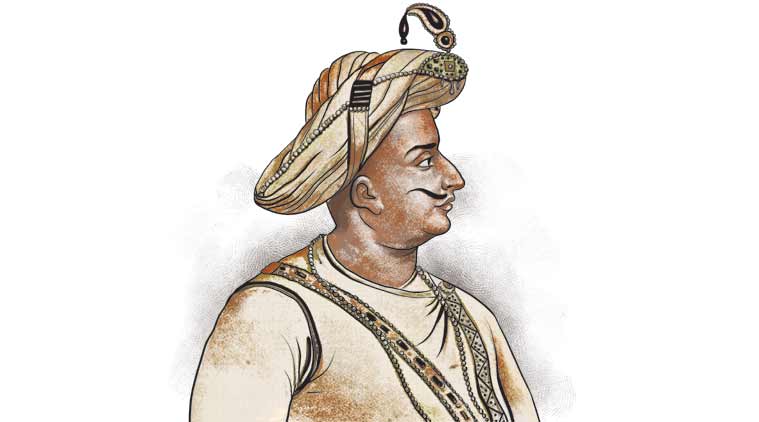
Tipu Sultan, Tipu Sultan controversy, Tipu Sultan issue, Tipu Sultan histy, history tipu sultan, tipu sultan story, BJP, Karnataka, VHP, India news
Tipu Sultan
Why is a late 18th century Mysore ruler at the centre of a polarising debate?
Last year, Karnataka Chief Minister Siddaramaiah announced that from now on, the state would officially celebrate the birth anniversary of Tipu Sultan, the “Tiger of Mysore”, on November 10 every year. A controversy followed, and the historical role of Tipu was debated among those who saw him as a bulwark against colonialism and a great son of Karnataka, and those who pointed to his destruction of temples and forced conversions of Hindus and Christians to accuse him of tyranny and fanaticism.
The disagreement flared up again as the planned celebration approached. The VHP began an agitation, and the BJP announced a boycott of the ceremony at the Karnataka Vidhana Soudha. On the other hand, Siddaramaiah insisted Tipu was a patriot and “true secularist”, and speaking at the Vidhana Soudha function, playwright and Jnanpith awardee Girish Karnad said Tipu would have been as revered in Karnataka as Shivaji was in Maharashtra if only he was Hindu. Karnad also said that Tipu was born in Devanahalli, where Bengaluru airport is located, and the airport should ideally be named after him.
On November 10, a 67-year-old VHP leader was killed after falling off a wall while trying to dodge bricks thrown by protesters in Kodagu. A day later, a Muslim man succumbed to a bullet injury he suffered apparently while participating in a pro-Tipu protest. Girish Karnad and Pratap Simha, the BJP MP from Mysuru who has been leading the protests against the Tipu celebrations, have received death threats online, allegedly from opposing camps in the quarrel.
So, who was Tipu Sultan and when did he rule? What is he best known for?
Tipu Sultan was the son of Haider Ali, a professional soldier of humble origins who started out as a junior officer in the army of the Wodeyar king of Mysore, and rose rapidly to ultimately take power in 1761.
Tipu was born in 1750 and, as a 17-year-old, participated in the first Anglo-Mysore War. He subsequently fought against the Marathas, and in the Second Anglo-Mysore War of 1780-84. Haider died while the war was on, and Tipu succeeded him in 1782. The war ended with the Treaty of Mangalore, at which Tipu had the upper hand.
In India’s wider national narrative, Tipu is a man of imagination and courage, a brilliant military strategist who, in a short reign of 17 years, mounted the most serious challenge that the English East India Company faced in India. He engaged Company forces in four rounds of fighting during 1767-99, and gave Governors-General Cornwallis and Wellesley sleepless nights before finally being killed on the battlefield defending his capital Srirangapatnam in the Fourth Anglo-Mysore war. With Tipu gone, Wellesley imposed the humiliating Subsidiary Alliance on the reinstated Wodeyar king, reducing Mysore to a client state of the Company.
Tipu was a moderniser who reorganised his army along European lines, using new technology, including what is considered the first war rocket. He devised a comprehensive land revenue system based on a detailed survey and classification of land, in which the tax was imposed directly on the peasant, and collected through salaried agents in cash, widening the resource base of the state. He worked to modernise agriculture, giving tax breaks for developing wasteland, building new irrigation infrastructure and repairing old dams, and promoting agricultural manufacturing and sericulture. He sent ambassadors to Europe to learn technical knowhow, built a navy to support sea trade, and commissioned a “state commercial corporation” to set up factories outside Mysore. Mysore started trade in sandalwood, silk, spices, rice and sulphur, and ultimately came to establish 30 trading outposts across Tipu’s dominions and even overseas.
Why is he then seen unfavourably?
As with nearly every historical figure, perspectives on Tipu differ. Both Haider and Tipu had strong territorial ambitions, and invaded and annexed territories outside Mysore. Haider annexed Malabar and Kozhikode, and then conquered Kodagu, Thrissur, Kochi and Mayyazhi (Mahe). Tipu went to war with the English and Marathas, raided Kodagu, and crushed revolts in Kochi and Travancore.
Not surprisingly, in these areas, the narrative of his reign is markedly different. In Kodagu, Mangaluru and Malabar, he is seen as a bloodthirsty tyrant, who burnt down entire towns and villages, razed hundreds of temples and churches, and forcibly converted Hindus. This narrative is sometimes backed by a historical record that has Tipu himself boasting about having forced “infidels” to convert to Islam, and destroyed their places of worship.
Is there any scope for the two opposing narratives to be reconciled?
Real or imagined differences between any two opposing historical narratives appear sharpened periodically — most commonly in the context of current political battles. The disagreement over Tipu is old, and has combusted every few years after ‘political’ provocation. The current escalation probably cannot be separated from the larger context of majoritarian muscle-flexing by Hindu extremists across the country.
Much of the criticism of Tipu is rooted in accounts of those he vanquished — and of colonial historians who had powerful reasons to demonise him. Tipu defeated the Company in wars, allied with the French to frustrate its attempts to control politics of the Deccan and Carnatic, and sought to challenge its vital trading interests. Tipu’s keenness to subjugate Kodagu was linked directly to his desire to control the port of Mangaluru, on whose path Kodagu fell. Tipu battled nearly all powers in the region, irrespective of the faith of his opponents. It is likely that his Islamic zeal had something to do with finding ideological ballast for relentless warring.
To argue, like Siddaramaiah, that Tipu was a nationalist patriot and secular, is futile. Neither nationalism nor secularism is a philosophy that existed in the 18th century. To read these modern concepts back in time is misleading and fallacious. If Tipu fought the British “only to save his kingdom”, so did every other pre-modern ruler in history.
If there is evidence that Tipu persecuted Hindus and Christians, there is enough evidence too of his patronage of Hindu temples and priests, and of handsome grants and gifts to them. His patronage of the Sringeri mutt and donations to temples at Nanjangud, Kanchi and Kalale are well documented.
Tipu was a multilayered personality who must not be seen through the prism of morality or religion. It is not necessary that he be judged either as a hero or as a tyrant.
How does the conflict fit into the politics of Karnataka today?
The Congress and socialists see Tipu as a nationalist figure because he fought the East India Company. His building of roads, a centralised administration, irrigation systems and a modern standing army is stressed to decommunalise his legacy. Championing Tipu as a “statesman” is in line with the Congress’s religion-neutral nationalist tradition.
The row over Girish Karnad’s suggestion on renaming Bengaluru airport reflects something different. The airport is named after Kempe Gowda, a chieftain revered by the Vokkaligas, the core base of the JD(S). The party has picked on Karnad’s remarks, and forced the CM to distance himself from them.
For the BJP and the Parivar, the Tipu controversy is an opportunity to push the political conversation to religious identities and force a polarisation. Siddaramiah, who has built a broad coalition of OBCs and minorities with reasonable success, now faces a challenge from Hindutva politics.
What happens now? How far can this disagreement go?
State Assembly elections are due only in 2018, but Siddaramaiah’s celebration of Tipu has given the opposition an issue to galvanise cadres and target the government.
When linguistic states were formed in the 1950s, many regions that read their historical past differently were merged under a common linguistic identity. Kodagu, now part of Karnataka, has always seen Tipu as an invader — the old Mysore state’s narrative of him as a moderniser was unlikely to be acceptable only because it was now the official state narrative. The Marathas are an exception who found pan-Indian acceptability overcoming past narratives in regions they conquered. Karnad’s point that the evolution of the Marathas into pan-Indian icons was helped by the fact that they were Hindus, is significant.
In much of India, history continues to be seen through an ethnic, communal, regional or religious lens. There is every possibility, therefore, of the Tipu controversy being raked up again.