
Tippu Sultan is the son of Karnataka, and he cared for his people and has done a lot of good. The Victors, the British were hell bent on maligning anyone that was a threat to them, Tipu was no exception.
What he has done for Karnataka is unmatched, he laid the foundation for industry, irrigation and communal harmony. His most trusted deputy was a Hindu, who literally raised him.
BJP is resorting to dirty politics, that is what they have done, where ever they go, they create
problems.
Mike Ghouse
What he has done for Karnataka is unmatched, he laid the foundation for industry, irrigation and communal harmony. His most trusted deputy was a Hindu, who literally raised him.
BJP is resorting to dirty politics, that is what they have done, where ever they go, they create
problems.
Mike Ghouse
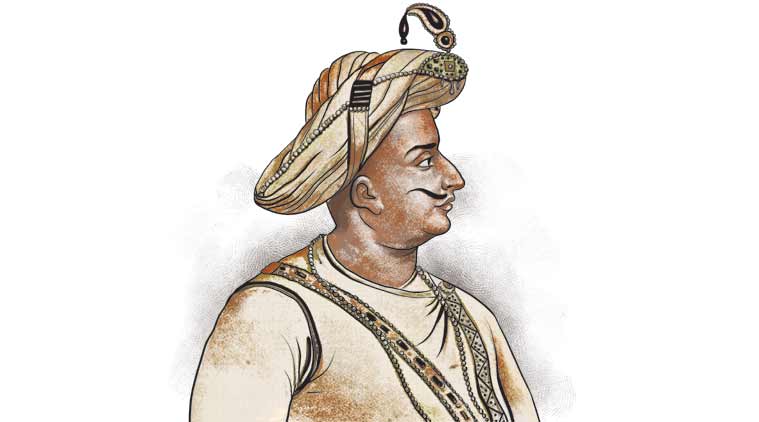
Historical evidence on the life and times of Tipu Sultan is mixed, and his assessment has often been based on current perceptions, prejudices.
Written
by Amrith Lal , Monojit
Majumdar | Updated: November
16, 2015 10:03 am
Why
is a late 18th century Mysore ruler at the centre of a polarising
debate?
Last
year, Karnataka Chief Minister Siddaramaiah announced that from now on, the
state would officially celebrate the birth anniversary of Tipu Sultan, the
“Tiger of Mysore”, on November 10 every year. A controversy followed, and the
historical role of Tipu was debated among those who saw him as a bulwark against
colonialism and a great son of Karnataka, and those who pointed to his
destruction of temples and forced conversions of Hindus and Christians to accuse
him of tyranny and fanaticism.
The
disagreement flared up again as the planned celebration approached. The VHP
began an agitation, and the BJP announced a boycott of the
ceremony at the Karnataka Vidhana Soudha. On the other hand, Siddaramaiah
insisted Tipu was a patriot and “true secularist”, and speaking at the Vidhana
Soudha function, playwright and Jnanpith awardee Girish Karnad said Tipu would
have been as revered in Karnataka as Shivaji was in Maharashtra if only he was
Hindu. Karnad also said that Tipu was born in Devanahalli, where Bengaluru
airport is located, and the airport should ideally be named after him.
On
November 10, a 67-year-old VHP leader was killed after falling off a wall while
trying to dodge bricks thrown by protesters in Kodagu. A day later, a Muslim man
succumbed to a bullet injury he suffered apparently while participating in a
pro-Tipu protest. Girish Karnad and Pratap Simha, the BJP MP from Mysuru who has
been leading the protests against the Tipu celebrations, have received death
threats online, allegedly from opposing camps in the quarrel.
So,
who was Tipu Sultan and when did he rule? What is he best known for?
Tipu
Sultan was the son of Haider Ali, a professional soldier of humble origins who
started out as a junior officer in the army of the Wodeyar king of Mysore, and
rose rapidly to ultimately take power in 1761.
Tipu
was born in 1750 and, as a 17-year-old, participated in the first Anglo-Mysore
War. He subsequently fought against the Marathas, and in the Second Anglo-Mysore
War of 1780-84. Haider died while the war was on, and Tipu succeeded him in
1782. The war ended with the Treaty of Mangalore, at which Tipu had the upper
hand.
In
India’s wider national narrative, Tipu is a man of imagination and courage, a
brilliant military strategist who, in a short reign of 17 years, mounted the
most serious challenge that the English East India Company faced in India. He
engaged Company forces in four rounds of fighting during 1767-99, and gave
Governors-General Cornwallis and Wellesley sleepless nights before finally being
killed on the battlefield defending his capital Srirangapatnam in the Fourth
Anglo-Mysore war. With Tipu gone, Wellesley imposed the humiliating Subsidiary
Alliance on the reinstated Wodeyar king, reducing Mysore to a client state of
the Company.
Tipu
was a moderniser who reorganised his army along European lines, using new
technology, including what is considered the first war rocket. He devised a
comprehensive land revenue system based on a detailed survey and classification
of land, in which the tax was imposed directly on the peasant, and collected
through salaried agents in cash, widening the resource base of the state. He
worked to modernise agriculture, giving tax breaks for developing wasteland,
building new irrigation infrastructure and repairing old dams, and promoting
agricultural manufacturing and sericulture. He sent ambassadors to Europe to
learn technical knowhow, built a navy to support sea trade, and commissioned a
“state commercial corporation” to set up factories outside Mysore. Mysore
started trade in sandalwood, silk, spices, rice and sulphur, and ultimately came
to establish 30 trading outposts across Tipu’s dominions and even overseas.
Why
is he then seen unfavourably?
As
with nearly every historical figure, perspectives on Tipu differ. Both Haider
and Tipu had strong territorial ambitions, and invaded and annexed territories
outside Mysore. Haider annexed Malabar and Kozhikode, and then conquered Kodagu,
Thrissur, Kochi and Mayyazhi (Mahe). Tipu went to war with the English and
Marathas, raided Kodagu, and crushed revolts in Kochi and Travancore.
Not
surprisingly, in these areas, the narrative of his reign is markedly different.
In Kodagu, Mangaluru and Malabar, he is seen as a bloodthirsty tyrant, who burnt
down entire towns and villages, razed hundreds of temples and churches, and
forcibly converted Hindus. This narrative is sometimes backed by a historical
record that has Tipu himself boasting about having forced “infidels” to convert
to Islam, and destroyed their places of worship.
Is
there any scope for the two opposing narratives to be reconciled?
Real
or imagined differences between any two opposing historical narratives appear
sharpened periodically — most commonly in the context of current political
battles. The disagreement over Tipu is old, and has combusted every few years
after ‘political’ provocation. The current escalation probably cannot be
separated from the larger context of majoritarian muscle-flexing by Hindu
extremists across the country.
Much
of the criticism of Tipu is rooted in accounts of those he vanquished — and of
colonial historians who had powerful reasons to demonise him. Tipu defeated the
Company in wars, allied with the French to frustrate its attempts to control
politics of the Deccan and Carnatic, and sought to challenge its vital trading
interests. Tipu’s keenness to subjugate Kodagu was linked directly to his desire
to control the port of Mangaluru, on whose path Kodagu fell. Tipu battled nearly
all powers in the region, irrespective of the faith of his opponents. It is
likely that his Islamic zeal had something to do with finding ideological
ballast for relentless warring.
To
argue, like Siddaramaiah, that Tipu was a nationalist patriot and secular, is
futile. Neither nationalism nor secularism is a philosophy that existed in the
18th century. To read these modern concepts back in time is misleading and
fallacious. If Tipu fought the British “only to save his kingdom”, so did every
other pre-modern ruler in history.
If
there is evidence that Tipu persecuted Hindus and Christians, there is enough
evidence too of his patronage of Hindu temples and priests, and of handsome
grants and gifts to them. His patronage of the Sringeri mutt and donations to
temples at Nanjangud, Kanchi and Kalale are well documented.
Tipu was a multilayered personality who must not be seen through the prism of morality or religion. It is not necessary that he be judged either as a hero or as a tyrant.
Tipu was a multilayered personality who must not be seen through the prism of morality or religion. It is not necessary that he be judged either as a hero or as a tyrant.
How
does the conflict fit into the politics of Karnataka today?
The Congress and socialists see
Tipu as a nationalist figure because he fought the East India Company. His
building of roads, a centralised administration, irrigation systems and a modern
standing army is stressed to decommunalise his legacy. Championing Tipu as a
“statesman” is in line with the Congress’s religion-neutral nationalist
tradition.
The
row over Girish Karnad’s suggestion on renaming Bengaluru airport reflects
something different. The airport is named after Kempe Gowda, a chieftain revered
by the Vokkaligas, the core base of the JD(S). The party has picked on Karnad’s
remarks, and forced the CM to distance himself from them.
For
the BJP and the Parivar, the Tipu controversy is an opportunity to push the
political conversation to religious identities and force a polarisation.
Siddaramiah, who has built a broad coalition of OBCs and minorities with
reasonable success, now faces a challenge from Hindutva politics.
What
happens now? How far can this disagreement go?
State
Assembly elections are due only in 2018, but Siddaramaiah’s celebration of Tipu
has given the opposition an issue to galvanise cadres and target the
government.
When
linguistic states were formed in the 1950s, many regions that read their
historical past differently were merged under a common linguistic identity.
Kodagu, now part of Karnataka, has always seen Tipu as an invader — the old
Mysore state’s narrative of him as a moderniser was unlikely to be acceptable
only because it was now the official state narrative. The Marathas are an
exception who found pan-Indian acceptability overcoming past narratives in
regions they conquered. Karnad’s point that the evolution of the Marathas into
pan-Indian icons was helped by the fact that they were Hindus, is
significant.
In
much of India, history continues to be seen through an ethnic, communal,
regional or religious lens. There is every possibility, therefore, of the Tipu
controversy being raked up again.


