HOME | ABOUT US | Speaker | Americans Together | Videos | www.CenterforPluralism.com | Please note that the blog posts include my own articles plus selected articles critical to India's cohesive functioning. My articles are exclusively published at www.TheGhouseDiary.com You can send an email to: MikeGhouseforIndia@gmail.com


Showing posts with label Karnataka. Show all posts

Sunday, November 15, 2015

The competing narratives of Tipu: What they say, and why

Tippu Sultan is the son of Karnataka, and he cared for his people and has done a lot of good. The Victors, the British were hell bent on maligning anyone that was a threat to them, Tipu was no exception. 

What he has done for Karnataka is unmatched, he laid the foundation for industry, irrigation and communal harmony. His most trusted deputy was a Hindu, who literally raised him. 


BJP is resorting to dirty politics, that is what they have done, where ever they go, they create
problems.
Mike Ghouse

Historical evidence on the life and times of Tipu Sultan is mixed, and his assessment has often been based on current perceptions, prejudices.


Written by Amrith Lal , Monojit Majumdar | Updated: November 16, 2015 10:03 am
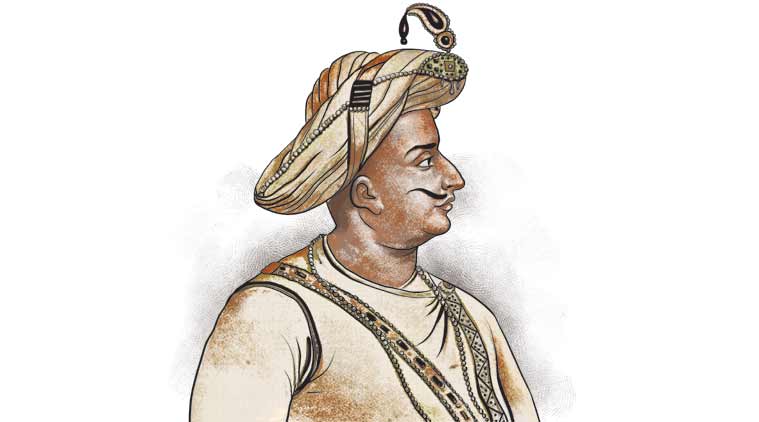
Tipu Sultan, Tipu Sultan controversy, Tipu Sultan issue, Tipu Sultan histy, history tipu sultan, tipu sultan story, BJP, Karnataka, VHP, India news
Tipu Sultan
Why is a late 18th century Mysore ruler at the centre of a polarising debate?
Last year, Karnataka Chief Minister Siddaramaiah announced that from now on, the state would officially celebrate the birth anniversary of Tipu Sultan, the “Tiger of Mysore”, on November 10 every year. A controversy followed, and the historical role of Tipu was debated among those who saw him as a bulwark against colonialism and a great son of Karnataka, and those who pointed to his destruction of temples and forced conversions of Hindus and Christians to accuse him of tyranny and fanaticism.
The disagreement flared up again as the planned celebration approached. The VHP began an agitation, and the BJP announced a boycott of the ceremony at the Karnataka Vidhana Soudha. On the other hand, Siddaramaiah insisted Tipu was a patriot and “true secularist”, and speaking at the Vidhana Soudha function, playwright and Jnanpith awardee Girish Karnad said Tipu would have been as revered in Karnataka as Shivaji was in Maharashtra if only he was Hindu. Karnad also said that Tipu was born in Devanahalli, where Bengaluru airport is located, and the airport should ideally be named after him.
On November 10, a 67-year-old VHP leader was killed after falling off a wall while trying to dodge bricks thrown by protesters in Kodagu. A day later, a Muslim man succumbed to a bullet injury he suffered apparently while participating in a pro-Tipu protest. Girish Karnad and Pratap Simha, the BJP MP from Mysuru who has been leading the protests against the Tipu celebrations, have received death threats online, allegedly from opposing camps in the quarrel.
So, who was Tipu Sultan and when did he rule? What is he best known for?
Tipu Sultan was the son of Haider Ali, a professional soldier of humble origins who started out as a junior officer in the army of the Wodeyar king of Mysore, and rose rapidly to ultimately take power in 1761.
Tipu was born in 1750 and, as a 17-year-old, participated in the first Anglo-Mysore War. He subsequently fought against the Marathas, and in the Second Anglo-Mysore War of 1780-84. Haider died while the war was on, and Tipu succeeded him in 1782. The war ended with the Treaty of Mangalore, at which Tipu had the upper hand.
In India’s wider national narrative, Tipu is a man of imagination and courage, a brilliant military strategist who, in a short reign of 17 years, mounted the most serious challenge that the English East India Company faced in India. He engaged Company forces in four rounds of fighting during 1767-99, and gave Governors-General Cornwallis and Wellesley sleepless nights before finally being killed on the battlefield defending his capital Srirangapatnam in the Fourth Anglo-Mysore war. With Tipu gone, Wellesley imposed the humiliating Subsidiary Alliance on the reinstated Wodeyar king, reducing Mysore to a client state of the Company.
Tipu was a moderniser who reorganised his army along European lines, using new technology, including what is considered the first war rocket. He devised a comprehensive land revenue system based on a detailed survey and classification of land, in which the tax was imposed directly on the peasant, and collected through salaried agents in cash, widening the resource base of the state. He worked to modernise agriculture, giving tax breaks for developing wasteland, building new irrigation infrastructure and repairing old dams, and promoting agricultural manufacturing and sericulture. He sent ambassadors to Europe to learn technical knowhow, built a navy to support sea trade, and commissioned a “state commercial corporation” to set up factories outside Mysore. Mysore started trade in sandalwood, silk, spices, rice and sulphur, and ultimately came to establish 30 trading outposts across Tipu’s dominions and even overseas.
Why is he then seen unfavourably?
As with nearly every historical figure, perspectives on Tipu differ. Both Haider and Tipu had strong territorial ambitions, and invaded and annexed territories outside Mysore. Haider annexed Malabar and Kozhikode, and then conquered Kodagu, Thrissur, Kochi and Mayyazhi (Mahe). Tipu went to war with the English and Marathas, raided Kodagu, and crushed revolts in Kochi and Travancore.
Not surprisingly, in these areas, the narrative of his reign is markedly different. In Kodagu, Mangaluru and Malabar, he is seen as a bloodthirsty tyrant, who burnt down entire towns and villages, razed hundreds of temples and churches, and forcibly converted Hindus. This narrative is sometimes backed by a historical record that has Tipu himself boasting about having forced “infidels” to convert to Islam, and destroyed their places of worship.
Is there any scope for the two opposing narratives to be reconciled?
Real or imagined differences between any two opposing historical narratives appear sharpened periodically — most commonly in the context of current political battles. The disagreement over Tipu is old, and has combusted every few years after ‘political’ provocation. The current escalation probably cannot be separated from the larger context of majoritarian muscle-flexing by Hindu extremists across the country.
Much of the criticism of Tipu is rooted in accounts of those he vanquished — and of colonial historians who had powerful reasons to demonise him. Tipu defeated the Company in wars, allied with the French to frustrate its attempts to control politics of the Deccan and Carnatic, and sought to challenge its vital trading interests. Tipu’s keenness to subjugate Kodagu was linked directly to his desire to control the port of Mangaluru, on whose path Kodagu fell. Tipu battled nearly all powers in the region, irrespective of the faith of his opponents. It is likely that his Islamic zeal had something to do with finding ideological ballast for relentless warring.
To argue, like Siddaramaiah, that Tipu was a nationalist patriot and secular, is futile. Neither nationalism nor secularism is a philosophy that existed in the 18th century. To read these modern concepts back in time is misleading and fallacious. If Tipu fought the British “only to save his kingdom”, so did every other pre-modern ruler in history.
If there is evidence that Tipu persecuted Hindus and Christians, there is enough evidence too of his patronage of Hindu temples and priests, and of handsome grants and gifts to them. His patronage of the Sringeri mutt and donations to temples at Nanjangud, Kanchi and Kalale are well documented.
Tipu was a multilayered personality who must not be seen through the prism of morality or religion. It is not necessary that he be judged either as a hero or as a tyrant.
How does the conflict fit into the politics of Karnataka today?
The Congress and socialists see Tipu as a nationalist figure because he fought the East India Company. His building of roads, a centralised administration, irrigation systems and a modern standing army is stressed to decommunalise his legacy. Championing Tipu as a “statesman” is in line with the Congress’s religion-neutral nationalist tradition.
The row over Girish Karnad’s suggestion on renaming Bengaluru airport reflects something different. The airport is named after Kempe Gowda, a chieftain revered by the Vokkaligas, the core base of the JD(S). The party has picked on Karnad’s remarks, and forced the CM to distance himself from them.
For the BJP and the Parivar, the Tipu controversy is an opportunity to push the political conversation to religious identities and force a polarisation. Siddaramiah, who has built a broad coalition of OBCs and minorities with reasonable success, now faces a challenge from Hindutva politics.
What happens now? How far can this disagreement go?
State Assembly elections are due only in 2018, but Siddaramaiah’s celebration of Tipu has given the opposition an issue to galvanise cadres and target the government.
When linguistic states were formed in the 1950s, many regions that read their historical past differently were merged under a common linguistic identity. Kodagu, now part of Karnataka, has always seen Tipu as an invader — the old Mysore state’s narrative of him as a moderniser was unlikely to be acceptable only because it was now the official state narrative. The Marathas are an exception who found pan-Indian acceptability overcoming past narratives in regions they conquered. Karnad’s point that the evolution of the Marathas into pan-Indian icons was helped by the fact that they were Hindus, is significant.
In much of India, history continues to be seen through an ethnic, communal, regional or religious lens. There is every possibility, therefore, of the Tipu controversy being raked up again.

Monday, May 12, 2014

Tipu Sultan's ring to be auctioned off at Christies

GOVERNMENT OF INDIA SHOULD BUY THIS HISTORIC RING
AND TAKE PRIDE IN INDIAN RULER'S SECULAR CREDENTIALS

URL - http://mikeghouseforindia.blogspot.com/2014/05/tipu-sultans-ring-to-be-auctioned-off.html

"RAM" IS INSCRIBED ON THE RING IN HINDI
This is indeed one of the best news I have read about Tippu Sultan, reaffirming his credentials as a secular ruler.

Dr. Range Gowda has done through research and has unearthed the documents found in the Sringeri Mutt in Mangalore - where the Jagadguru of the Mutt has praised Tippu Sultan for saving the temple from the Maratha onslaught and restoring the temple.  Tippu also rebuilt the Ranganatha Swamy temple in Sri Rangapatna.

When I was around 8-10 years old, my Dad corrected the tour guide at the temple for his divisive language when we went on a tour of Mysore. It's amazing, it's almost like hereditary, I do the same, and I have corrected the tour guides in Israel, India, Australia and elsewhere.

He is one of the first three rulers in the world who had recognized American independence and had sent his greetings; the letter is in a French Library per Dr. Gowda. 

He is falsely accused of forcing conversions of Christians and Hindus, he was not aware of it, his overzealous fanatic generals did that, just as Amit Shah could muddle things with his thoughtless idiotic words do in the name of Modi and Modi will get the bad rap for it.
This is one of the few brass busts made on biennial century of Tippu's death in 1999; one of them was given to me as a gift, which I cherish. More at http://theghousediary.blogspot.com/2013/05/tippu-sultan-indias-brave-king-against.html


I sincerely hope the Government of India buys it and displays it in its Museum and take pride in our heritage of secular pluralistic leaders.

Mike Ghouse
http://MikeGhouseforIndia.blogspot.com
www.MikeGhouse.net

# # # # #

Courtesy of  The Hindu

Tipu Sultan's ring to be auctioned off at Christies
Parvathi Menon


It is through the private commerce of the auction house that many a precious relic of India's history has come to light.

On May 22, a remarkable artifact that illuminates a watershed moment in India's history will be auctioned by the leading London auction house Christie's - and presumably thereafter vanish forever from the public eye.

A heavy gold ring worn by 18th century ruler Tipu Sultan during his last campaign against the British in 1799 will be sold as part of the 'Raglan Collection: Wellington, Waterloo & The Crimea.'

Unusually, the 41.2 gm oval ring has the name of the Hindu God Rama in raised Devanagari inscribed on it.


It was taken off the finger of the dead ruler by the Duke of Wellington, Arthur Wellesley, as his personal spoil of war after the Battle of Seringapatam in 1799.

 The ring then found its way into the hands of another military family, that of FitzRoy Somerset, the 1st Baron Raglan. A famous soldier of the early 19th century, he joined Duke Wellington's service in 1808 and rose to become his right-hand man for the next 40 years. He fought in major campaigns under Duke Wellington, including Waterloo and in the Crimea.

 Tipu's ring to be auctioned off at Christies

FitzRoy Somerset married the Duke's favourite niece Emily Wellesley-Pole who was in possession of the ring, a gift from her uncle.

The ring has been valued at £10,000 to £15,000 and is part of the private collection of Fitzroy John Somerset, the great great grandson of the 1st Baron Raglan. The collection contains items that have been the possession of the family from 1858, including historical medals, arms and armour, militaria, pictures, furniture, silver, books, Indian weapons and works of art, as well as a selection of art.

Though a small object of personal use, the ring with its inscription awakens the spirit of the unusual 18th ruler who was its owner.

The historical record shows Tipu as Catholic in his religious outlook and forward-looking in his world-view. He sought out what was modern and transformatory for the time, putting it to use in his paramount objective of defeating the British.

Monday, March 1, 2010

Taslima's article sparks violence in Karnataka, 2 killed

Taslima's article sparks violence in Karnataka, 2 killed

Taslima's article sparks violence in Karnataka, 2 killed, the article is followed by my commentary and Quotes from Quraan.

The Indian Muslim clergy and the leadership needs to jump in on this. As an individual she has the right to express her opinions whether we agree or not, as much as any one has a right to condemn her statements.

Continued: http://worldmuslimcongress.blogspot.com/2010/03/taslimas-article-sparks-violence-in_01.html

Friday, May 2, 2008

We are one India, aren't we?

In the article below MV Kamath has captured the essence of the state disputes in India.

What are the choices we have?

Justice should be the basis for resolving all the disputes. In the case of water allocation between states or the Goondas chasing workers out of Maharashtra, the GOI cannot impose laws, as it would aggravate the situation further and may elongate the disputes.

A few thoughts, hoping each one of us on the forum can add a few solutions;

3. A commission involving all members to the conflict to come with a solution that all can live with the resolution. Put the bad guys and the good guys to bring the solutions, leaving any one outside the discussion is futile. Every argument and counter argument should be encouraged, but their end goal is a solution. Let the debates be published daily... let the public on either side of the conflict be educated and learn that... what they assume is right for them is not right for the other, and they have to come to terms that what is good for them has got to be good for others for the decision to sustain and last.

1. Any damage to public property must be considered criminal - without labeling them as Tamilians or Kannadigas, Telugu or Marathas, North Indian or Mumbaites, the police or special military unites must round them up as criminal individuals, hope the media can support this, as an issue of law and order.

2. A resolution needs to be passed in each assembly that no Public representative (MLA's, MP's) would use the language to further the dispute and create chaos that shall disqualify him or her from serving in the public office. Again their oath is to uphold law and order, justice to every citizen and not acting out as required must be a disqualified. Let that be published in the media. Let that be handled by a special commission made up of people representing all sides.

Please share your views in the comment section below:

Jai Hind


Mike Ghouse
www.MikeGhouse.net

iiiiiiiiiiiiiiiiiiiiiiiiiiiiiiiiiiiiiiiiiiiiiiiiiiiiiiiiiiiiiiiiiiiiiiiiiiiiiiiiiiii
Subject: One India, one people - http://indiasecular.wordpress.com
http://indiasecular.wordpress.com/
We are one India, one people
By M.V. Kamath,Organiser


No state can claim arbitrary rights to the use of water flowing in a river that passes through one or two other states.

Maharashtra is having differences with Andhra Pradesh over the waters of the Godavari. Andhra Pradesh is objecting to the construction of the Babhli Barrage in Maharashtra, claiming that it intrudes into the water shortage area of Pachampad Dam, also known as Shri Ram Sagar project, built by Andhra Pradesh.


What on earth are we doing to this lovely country we call our home, our motherland? Why are we forgetting that we are Indians first, last and always? Sub-nationalism is taking on new colours and is threatening the essential unity of this great nation, for which thousands fought and died since 1857.


Did Bhagat Singh go to the gallows to see the Thackeray clan̢۪s goons drive Bihari labourers out of Maharashtra? Or to see Karnataka Rakshana Vedike activists go on a rampage damaging trucks boarding Tamil Nadu registration? Members of the Vedike have been indulging in outrageous acts such as stopping Tamil films being shown in Bangalore and stoning the office of a cable TV network in a bid to stop it from relaying Tamil programmes.

What kind of rakhshana are these rowdies providing to Karnataka? If they want to preserve the essential character of Kannada, they must tell those activists appearing in Kannada channels not to intersperse English words even in ordinary conversation. In reply to goondaism in Karnataka, their counterparts in Chennai have been rampaging in Chennai, attacking restaurants set up allegedly by Kannadigas: wreaking unheard of damage to property. And one understands that these were not goons but educated lawyers who presumably are conversant about law and order.
What sort of madness is it that is overtaking this country? Bihari labour is being driven out from the north east. They are not wanted in Jammu and Kashmir either.

In the first week of February, 60,000 migrant labourers left Nasik and 40,000 from Pune. Many industrial units have been apparently closed down in Maharashtra because north Indian workers have been driven out. Several steel units, not to speak of construction activities are indefinitely closed down.

One would have imagined that these developments would have been taken notice of by our ‘leaders’. When there was strong anti-Hindi agitation in Chennai in the sixties, Indira Gandhi had the courage and foresight to rush to Tamil Nadu to cool down tempers.


In contrast, Sonia Gandhi has gone to Rajasthan, mainly to run down the BJP. The south is burning, but Sonia Gandhi can only think of ridiculing L.K.Adavani and Jaswant Singh over a minor controversy. It is to this sad state of national degradation that this country has been reduced.


What is it that has set Tamil Nadu against Karnataka? There is a dispute between the two states over the setting up of a project at a place called Hogenakkal, situated on their mutual border, allegedly for the supply of drinking water to Tamil Nadu. The estimated cost of the Project has been placed at Rs 1,340 crore, no small sum. This project is part of the outstanding and unresolved larger issue of equitable sharing of the waters of the river Kaveri (Cauvery) between the two riparian states. The Cauvery Water Disputes Tribunal had given its verdict last year, but unhappy with it, both the states had appealed to the Supreme Court where the petitions are reportedly pending. Wisdom dictated that a mutually agreed solution should be worked out between the two concerned states; instead, the matter has been turned into high level dissonance with Tamil Nadu Chief Minister making harsh statements unbecoming of anyone, let alone a Chief Minister.

Karunanidhi has since shown signs of wisdom and announced categorically that â€Å“no room should be given to violence” and Karnataka’s S.M.Krishan has reciprocally called him â€Å“magnanimous”, both welcome statements, if somewhat belated, even if Karunanidhi keeps talking about Tamil â€Å“Self respect”.

Nobody in his right mind would want to wound any state̢۪s self-respect. That should go without saving.

In this regard, two points need to be made: One is that India is not a confederation of independent States. It is one and indivisible.

No state can claim arbitrary rights to the use of water flowing in a river that passes through one or two other states. Maharashtra is having differences with Andhra Pradesh over the waters of the Godavari. Andhra Pradesh is objecting to the construction of the Babhli Barrage in Maharashtra, claiming that it intrudes into the water shortage area of Pachampad Dam, also known as Shri Ram Sagar project, built by Andhra Pradesh.
Seventy one (71) kilometres of the 126 km long water storage area of the Shri Ram Sagar Project is in Andhra Pradesh, while 55 kms is in Maharastra. The issue has been raised that because of this, the Babhli Barrage intrudes into the water storage area of the Shri Ram Sagar Project.

Such disputes need to be amicably settled, not viciously fought over by stoning buses and damaging public property or getting film stars to take sides. When it comes to natural resources, they are not the exclusive property of Punjabis or Bengalis, Gujarathis or Rajasthanis, Kannadigas or Tamilians. Only the other day (March 27), Gujarat̢۪s Chief Minister, Narendra Modi symbolically sent the Narmada waters surging through a specially constructed main canal, to quench the thirst of desert-lined Rajasthan, after an epic 458 km long journey through ten districts of Gujarat.

â€Å“We are doing no favour to our neighbours, just repaying a centuries-old debt” said Modi, emotionally, while addressing lakhs of people who had assembled at Banaskantha. That is real patriotism.


Those who have been indulging in violence both in Karnataka and Tamil Nadu are insulting Bharat Mata. They need to be pulled up sharply. There are no Kannada or Tamil waters. Or Maharashtrian and Andhra Pradesh waters. All that we have are a Kaveri and a Godavari, just as we have a Narmada or a Ganga. What is true of rivers, is also true of human beings.

We are Indians first; language should not separate us, or geography.


It is only when there is free movement of people across one part of the country to another, that we establish our true Indian-ness or Bharatiyata.

Mumbai City, for instance, was not built to its pre-eminence solely by the Marathi manoos. It was the sum-total of efforts made by Parsi entrepreneurs, Gujarati businessmen, Konkan mill workers, Marathi intellectuals, north Indian film stage and Karnatak hoteliers, to mention only a few, to whom credit is due. The Civil Service is all-Indian. Only talent counts.

The Army is one; so are the Navy and Air Force. They are not divided linguistically. It is time our petty politicians remembered that.


Strong objection should be taken about Karnatak and Tamil film stars behaving in a most craven manner. Children behave more responsibly. It is this kind of in-fighting between one kingdom and another in the 18th century that finally enabled the British to conquer India. All inter-state disputes should be settled amicably, not by mud-slinging and in-fighting, but through mutual understanding and accommodation.

Lord Clive must be laughing in his grave at the antics of our so-called ‘leaders’. They have only brought shame and disgrace to this country we love. What our national ‘leaders’ are doing. Sitting pretty in Delhi, while south India is burning makes one wonder what, sort of leaders we have.


India's polity is rotten, writes The Economist (March 22). No truer words were said.


http://www.organiser.org/dynamic/modules.php?name=Content&pa=showpage&pid=235&page=13