HOME | ABOUT US | Speaker | Americans Together | Videos | www.CenterforPluralism.com | Please note that the blog posts include my own articles plus selected articles critical to India's cohesive functioning. My articles are exclusively published at www.TheGhouseDiary.com You can send an email to: MikeGhouseforIndia@gmail.com


Sunday, July 21, 2019

Religious freedom and economic prosperity

RELIGIOUS FREEDOM AND ECONOMIC PROSPERITY
Open to Public, RSVP
Time 11:30 to 1:00 PM
Friday, July 19k 2019
Location:  100 Maryland Ave, NE, conference Room 3, Washington DC 20002
RSVP – https://www.eventbrite.com/e/religious-freedom-is-proportional-to-economic-prosperity-of-a-nation-tickets-64248754755
Organization(s): Center for Pluralism
Preview: The economic prosperity of a nation is directly proportional to religious freedom. It frees people from the daily tensions of what to eat, drink, wear and believe, or loss of income. They become a productive employee and devoted members of their family and contributing to the prosperity of the nation.
PARKING
Union Station metro and Capitol South Metro are about 10 minutes’ walk from the United Methodist building, the building is in the corner of Maryland Ave, NE, and First Street NE – ring the doorbell. You might find parking north of 2nd street on the constitution avenue/

Preview: The economic prosperity of a nation is directly proportional to religious freedom. It frees people from the daily tensions of what to eat, drink, wear and believe, or loss of income. They become a productive employee and devoted members of their family and contributing to the prosperity of the nation.
The prosperity hinges on the prosperity of people around us and the success of nations around us. None of us will succeed if some of us are left behind. Moreover, our very survival as a society may be at stake.
We are committed to restoring justice to my fellow Americans   We will restore our glory days, and in the end, no human will be left out.
We will discuss the solutions … and what we can do about it.
Imagine a child raised with ill will towards Blacks, Whites, Latinos, Arabs, Chinese or Asians. I have closely monitored the results with Indian kids raised to hate Pakistani kids and vice-versa. The idiotic parents poison their kids.
When that child grows up to be an adult and has to work with the other who is not to be trusted, you can guess the anguish that person endures. There is an unwanted battle he/she encounters causing him non-stop distress. As an owner of the business, do you welcome these inner battles between employees, don’t they cut down the productiveness of your firm?
You want to get along with all and focuses on delivering quality products and services to your customers.  You also want to go home with no baggage from work and give 100% of himself or herself to the family. A happy person is productive for his/her family, your community and the nation.
Should employers look for employees who have no problem with others?
Dr. Swamy’s example
Questions to the audience – how many of you feel tense working with….
Disaster is waiting to happen in India.
This is an early warning signal to the Indian businesses and IT employees who do not want to see a disaster and lose all that they have gained in the last two decades. The course can be corrected, and PM Modi needs to be approached.
‘Let’s start with an ideal society that functions cohesively, where each member of the community feels secure about his/her faith, culture, language, ethnicity, and other uniqueness. Indeed, the prosperity of a nation and religious freedom is directly proportional to each other, the higher the freedom, the greater the economic prosperity.
That’s the central lesson of the “2008 Index of Economic Freedom,” released by The Heritage Foundation and The Wall Street Journal. “A country-by-country survey of how free people are worldwide to direct their economic fortunes; the Index repeatedly demonstrates the vital link between freedom and prosperity. In simple words, the freer the people are, the more an economy grows — and the more everyone benefits.”
Gill and Owen in a paper “Religious Liberty and Economic prosperity,” write in a Cato Publication, ” A casual glance suggests nations that have developed strong legal guarantees of religious freedom are also ones that have had long-term sustained economic growth (Grim and Finke 2011).”
One should be free to eat, drink, wear, think, speak, and believe whatever the individual wants in the pursuit of his/her happiness. The greater the security, the higher the productivity, and one starts contributing more than his share to the growth of the company and the nation’s GDP as a whole.
Right now, most minorities, but particularly the American Jews, Muslims, Sikhs, and Latinos are the worried, concerned and are tense. African Americans have been tensing all through history. I live in a predominantly Black community; in fact, I am the only non-black there.
         Let the audience take a minute to share it.
When a black man sits behind the wheel to go to work, he is apprehensive, never knowing when he will be stopped….and even shot.
The Jewish Community, 119 Cemeteries
Muslims Mosques, declarations by a few stupid presidential candidates that they will not hire Muslims in their administration – Harmon had said, Gingrich had said, Romney had said. all of them did the damage
the Indian Christians, Muslims, and Dalits are not feeling secure in their neighborhoods. Every day is laden with tensions, and everyone is apprehensive about walking alone on the street lest he/she be beaten, harassed, raped, or even lynched. Lynching is not only on beef pretext but clearly demanding to renounce one’s religion.
Let this be clear; the innocent majorities believe that everyone around them is treated fairly and equitably. However, the moderate white majority does not understand the fear a black man feels when he sits behind the wheel to go to work, nor does the moderate Hindu majority understands the concern a Muslim, Christian or a Dalit man or a woman feels walking alone on a given street in Modi’s India.
Since ‘Modi’s re-election on May 23, 2019, in less than a month, seven cases of brutal lynching have occurred. Muslims, in particular, are afraid to get out on the street, lest someone lynches them for the suspicion of carrying beef. Just this week, a woman was hung to a tree and beaten non-stop while a huge crowd gathered around and watched the shameless act. An individual was hacked to death with bare stones and ax in public, and they videotaped the gory murder for the world to watch.
Does Modi recognize the ruthless, mindless, and violent new generation he is fostering? What kind of Next generation are we raising?
Modi needs to get out of the mode of giving three days for the violent men to clean up before he takes action as happened in Gujarat Massacre where nearly 2000 men, women, and children were killed and burnt alive.   Last year, the men who gang-raped and brutally murdered a six-year-old girl in a Hindu temple were greeted with garlands by Modi’s men as if they were heroes. Two years ago, the Chief Minister (Governor equivalent) Yogi stood on the podium next to a man who announced to the extremists to dig out dead Muslim women from the graves and rape them, and it happened as well. There is a whole list out there, but the question is what kind of Indians are we looking forward to being in the new generation.
On the other hand, can a nation afford to undermine and underutilize the productivity of her 300 million Dalits, 200 million Muslims, and 30 million Christians? Can it afford to keep the people under eternal tensions?
India may get the certificate of country of Particular Concern by the Department of State? Would Google, Facebook, Twitter, and other mega-corporations see a future in ‘India’s growth, would they continue to partner or hold back for lack stability?
Indian Muslim must be appreciated; they have shown extraordinary resilience and patience. Despite the lynching’s and injustices, they have not resorted to violence, unlike their counterparts in other nations. Presidents Bush, and then Obama, as well as Prime Minister Manmohan Singh, have appreciated Indian Muslims. It is time for Modi to do the same and stop the growing discord.
Prime Minister Modi and his party is living in the past and want to get even with the Muslims for the acts committed by some kings three hundred years ago, who happened to be Muslims. Indeed, almost all the kings of yesteryears, be it Hindu, Muslim, Christian or otherwise expanded their territories by killing the neighbors and robbing their wealth.  The Muslim of independent India has nothing to do with anyone beyond his/her grandfather; in fact, no one should be responsible for the acts he did not commit. Should one be jailed for the actions of his father?
If Modi cannot change the mindset of the mobs, no one can. All he has to do is to speak up and boldly announce that anyone who harasses another Indian will be taken to the court and appropriate punishment will be met. That is all it takes.
There is a limit to pushing, harassing, and lynching people and that limit is approaching a breaking point, it needs to be stopped before it blows up.
What if Indian Muslims, Christians, and Dalits cannot take it anymore and resort to violence? What will happen to the economy, investments from overseas, and the political stability of the nation? Every Indian will live in hell should that happen. I hope Modi brings law and order and restores the cohesiveness of India. No Indian wants a chaotic India.
If India goes through serious social upheaval and terrorism, How does it affect American Interests?
Geopolitical
Economic
Freedom
References:

Communal Harmony Story of India

When Old Delhi Came Together to Shower Petals on A Temple Yatra and Serve Food at the Bhandaara…. Abu Sufyan says, “We have shown the way to India”
This reminds me of how we have shown conflict Mitigation in America when Pastor Jones wanted to burn 3000 copies of the Quran.
Way back in the ’60s- when Jabalpur riots broke out,  Muslims and Hindus were throwing soda bottles at each other and several people were killed. My father sat us down along with friends and said this – if the first two individuals, let’s say Ram and Raheem were stopped from fighting, nothing would have happened. The quarrel was between the two,  it should have stayed between them, but within minutes each other’s friends join to beat up on the other and by the end of the day, it became a Hindu Muslim riot. They were store owners next door to each other fighting over who can read the morning newspaper. Then my father said, the quarrel was between the two idiots and not HIndus and Muslims.  I will always remember that the fights, wars, and riots start with two individuals and not religions, even if the idiots say Allahu Akbar or Jai Shree Ram. It is the individuals and not religions. Religions don’t have legs to walk and fight.
Courtesy of TheCitizen.In
NEW DELHI: It was a rare but warming sight in the winding lanes of Old Delhi. Despite the trepidation and anxiety that kept women and children indoors, the men folk of both communitiies came out to greet a Shobha yatra to reinstall idols in the temple at Lal Kuan, with flowers and bottles of water.
The Aman committee formed after the violence in Lal Kuan in which the temple was stoned, was there to greet the procession along with the residents of Old Delhi. They showered rose petals, offered bottles of water, and this gesture at the very beginning of the yatra diffused what could have become a very tense situation.
And if this was not enough the bhandaara organised by the temple, had the Muslim residents serving the food to the processionists. Another gesture that brought smiles to tense faces and contributed towards a peaceful end to a very tense day. The Delhi police that have played an exemplary role and earned the respect and support of both communities over the past few days, were present in large numbers. Ninety one CCTV cameras, along with audio, were installed in the area..
In the absence of conventional leaders —with all political representatives having disappeared from view—the residents of Old Delhi too peace into their hands and worked day and night to ensure that there was no disturbance during the course of a Shobha yatra to re-install idols in the temple at Lal Kuan.

It might be recalled that a clash between the two communities over a petty parking issue had resulted in stone throwing, with the Durga temple vandalised in the confrontation. The anger was contained then by the two communities who formed an Aman committee, and worked with the Delhi police to bring about an agreement in which the Muslims agreed to repair the temple. Those responsible for the violence were arrested.
There was no dearth of good samaritans. Young man Abu Sufiyan did the work that journalists no longer bother with, recording the procession, the arrangements, interviewing key persons and releasing the videos of peace on the social media to bust rumours that were aimed at inciting passions on the streets. Sufiyan diligently videographed the efforts for peace, while the eight member peace committee worked with the police to ensure that no spark was ignited by mischief makers that would set the area on fire.
Although Twitter kicked up a storm, on the ground in Old Delhi the peace committee and residents worked to diffuse rumours of big build ups on both sides, of sinister plans by the one community to attack the other. These were diffused again through positive posts on the social media and direct contact with residents. The Aman committee of both Hindus and Muslims did a good job, and according to the local residents, did amazing work to keep the situation under control. Not just that but to promote “bhai chara” between the residents, with the bhandaara in which the committee made the Muslims participate, and the joint reception with flowers and water going a long way for peace.
Sufiyan said, “when the trouble began we all really felt the need for political leaders as we had no idea what to do. But now that the people here have taken over, we are actually happy that none of them came here. They would have only complicated matters and perhaps made the situation very tense.” Instead the residents took over and have shown the country the power of the people in what was a very exacting and tense situation that went out of hand, but was immediately brought back in control.
As the local residents said, it is difficult to find words to express how this was done, and then as a young man piped up with a smile, “but we did it!” Sufiyan had the last word, “we have shown the way to all of India.”

Credit for Videos and photographs ABU SUFIYAN

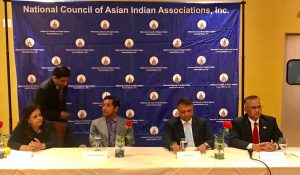
NCAIA- Inclusive Language

 NCAIA Event – Inclusive language. Inspiring stories of amazing people and their successful journey in entrepreneurship. Each one of us can relate with at least one aspect of their journey.
June 6, 2019, Silver Spring, MD — The national council of Asian Indian Associations (NCAIA) organized a talk on leadership & entrepreneurship in America.
Mr. Pavan Bezwada, President, and Dr. Suresh Gupta, the Chairman delivered a brief thoughtful message. They have a great team who put this event together and invited the right people to share the journey of their success in entrepreneurship.  As a social scientist, I will concentrate on their inclusive language, one of the essential elements of entrepreneurship.
L-R: Dolly Oberoi, Sid Chowdhary, Sam Malhotra, and Subbu Manianasamy 
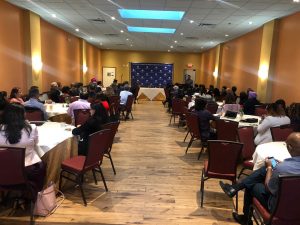
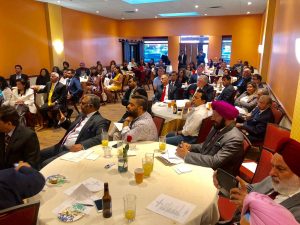
Even though the program went over time, the enthusiasm to listen to the speakers did not wane a bit.  Almost everyone in the audience could relate the journey of the speakers. Indeed, I connected with each speaker and pleased to share a few notes and hope that you find that connection as well.
They were all very humble people, maybe they have imbibed the American values. In most other parts of the world, individuals with power and wealth allow arrogance to take over them.  All of them personally financed their ventures.
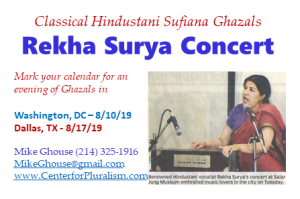
Please mark your calendar
DC: Saturday, Aug 10, 2019
Dallas: Saturday, Aug 17, 2019
Location and contacts will be announced shortly.
Ms. Dolly Oberoi, CEO of c2 Technologies, was inspiring, particularly to those who have a dream and want to pursue it without any knowledge and resources. It’s her passion, coupled with the commitment to make a difference that brought her undeterred success. Her story should motivate many people, and one of my friends has dropped everything and is precisely doing that, innovating technology to put knowledge in the hands of people who would otherwise not have it. I hope to have him meet her. She gave a perfect message to women to not let anyone discount their dreams and aspirations.  She also urged to bring in the youth, so they know that their crazy ideas are realizable. Her mom encouraged her to be who she is and suggested that parents lift their children. It’s the passion and commitment that brings success.
Mr. Siddhartha Chowdhary, CEO of Credence Management, shared his success story. He also dreamt, and many hurdles came his way, but his dream to be someone, and determination to decide his future made him pass through them all.  I was gloating when he said; Steve Jobs motivated him. Indeed, Steve Jobs did that to me as well. I abandoned every money-making activity and pursued establishing the center for pluralism.
A key point of his style of management is not to blame others if a mistake is made. He asks himself how he could have avoided the error the next time around. With that attitude, no one’s devotion to the work gets dampened, and his or her energy remains intact. He called himself the bottom of the funnel through which all the failures and success pass through.  That is like Siri on your cell phone, if you take a wrong exit, she will not call you names, but factually tells you to make a U-turn at the next turn.
Mr.  Subbu Maniaswamy, CTO, Maryland Dept of human services broadened the definition of entrepreneurship, the difference between him and the business people was, he was not getting the profits but creating jobs and service. One of the key points he brought was the entrepreneurial spirit the immigrants are not passing it one to the next generation. This needs to be worked.
He shared a beautiful story of the legendary Birbal and King Akbar. When Akbar’s son was thrown into the sea on his ship, Akbar jumped and rescued him. Sid equated an entrepreneur with Akbar, he had all his military men on the boat to save, but it was Akbar who jumped. You take the responsibility to make things happen.
Mr. Sam Malhotra, CEO, Subsystems technology is the highest ranking Indian in the Maryland State Government as a cabinet secretary of Governor Hogan.
I instantly connected with him for his tone of voice, a rare soft voice like Manmohan Singh’s, and I have a similar sound. Once in Dallas, I played an audio clip of a Zoroastrian scholar on my Radio show, I was taken back, I thought that he was me.
Sam would be a role model to teach his inclusive language. A few Indians forget that when you are a genuine public servant, you belong to all.  At one time, he rephrased Indians as South Asians to be more inclusive. As a pluralist, that was powerful to me.
Devang Shah was the moderator of the discussion. I must say he is one of the best moderators I’ve seen. He was well prepared, listened to the talks, and framed his questions appropriately.
Let me share a motivational statement that has turned my life around.
If we can learn to accept and respect the God given uniqueness of each one of the 7 billion of us, then conflicts fade and solutions emerge.
Goethe, “Until one is committed, there is hesitancy… Concerning all acts of initiative (and creation), there is one elementary truth the ignorance of which kills countless ideas and splendid plans: the moment one commits oneself, then Providence moves too. All sorts of things occur to help one that would never otherwise have occurred.… Whatever you can do or dream that you can do, begin it. Boldness has genius, power, and magic in it. Begin it now.”
Also, this, “If we listened to our intellect, we’d never have a love affair. We’d never have a friendship. We’d never go into business because we’d be cynical. Well, that’s nonsense. You’ve got to jump off cliffs all the time and build your wings on the way down.”
Dr. Abusulayman “There is a clear distinction between doubts and problems. Doubts provoke obstruction, frustration, and discouragement, whereas problems inspire motivation, action, and diligence
Mike Ghouse, “Whatever you do in life, do it wholeheartedly.
# # #
Share this:

The Scourge of Indian Casteism in America

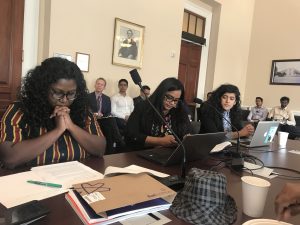
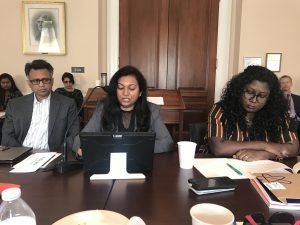
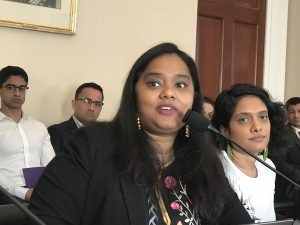
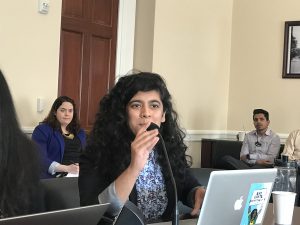
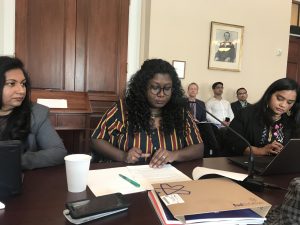
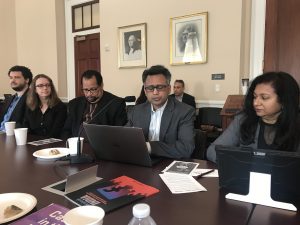
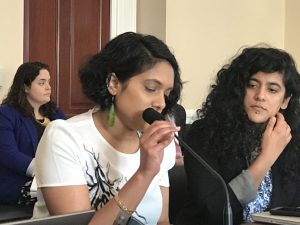
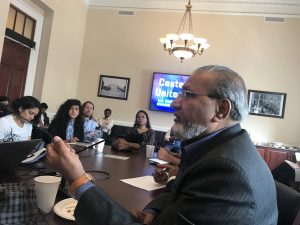
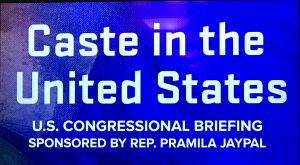
Wednesday, May 22, 2019, Capitol Hill, Washington, DC — The Equality Labs of America presented a historic congressional briefing on the evil of casteism that has followed several Indians to America.  It is hard to believe these men and women have taken the oath to uphold our constitution, but grossly violate the ideals enshrined in our declaration of independence. “We hold these truths to be self-evident: that all men are created equal; that they are endowed by their Creator with certain unalienable rights; that among these are life, liberty, and the pursuit of happiness.”

More pictures below
Congresswoman Pramila Rajagopal sponsored the briefing, her staff and other congressional staff took copious notes for record and action. Several organizations were concerned about discrimination of Dalits even in America and attended the meetings to learn about it.
As always, there are negative forces out there, instead of presenting their case for the public to understand and support them, they resort to denigrating the other and killing the programs thru undue influence.  Last year, I know two events on the Capitol Hill got canceled. It’s very un-American, if you have a reason to believe you have a point, communicate it effectively and not thru undue influence, someday all such nefarious activities will be shot down, truth ultimately prevails. We call it Satyameva Jayate.
It is in this context; we can conclude that this meeting was overwhelmingly successful. Indeed, it is the critical step towards acknowledging and serving justice to the Dalits.
It amazes me at the caste discrimination among South Asian Americans is rampant.
My recommendation to the presenters is to define casteism for the American audience.  In simple words Caste is boxing groups of people as inferior beings by their birth, they are the outcasts and untouchables. You don’t eat with them or even sit with them, let alone let them enter your home. If someone tends to act equal, he or she gets beaten up. It is still happening in India.
Thanks to my father for breaking all the rules. The Dalits would sit with us, eat with us in the same utensils and my mother would make them tea and we all drank with the same cups. It had a profound effect on me. I have fought with people at the public taps for the wait the Dalits had to endure and the shameful acts of washing the tap several times after a Dalit collects the water from the tap.  I am glad my parents did not poison me with prejudices that many parents in India do.  The poisoning against Dalits, Muslims, Christians, and Sikhs have been intensified in the last five yars. If this is not checked, every Indian will lose at the end.

The 90 minutes hearing was loaded with information; some of it was shocking, and some were unbelievable that it is happening in our country.
Themozhi Soundarajan, the Executive Director of the organization, is to be congratulated for organizing an effective program together.

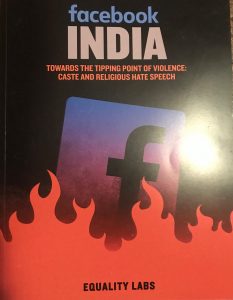
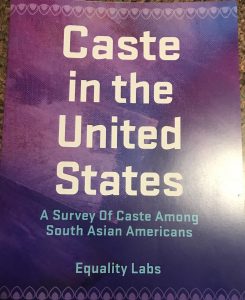
Report worth reading
Most White Americans assume everything runs per the rules, and they have difficulty in understanding why any idiot would discriminate the Blacks? For example, most Hindus in India guess everything is straight forward, and they cannot fathom why Muslims face blatant discrimination in housing. The same goes with the Muslims in Pakistan, and they have difficulty in believing that the Hindus were discriminated in their country.   I hope someday, our Hindu majority in America will wake up and say to the GOI, look we enjoy all the freedoms and opportunities in America, and we want similar equal opportunities for Dalits, Christians, Muslims, and Sikhs in India. We want India to follow the American model and restore its glory days of living and cherishing each other.
The following presenters shared their documented experiences followed by recommendations backed up by useful, robust empirical data. You can read the full report athttp://www.equalitylabs.org/castesurvey
  • Themozi Soundarajan: Government
  • Amol Kamble: Workplace
  • Maari Zunick-Maitreyi: Education
  • Divya Chand: Human and Civil Rights Organizations
  • Maya Sharma: Religious institutions
It is hard to believe that a few Indians bring their evil of superiority to America, its anathema to the American values of equality in opportunities, justice and access to everything in the pursuit of ones’ happiness.
“No one is more privileged than the other, and it is this arrogance that one is entitled to more privileges over the other, that has been the source of evil in societies including discrimination.” Excerpt from the book American Muslim Agenda.
A part of being American is to imbibe the values of equality and treat fellow Americans as equals. It frees the individuals from the agony of mistreating others.
Ambassador Brownback had urged the members of religious freedom to present their case without negating the others’ claim. A few among us will do everything to stop you, but don’t let that discourage you.

Hard to believe Indians behave like this
We have to educate fellow Americans to understand the value of equality. It is this value that is responsible for our prosperity, and we cannot let America slide back to discrimination.
Shame on us for mistreating fellow Indians of all stripes, let’s do the right thing and be on the right side of history. I urge all Indians to support this initiative.
Knowing a few imbecile men will attack me, I want to assure them that the right thing to do is for each one of us to stand up for the rights of others. In the end, all men and women should get justice and fair treatment. Indeed, I am blessed to have stood up for the rights of all individuals from Atheists to Zoroastrians and everyone in between including LGBTQ community and Native Americans, in this case, the Hindus. http://standingupforothers.blogspot.com/2012/04/standing-with-hindus.html?m=1
       
# # #

HIndus and Muslims Together

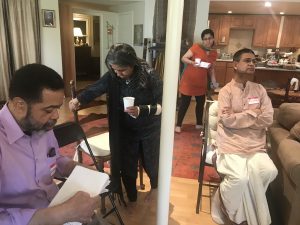
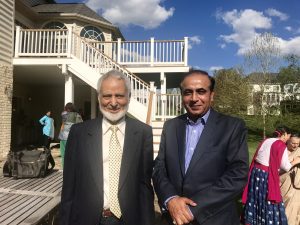
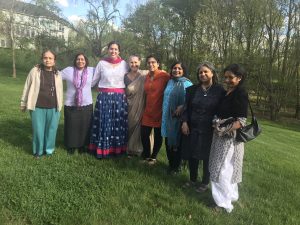
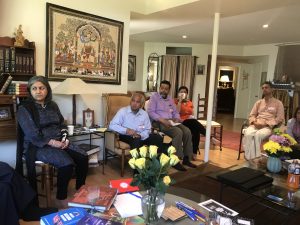
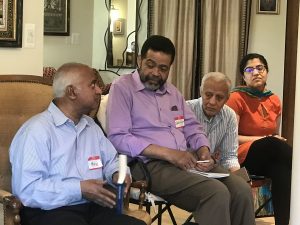
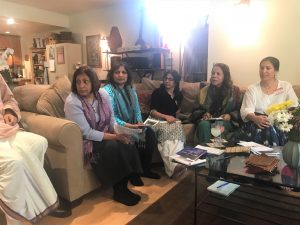
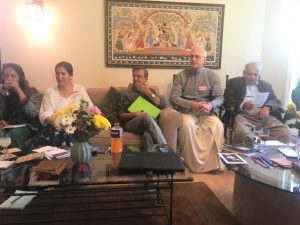
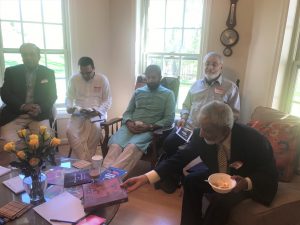
Saturday, April 20, 2019 – Silver Spring, Maryland. Hindus and Muslims gathered to talk about building bridges between the communities. There were ten from each group and carried on a purposeful discussion, followed by enlightening conversation.
Mr. Bhaya Hari and Mr. Abdul Majeed presented the attributes/names of God in Vaishnava and Islamic traditions. I learned several new points and values from their presentations.
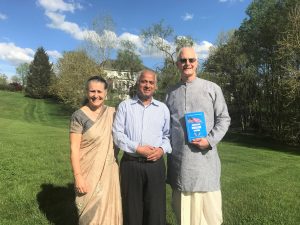
We appreciate Anutama and Rukmini Dasa for hosting this discussion in their home and providing a delicious meal. We also thank each participant for contributing his or her goodwill to the discussion.
In my view, if we strip the rituals from the religion for the sake of understanding the purpose of faith, we will find the same wisdom emanating from the same source of the universe to create safe and secure societies.  God has created everything in harmony, and if our individualistic insecurities cause us to grab more than our share, and act as if we have more privileges than the other, conflicts erupt, and adharma takes over.  Instead of mitigating the conflicts, the human tendency is to double down on it and start the wars of getting even.
The ‘un-stated’ purpose of religion, any religion is to create societies where the invincible and vulnerable can live freely without fear of the other and to create orderly societies where people can focus on life, liberty, and pursuit of their happiness by building each other and not tearing down the other.
Dr. Sayyid Syeed shared the compelling examples of how those initial apprehensions with Jews and Christians led him to find solutions by forming relationships and understanding each other’s perspectives.  The alliance between Muslim and Jewish communities have produced incredible results in restoring relationships. He cited one of the most successful campaigns called Shoulder-to-Shoulder entirely funded by Christians to build a relationship with Muslims and standing up for Muslims. Now this year, and this Ramadan, through their efforts iftaars are being organized in over 100 churches across the nation.   He made an impassioned appeal to Hindus and Muslims to form alliances and restore trust and good relationships that we all enjoyed for a long time.
The thought of Unity has been on my mind for several years, and this appeal gives a boost to the idea, as it will be supported by the man who has made a tremendous difference in American society.
Each one of the 20 people shared their stories of the glory days when we were friends with each other, religion was never a wall and we believed Mazhab Nahin sikhata aapas may bair rakhna – religion does not teach one to have ill-will towards the other. In the last few years, the bridge of goodwill is gradually collapsing, and as Lord Krishna says, we have to restore the dharma, the righteousness back again to live without apprehensions and tensions. Everyone deserves to live freely.
I am almost tempted to write poetry based on an old Indian song by Talat Mahmood.
Mera Hindustan Mujhe louta do,
My nafraton say ulajh gaya hoon,
koi hamien jina sikhlado.
I am a part of Jewish-Muslim dialogue society, part of Christian Muslim groups and hope to see the Hindu-Muslim and Muslim-Sikh gatherings. The more we are together, the happier we would be. We all have conflicts based on myths as well as facts, we need to separate the chaff from the grain, acknowledge the facts and bust the myths.
At the Center for Pluralism, we conduct workshops on Atheism to Zoroastrianism so that we can learn about each other.  We also write the essence of all major festivals of all religions, so we know the celebrations and commemorations of our fellow humans. Our mission is to build cohesive societies where each one of us can feel secure about our faith, race, ethnicity, culture, sexual and political orientations.
God bless the world and guide us all who know not and learn to know each other. Knowledge leads to understanding and understanding to acceptance and appreciation of the otherness of the other.
        
Dr. Mike Ghouse is committed to building cohesive societies and offers pluralistic solutions on issues of the day. His book, the “American Muslim Agenda” is about Muslim earning their respectable space in the society. The book is available at Amazon, Xlibris, Google, Barnes and Noble, and Kindle. Mike’s mission is to open people’s hearts, minds, and souls towards each other. He believes that the ultimate purpose of humans is to live freely and be comfortable with their culture, race, religion, ethnicity, sexuality, and individuality. Mike is a public speaker, author, interfaith wedding officiant, a newsmaker and the executive director of the Center for Pluralism in Washington, DC. More about him in three formats at https://www.linkedin.com/in/mikeghouse/

The Indian synagogues preserved by Muslims

Every time I read about Indian Jews leaving India, I wish they had not, then I realized that I have left India too, but of course, Indian blood runs in my veins. Two of the famous Indian Actors were David, who went to Canada, and Nadira (Film AAN fame with Dilip Kumar) died in 2016.
Mike

The Indian synagogues preserved by Muslims

By Kalpana Prodhan & Sreya Chatterjee 18 April 2019
Courtesy BBC News 
For more than 100 years, the synagogues in Kolkata, India, have been cared for by Muslims in a shining example of friendship uniting faith.
Pictures courtesy Getty’s image
       

Birth of the ‘Baghdadis’

For nearly 140 years, from 1772 to 1911, Kolkata was the capital of British India – a bustling commercial city on the bank of the Hugli River in the heart of West Bengal. Its strategic position, roughly 150km upstream from the Bay of Bengal, not only brought foreign trade, but also enticed several foreign communities – from Chinese to Armenians to Greeks – to migrate to the thriving city. Among them were Jews from the Middle East.
Known as ‘Baghdadis’ or ‘Baghdadi Jews’ because of their origins in modern-day Iraq, Syria and other Arabic-speaking places, Jewish immigrants began settling in Kolkata in 1798 after a trader named Shalom Cohen came in search of riches. As news spread of Cohen’s success in the trade of diamonds, silk, indigo, opium and cotton, Kolkata’s Jewish population grew rapidly, and by the early 1900s, thousands of Jews were living harmoniously alongside Kolkata’s many Hindus and Muslims.

Disappearing act

After World War Two, as many as 5,000 Jews resided in Kolkata. During the community’s peak in the 1940s, Kolkata was home to five synagogues, as well many Jewish businesses, newspapers and schools. Today, what was once India’s largest Judaic community has dwindled to fewer than 24 people, as many Baghdadi Jews have immigrated to Israel, the US, Britain, Canada and Australia.
Yet, while Kolkata’s Judaic population ages and shrinks, its remaining community continues a cross-cultural tradition that has existed for the past three generations: its three remaining houses of worship are maintained and cared for by Muslim men.

Family across faiths

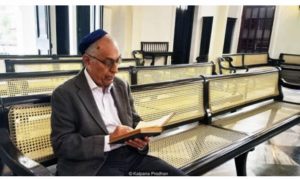
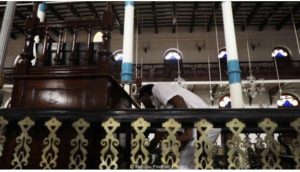
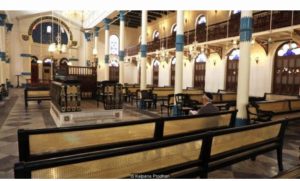
Climbing the marble staircase and pushing past the stained glass window of Kolkata’s Beth El Synagogue, built in 1856, visitors may come across a rare sight: a team of four white-clad Muslim men busy polishing the wooden balconies, sweeping the chequered marble floors and ensuring that the Star of David and seven-pointed menorah adorning the building’s sand-coloured facade are clean.
Several of the caretakers, such as Siraj Khan, a third-generation Muslim employee whose family has been maintaining the synagogue for more than 120 years, have grown up alongside Beth El’s few remaining members. According to AM Cohen, general secretary of Kolkata’s Jewish Community Affairs, Khan and the other Muslim caretakers of the city’s synagogues are considered part of the Jewish family.

Religious relatives

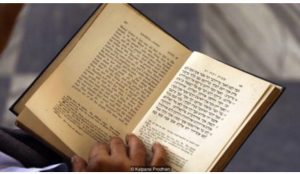
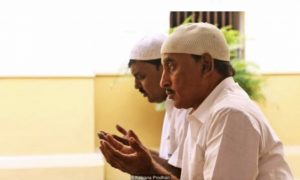
Just 300m from Beth El, one of Kolkata’s other remaining synagogues, Magen David, a towering Italian Renaissance-style red-brick building, is also maintained by four different Muslim men whose families have looked over the temple for generations. Like at Beth El, after the caretakers unlock the doors and turn on the altar lights, illuminating Hebrew inscriptions of the Ten Commandments, the workers often gather in a courtyard to unfurl a prayer rug towards Mecca and bend in prostration to Allah.
According to Jael Silliman, one of Kolkata’s last remaining Jews and author of the digital archive Recalling Jewish Calcutta, which aims to preserve the memories and legacy of the city’s Jewish community, there has always been a cultural familiarity between Muslims and Jews in Kolkata, as the earliest Jewish immigrants to the city spoke Judeo-Arabic and wore Arabic attire.
Beyond Kolkata, the two religions have a long history of overlap. Fittingly, during the tumultuous years before and during World War Two, many European Jews fled Nazi Germany and found safe refuge in Kolkata. Like their Jewish Middle-Eastern predecessors, these newly arrived European refugees soon found that they had a lot in common with the Muslims who made up Kolkata’s largest minority group – from similarities between kosher and halal food to their music and dance.

Special bond

“God is everywhere, be it a mosque, temple, church or synagogue, and working in this quaint synagogue is a service to God that I do wholeheartedly,” said Khan (pictured), whose grandfather and father cared for the Beth El Synagogue, and who now maintains it alongside his brother.
“His name or form is not to be differentiated when the language of love and kindness is spoken. And this special bond is what I feel with this synagogue.”

Melting pot

West Bengal is home to India’s third-highest concentration of Muslims, and Kolkata, its capital, has always been something of a haven for religious tolerance. While the majority of the 4.5 million population is Hindu, Muslims, Christians, Jews, Buddhists and Sikhs from across the world have long co-existed in the so-called ‘City of Joy’.
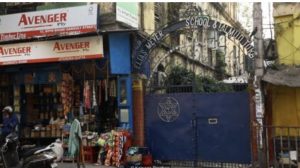
Today, it’s not uncommon in Kolkata for Hindus to join Muslims in mosques to celebrate the Eid-al-Adha ‘Festival of Sacrifice’ – one of the holiest Islamic holidays. The Jewish Girls’ School that was established in Kolkata in 1881 is now predominantly Muslim. And every year during the holy Hindu celebration of Durga Puja and the Christian Christmas festivities, a sea of Bengali revellers, regardless of religion, routinely take to the streets to dance.

Fading away

According to AM Cohen, a few factors led to Kolkata’s Jewish population disappearing after the end of World War Two.
First, India’s independence from Britain in 1947 signalled an uncertain time for India’s Jews. Banks and businesses became nationalised, and many Jewish property owners, fearing their assets may be taken by the Indian government, moved to Britain or the US.
In addition, the creation of the state of Israel in 1948 spurred a steady migration of Jews from India and from around the world to the new country.

Uncertain future

Today, Kolkata’s dwindling Jewish population faces a very uncertain future. While both the Beth El and Magen David synagogues are now recognised as protected heritage buildings by the Archaeological Survey of India, they – along with the city’s oldest synagogue, Neveh Shalom – haven’t held regular Saturday services since the late 1980s due to a lack of attendance. According to the Jewish minyan congregational quorum, 10 adult males must be present to sanctify public prayer, and there aren’t enough Jewish men left.
In the 1940s, Ian Zachariah, treasurer of Emunah Calcutta Jewish Trust, remembers that the wooden seats at Kolkata’s synagogues used to be filled with hundreds of worshippers during the High Holidays of Rosh Hashanah and Yom Kippur. Now, the three buildings are only open by special appointment or by asking one of the Muslim caretakers, who are paid to look after the temples by the Emunah Calcutta Jewish Trust, to enter.
Of the 24 or so Jews who continue to live in Kolkata, most are over the age of 50 and older than their Muslim brethren who continue to maintain the synagogues.

An Indian inspiration

As violence and political tension against Jews and Muslims continue to draw headlines throughout much of the world, Kolkata’s Muslim caretakers and their commitment to looking after these Jewish synagogues are a reminder that these two communities share much in common, and the importance of loving one’s neighbour.
Kolkata’s Jewish population may soon fade away, but as long as there is someone to care for the temples, open the doors and let visitors in, a part of their heritage will live on thanks to their Muslim brothers.
Video by Kalpana Prodhan, text by Sreya Chatterjee.
Breaking Barriers is a BBC Travel series featuring inspiring tales of unity and humanity in theatres of dispute and division.